
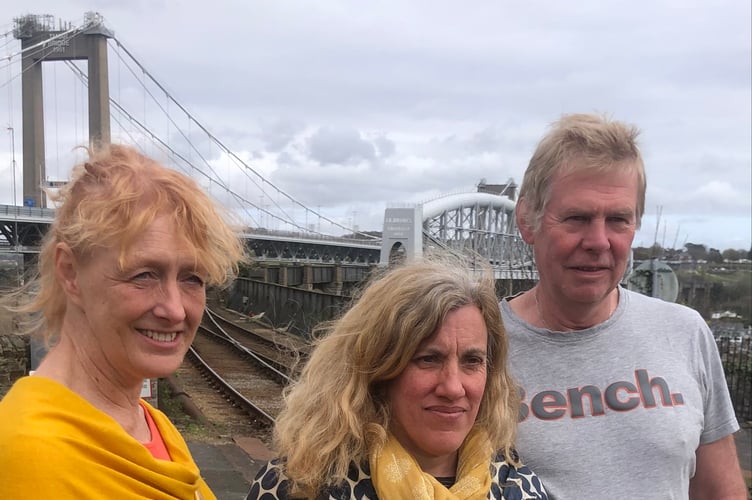
A RECENT visit by Saltash town councillors to the Tamar Bridge on a windswept March day certainly proved eye-opening in more ways than one.
Maintaining the Tamar Bridge and Torpoint Ferry costs nearly £20-million per year, covered entirely by income from those drivers using the two crossings.
The majority are residents and businesses in the PL12 area, so it’s easy to see how these costs can get overlooked the further west in the Duchy, or further abroad, you live.
Everyone in Saltash, Torpoint and the surrounding area should understand that funding the Tamar Crossings lies squarely with us, the toll payers. Without support from our MPs and government intervention, it will continue to remain that way.


Tolls were increased in May last year by 15 per cent. However, cash payments are declining and use of the Tamar Tag, introduced 20 years ago, has not returned to pre-Covid levels.
The Tag was designed to ‘give our customers a more reliable and efficient service’. However, the same 50 per cent discount applies whether you travel daily or once a year. That means those of us who rely on the crossings receive no greater benefit than occasional users, even though we are the ones using them day in, day out.
While local MPs say they want locals to pay less, there is currently no mechanism to deliver that.
The Tag account fee, unchanged since 2014, is now under consultation, with the Tamar Crossings management team proposing a 150 per cent increase from 80p to £2 per month. It is no wonder locals, who bear the biggest burden, are unhappy with this proposal. Therefore, I urge you all to make sure you give your views on those proposals at www.tamarcrossings.org.uk before it closes on April 6.
In Saltash, the collision of transport issues on our doorstep is compounded by a strategic road network that is not fit for purpose. Problems near the Carkeel roundabout frequently lead to gridlock, while safety measures like the average speed cameras on the A38 have attracted widespread criticism for slowing the road down.
Those same cameras have also produced some of the highest numbers of speeding tickets in Cornwall. A recent BBC Spotlight programme highlighted the volume of fines through the villages of Landrake and Tideford, as well as the stretch from Carkeel to Trerulefoot.
That has fuelled understandable frustration, but the data also shows accidents have fallen. As campaign group Safe38 argues, these measures encourage drivers to pay closer attention to speed. It is not just about getting somewhere quicker, but about getting there safely.
Following the announcement of £4.4-billion government investment into Devonport Dockyard, Cornwall Council has now signed a Memorandum of Understanding with Plymouth City Council, Torbay and Devon County Council. It is clear that this investment should benefit the wider region, including through improved transport infrastructure for communities like ours that rely on the bridge, the ferry and the A38.
The question is whether South East Cornwall will see any of that investment, or continue to pay the price.
Comments
This article has no comments yet. Be the first to leave a comment.