
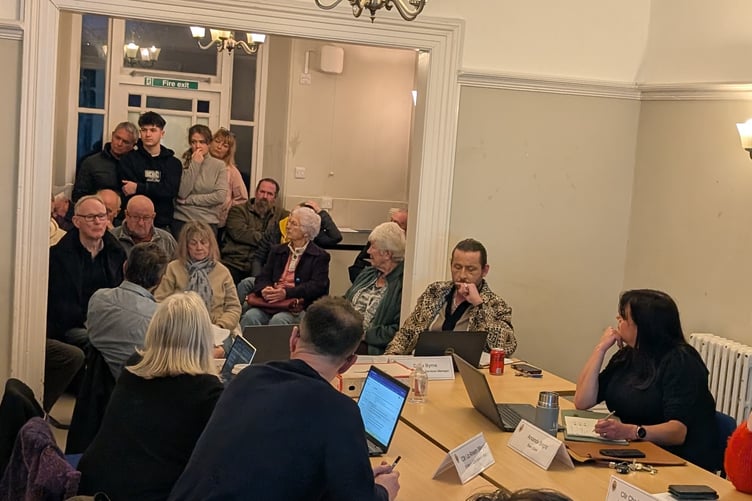
IMMINENT changes to the planning system implemented by the government have been met with strong criticism from local figures.
On October 31, the ability of councillors to ‘call in’ planning decisions to be decided by their council’s planning committees as opposed to being delegated to planning officers is set to be severely curtailed.
The government says its reforms are aimed at simplifying the planning system and aid it in achieving its ambitious targets for housebuilding.
In the current system, where an individual council member has concerns over an application, it can be ‘called in’ for the final decision to be made by a committee of elected councillors.
However, as part of the government’s efforts to reform and speed up the planning process, individual members will be stripped of this power, with some decisions automatically taken under delegated power by planning officers with no recourse.
In the new National Scheme of Delegation, which will replace the present system, there are two schedules – or types – of decisions.
Schedule one decisions are ones that will have no input from councillors into the decision for they will be decided by officers only.
These will primarily involve householder applications, minor residential developments (of one to nine homes in size on small sites that are less than 0.5 hectares), minor commercial developments, permission in principle (which establishes the principle of building on a plot of land), discharge of planning conditions, non-material amendments, certificate of lawful development or reserved matters (unless it is outline over 500 dwellings or 50,000 square metres of floor space).
Schedule two decisions are classified as ‘usually officer decisions’, with applications only being referred to a committee of councillors if it passes a ‘gateway test’. The only exceptions to the gateway are ‘own interest’ applications where the applicant is Cornwall Council, member or officer owned or controlled entities.
Schedule two applications comprise of major planning applications, reserved matters which relate to large outline applications, listed building consent and related planning applications, tree preservation order consents, advertisement consents, applications not listed in schedule one and own interest applications.




However, these decisions are delegated by default, meaning that even applications for large housing developments are likely to be decided by planning officers rather than council committees.
This is because the guidance specifically states: “These applications are delegated by default, and committee involvement is exceptional not automatic”.
The criteria for a schedule two application being referred to committee is strict.
It can only be referred if it raises one or more issues of economic, social or environmental significance or it raises one or more significant planning matters having regard to the development plan and any other material planning consideration.
It can also only be referred if it is agreed by both the Chief Planning Officer and the Committee chair.
‘Cornwall could be overrun’
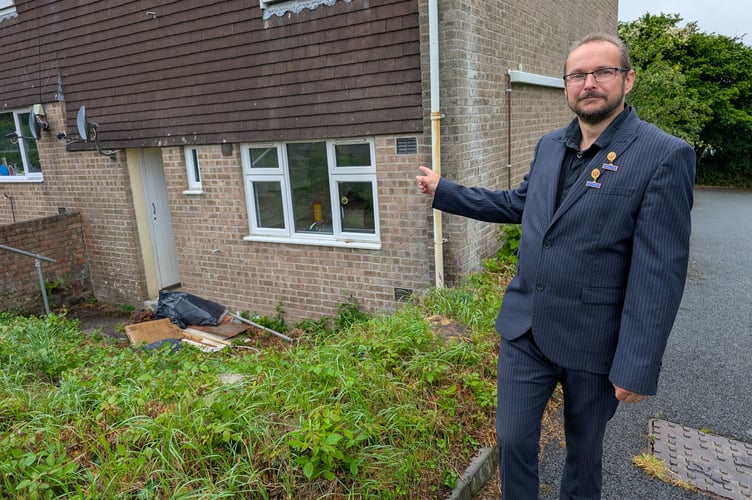
Former mayor of Bodmin, Cllr Andy Coppin is presently the chair of Bodmin Town Council’s planning committee.
The town council’s planning committee under his leadership had recently played a leading role in helping residents to overcome an attempt by a developer to get out of paying nearly £350,000 in infrastructure contributions to the town.
Cllr Coppin is warning that in his view; the Duchy could soon be ‘overrun’ with unwanted developments under the new plans.
He said: “Allowing planning officers to decide applications seem to undermine the role of elected councillors. The public rely on councillors to represent them on local issues and can be held to account if they don’t, such as at elections. Where is the accountability for a paid employee?
“It almost seems to me as a bypass of the Democratic process. Unless there are more rigid planning rules put in place we could be overrun with unwanted development. It could change the Cornish landscape forever.”
‘Weakens our voice’
These were concerns that were shared by another former mayor across the Tamar in Devon.
Cllr Nigel Kenneally, the Torridge District Council member for Milton and Tamarside said: “From October 31, new central government planning regulations will fundamentally change the role of elected local councillors in determining planning applications.
“Ward councillors will lose existing powers to call applications before planning committees, while many decisions will instead be delegated to planning officers under a national scheme of delegation.
“The Government says this will make planning more efficient, but it risks weakening the voice of locally elected representatives and the residents they represent. Councillors are elected to understand and represent the communities in their wards. Removing their ability to bring local concerns into the decision-making process feels like centralisation—not devolution.”
‘Flies in the face of devolution’
Further criticism came from the Devon branch of the Campaign for the Protection of Rural England (CPRE).
Devon CPRE Chair Steve Crowther said: "The latest removal of powers from Planning Committees is an egregious attack on local democracy. Successive governments insist on believing the fiction put forward by large developers that local councillors are the ones standing in the way of their housing targets, rather than developers carefully curating their land bank for maximum profit.
"In reality, 85 per cent of planning decisions are already made without councillors’ involvement, and the new system more or less removes them from the process completely.
“There seems little point in having an elected Planning Committee if they can't ‘call in’ contentious applications. This completely flies in the face of the Prime Minister’s stated aim of devolving power to communities."
Find out about planning applications that affect you by visiting the Public Notice Portal.
Devon CPRE Director Penny Mills echoed the criticism from Mr Crowther, adding: "This amounts to a regressive step away from local democracy. Residents deserve to have a say in important planning issues, as do councillors as their elected representatives. This change imposed from 'on high' flies in the face of that and threatens to further erode public engagement in the planning system."
Comments
This article has no comments yet. Be the first to leave a comment.