
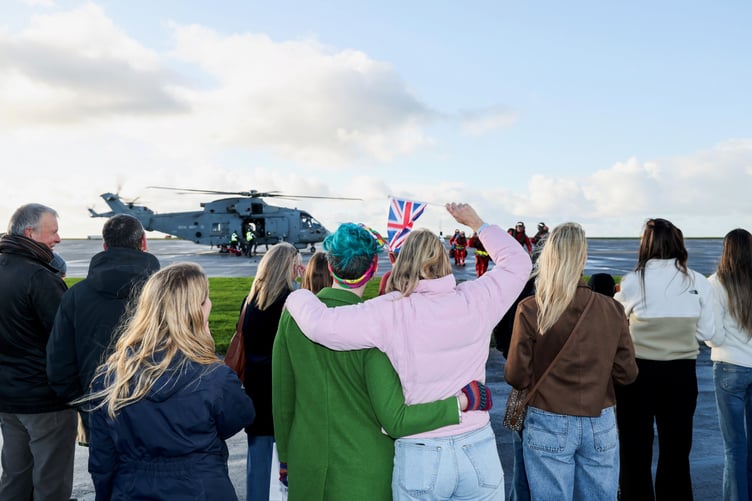
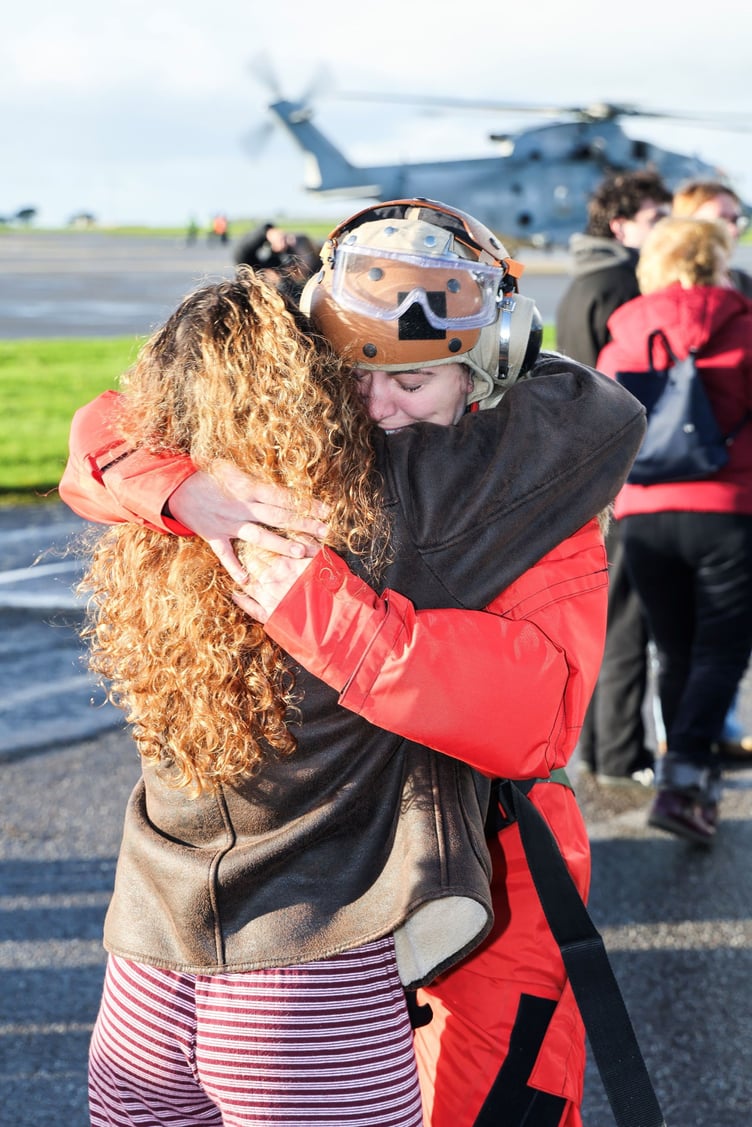
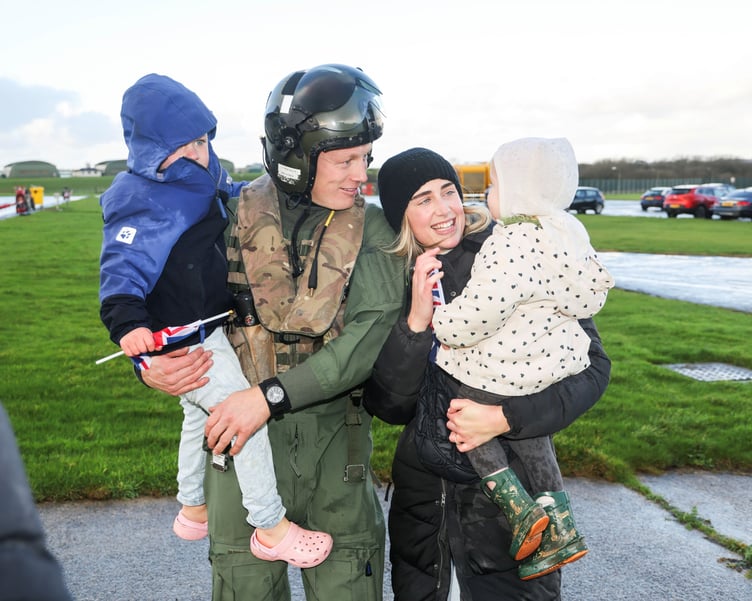
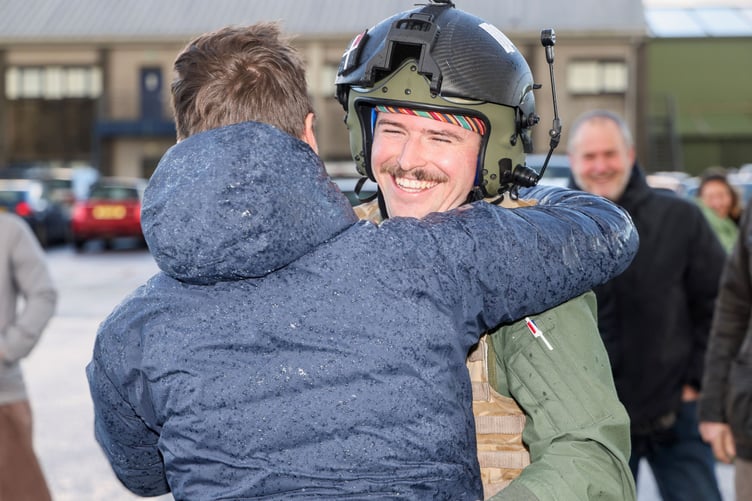
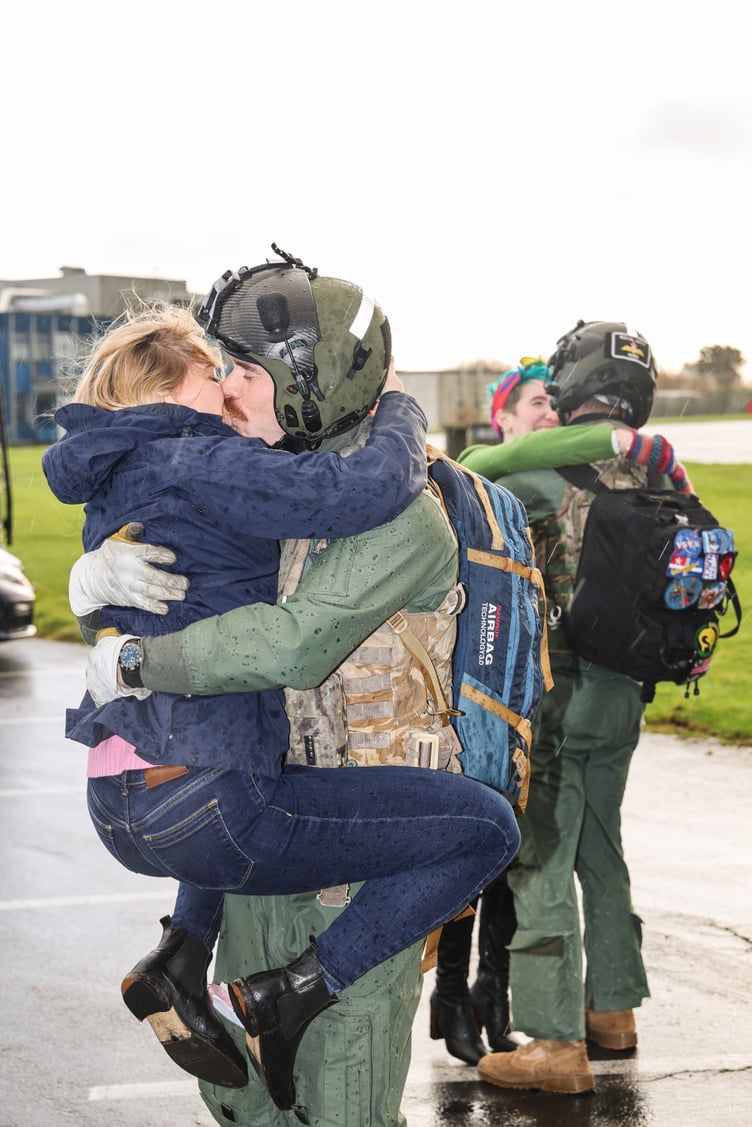
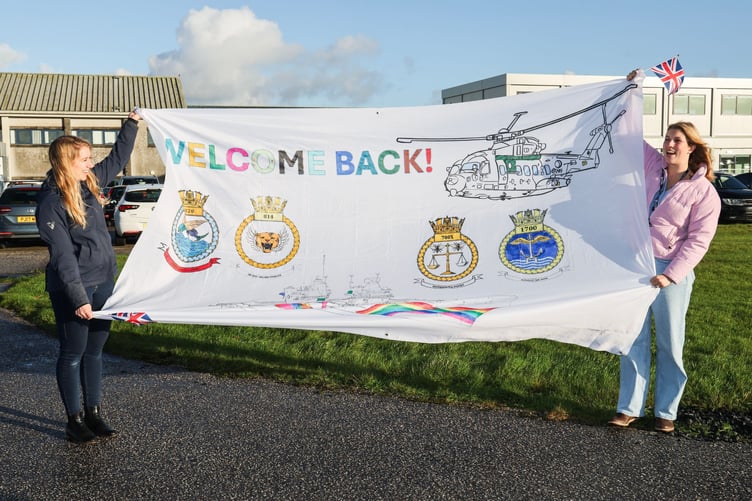

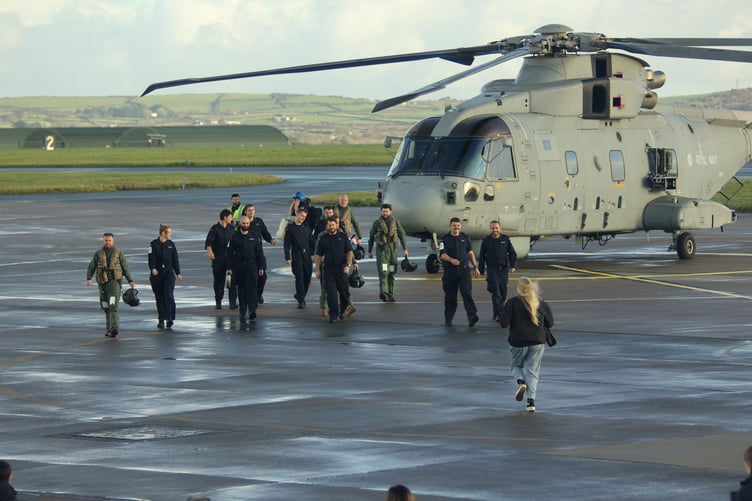
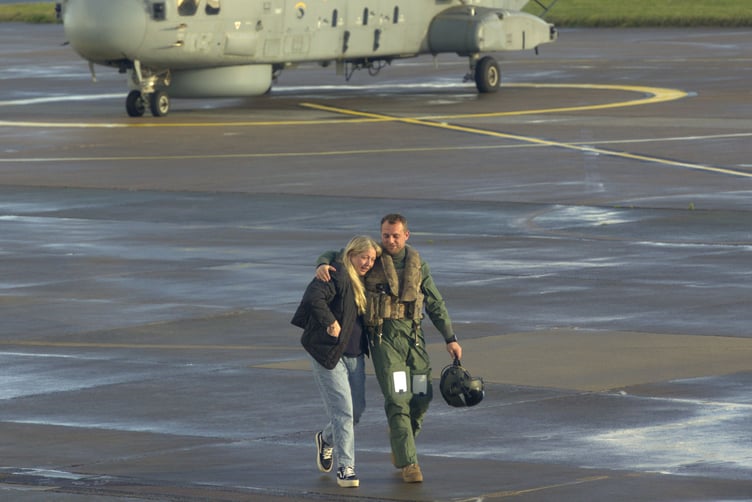
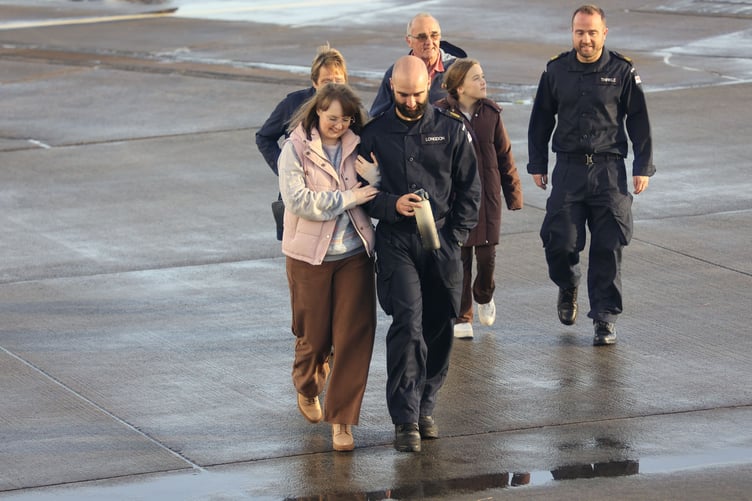
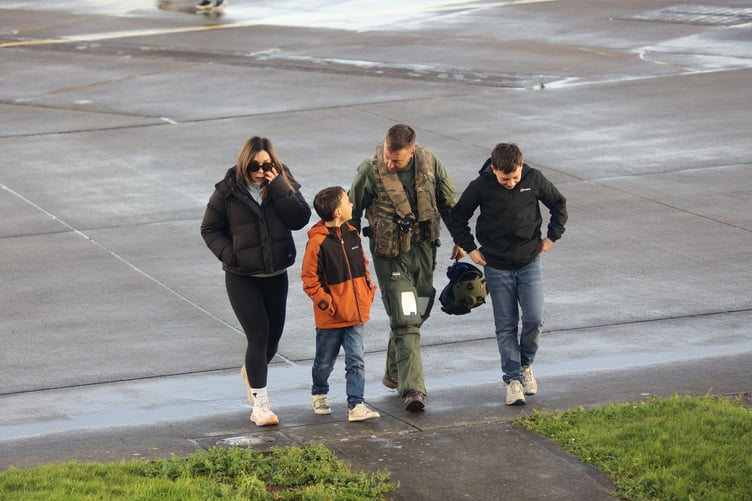
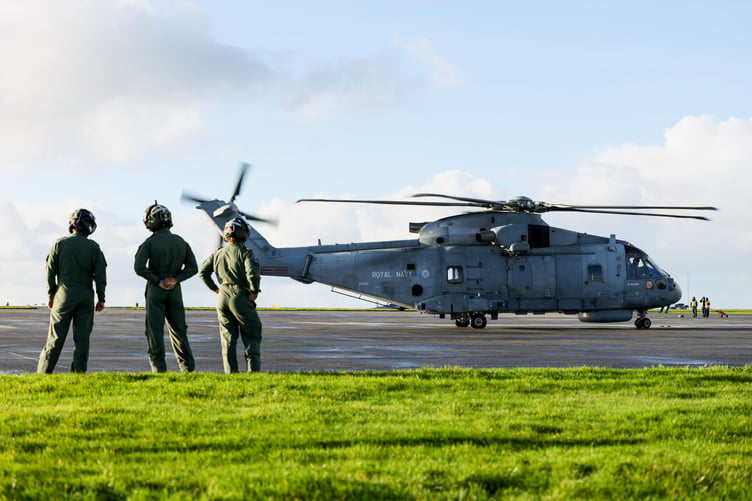
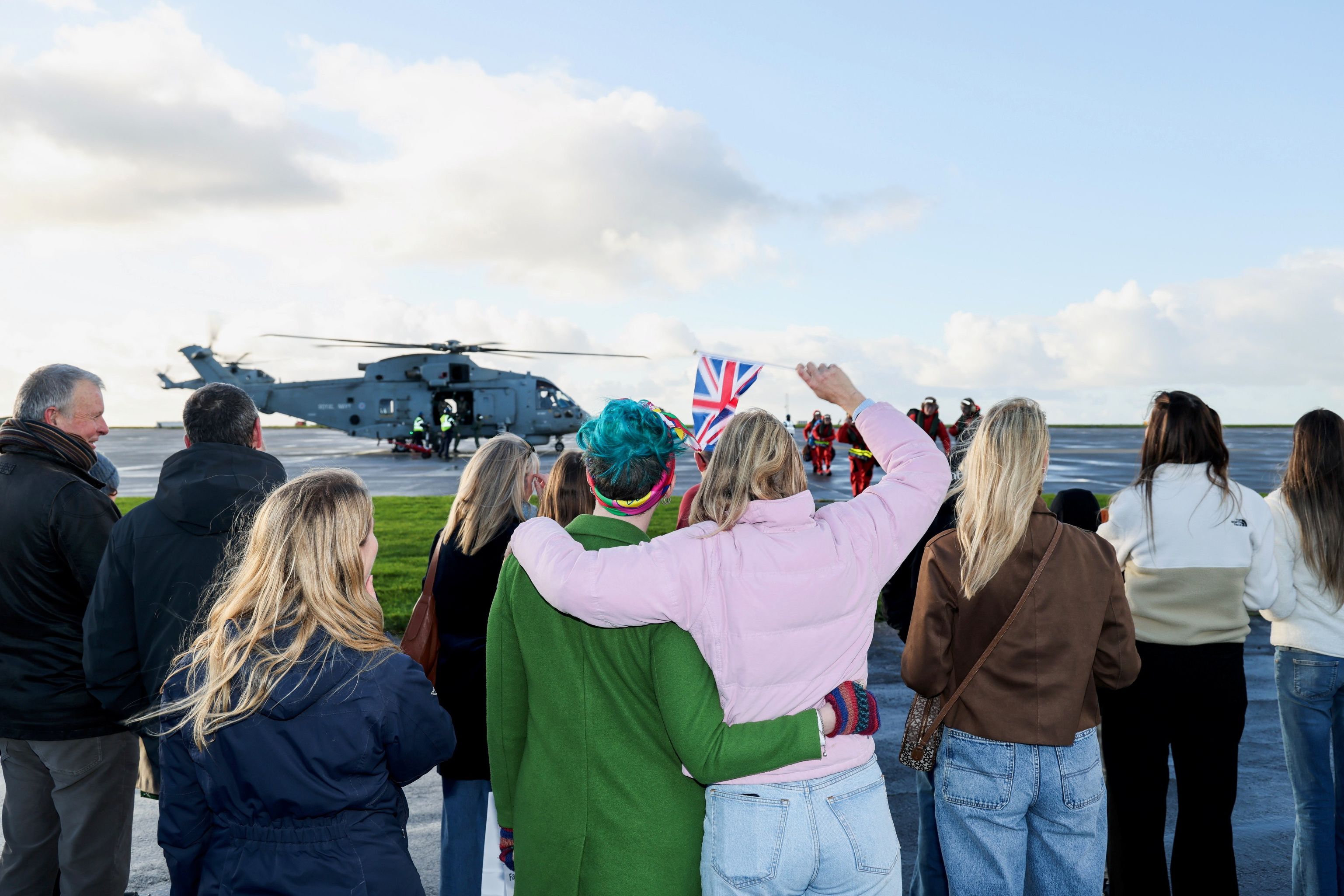
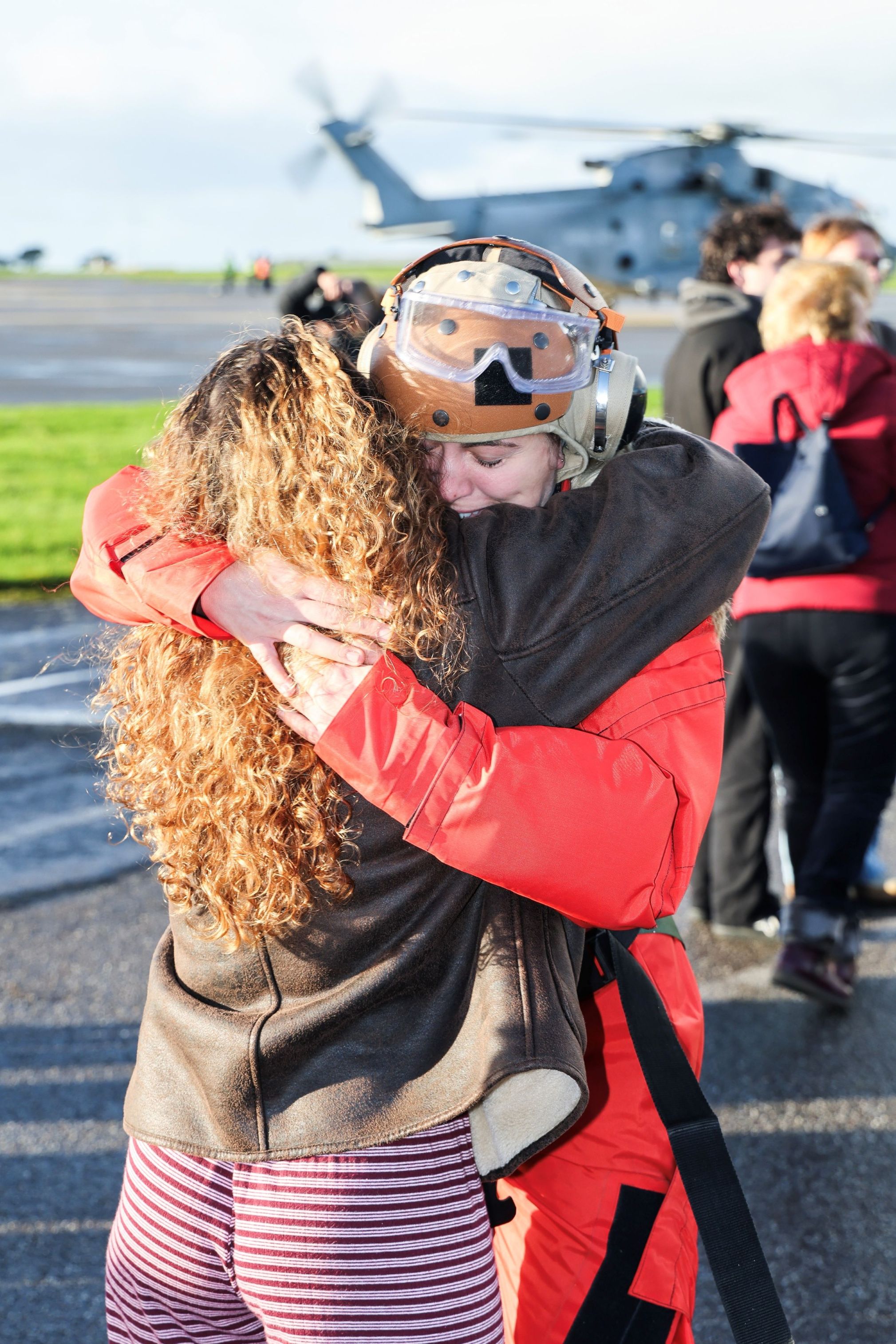
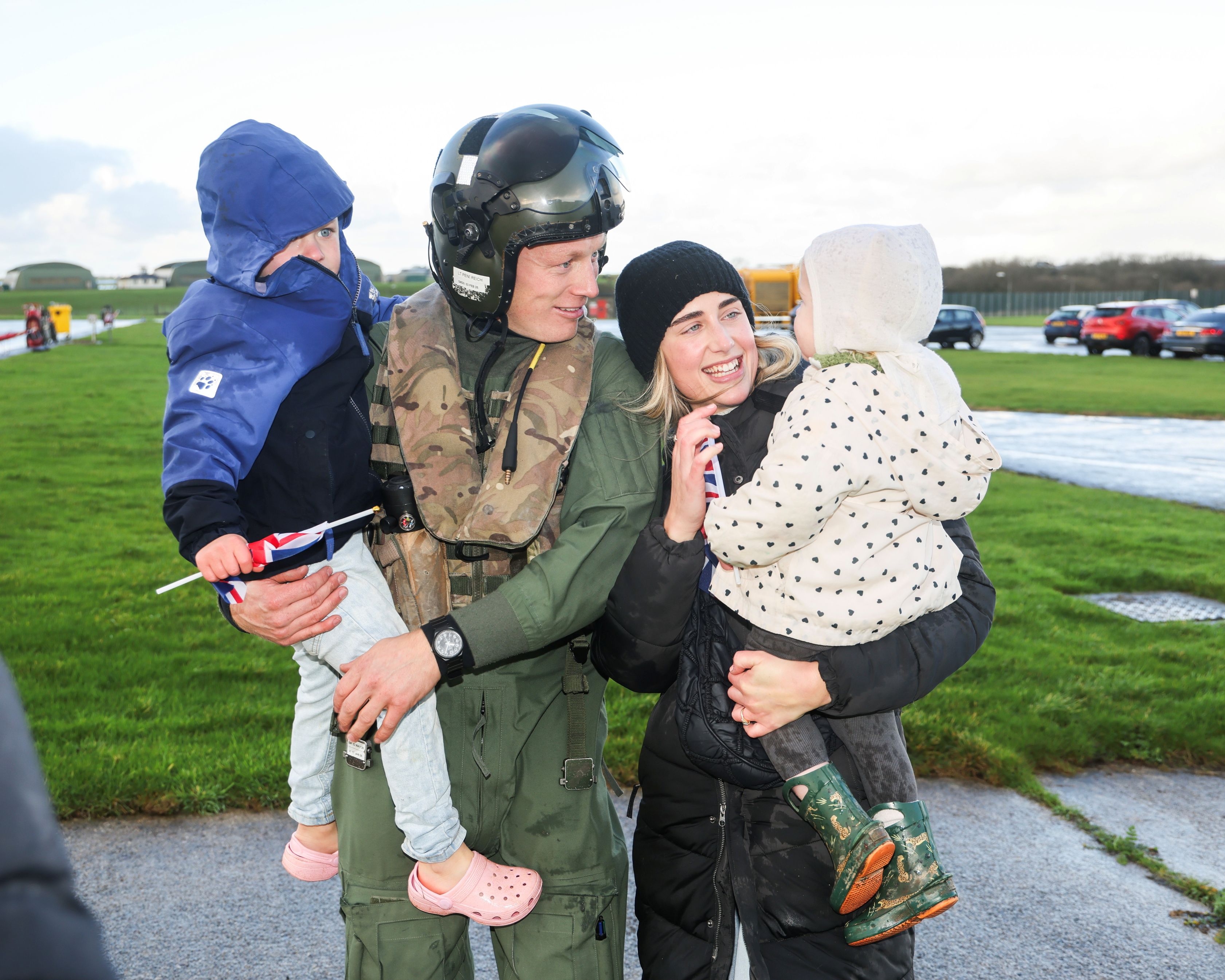
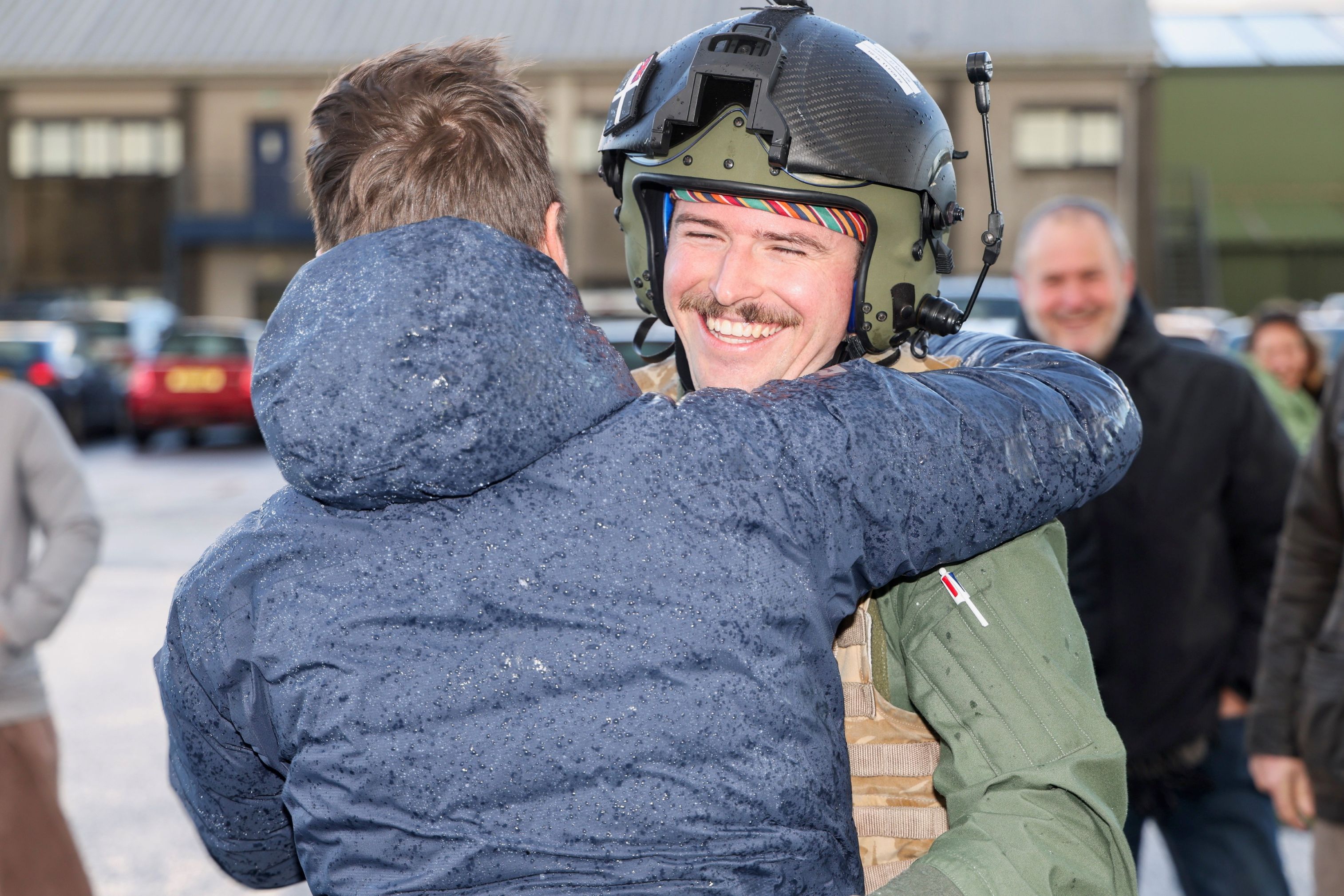
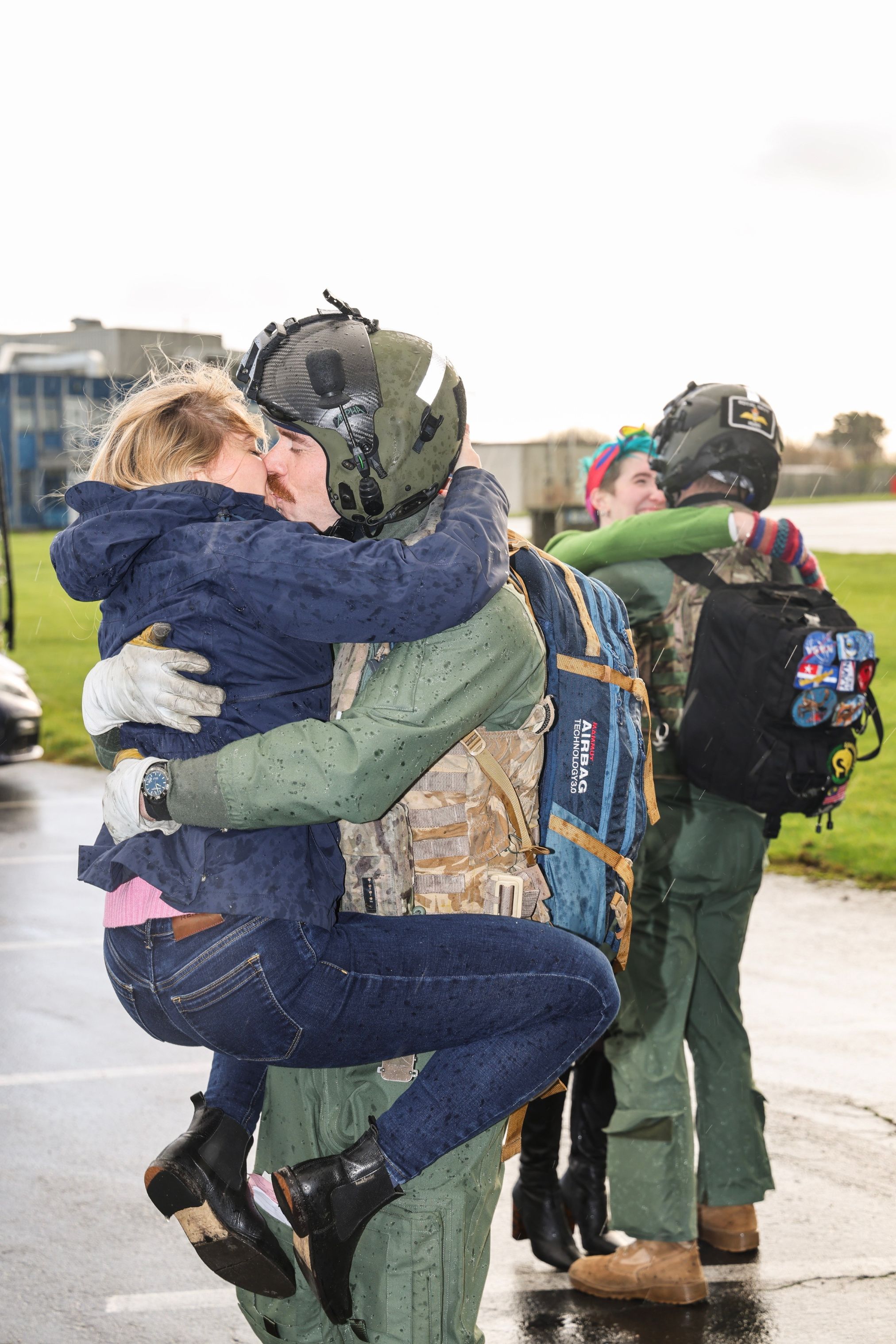
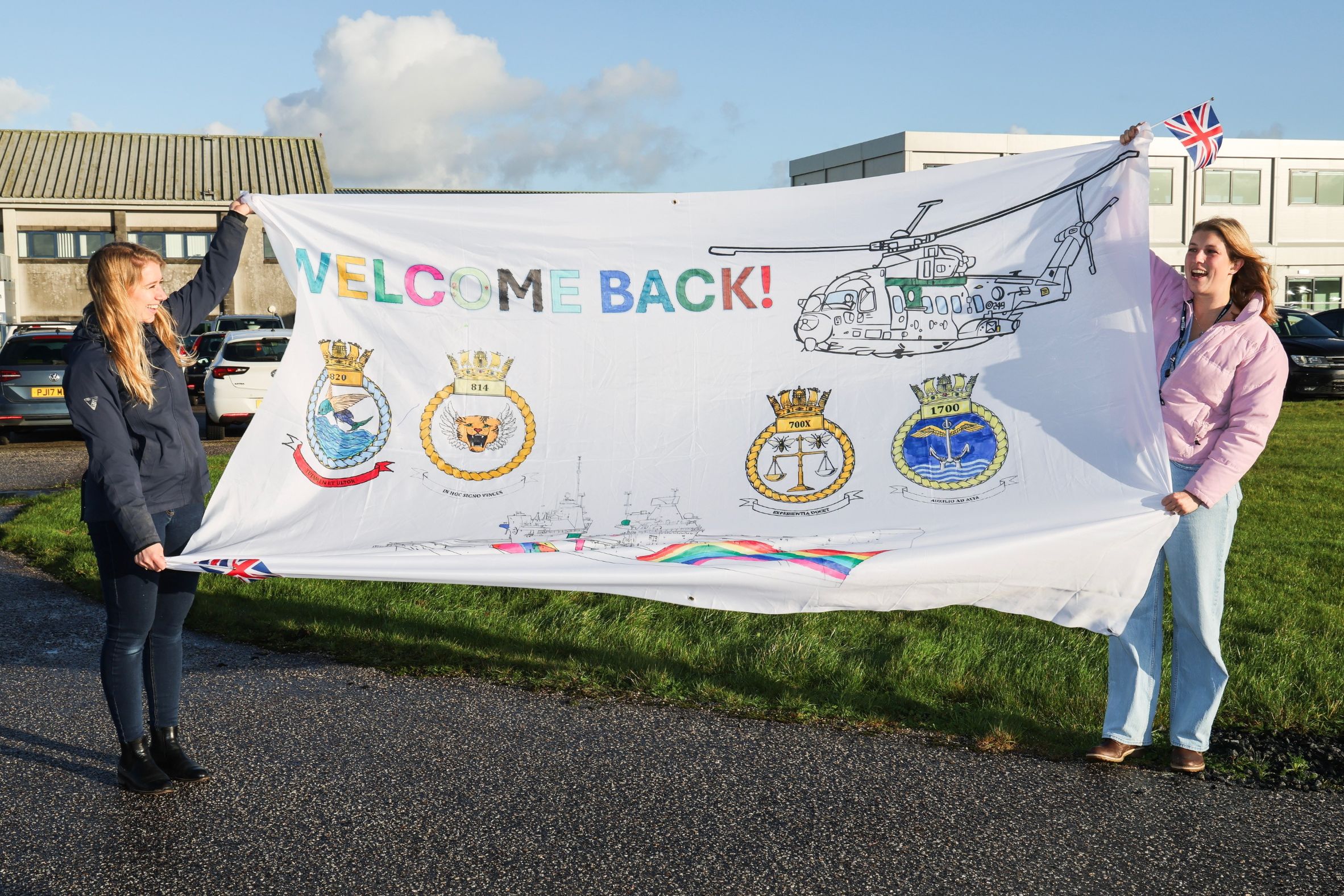
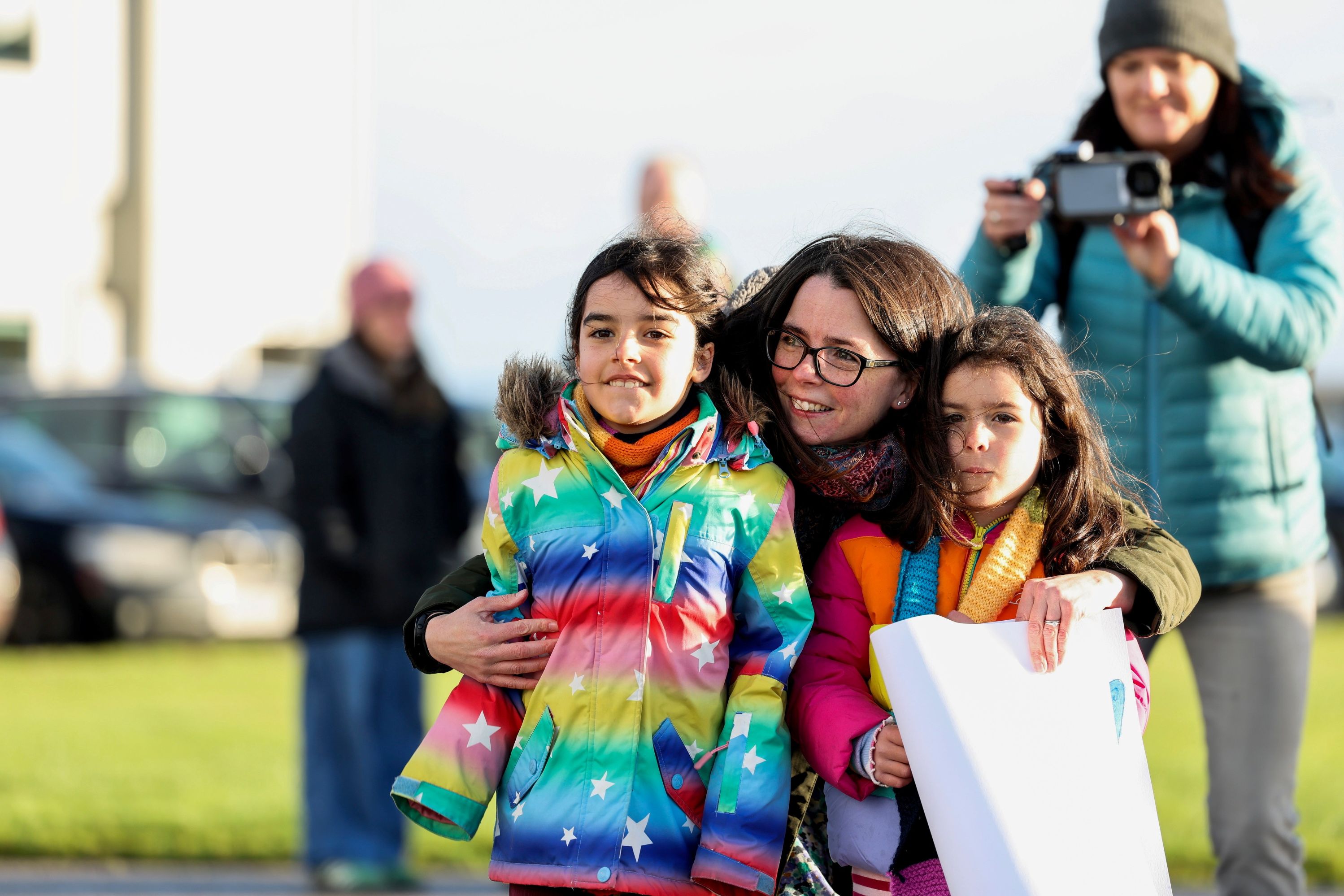
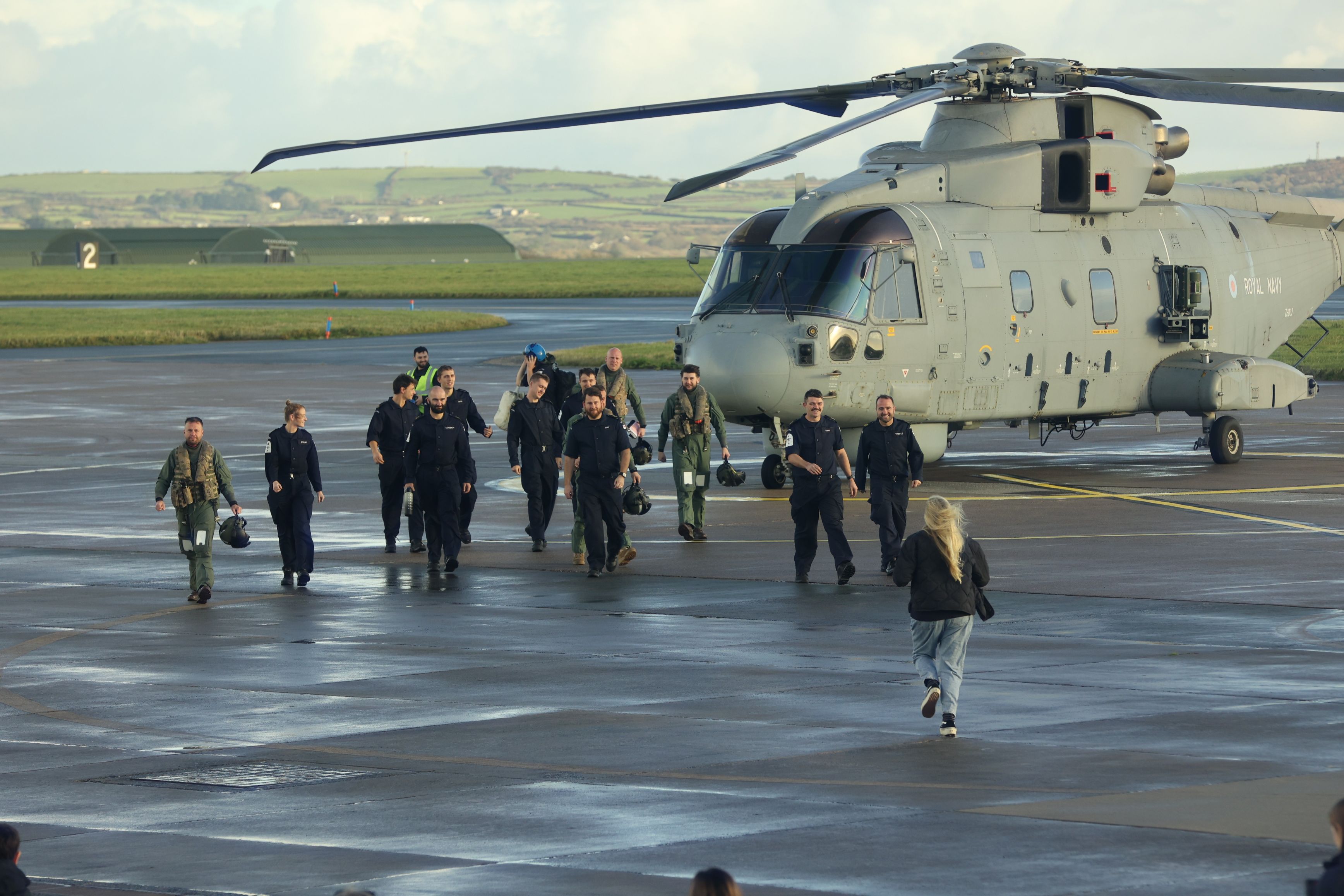
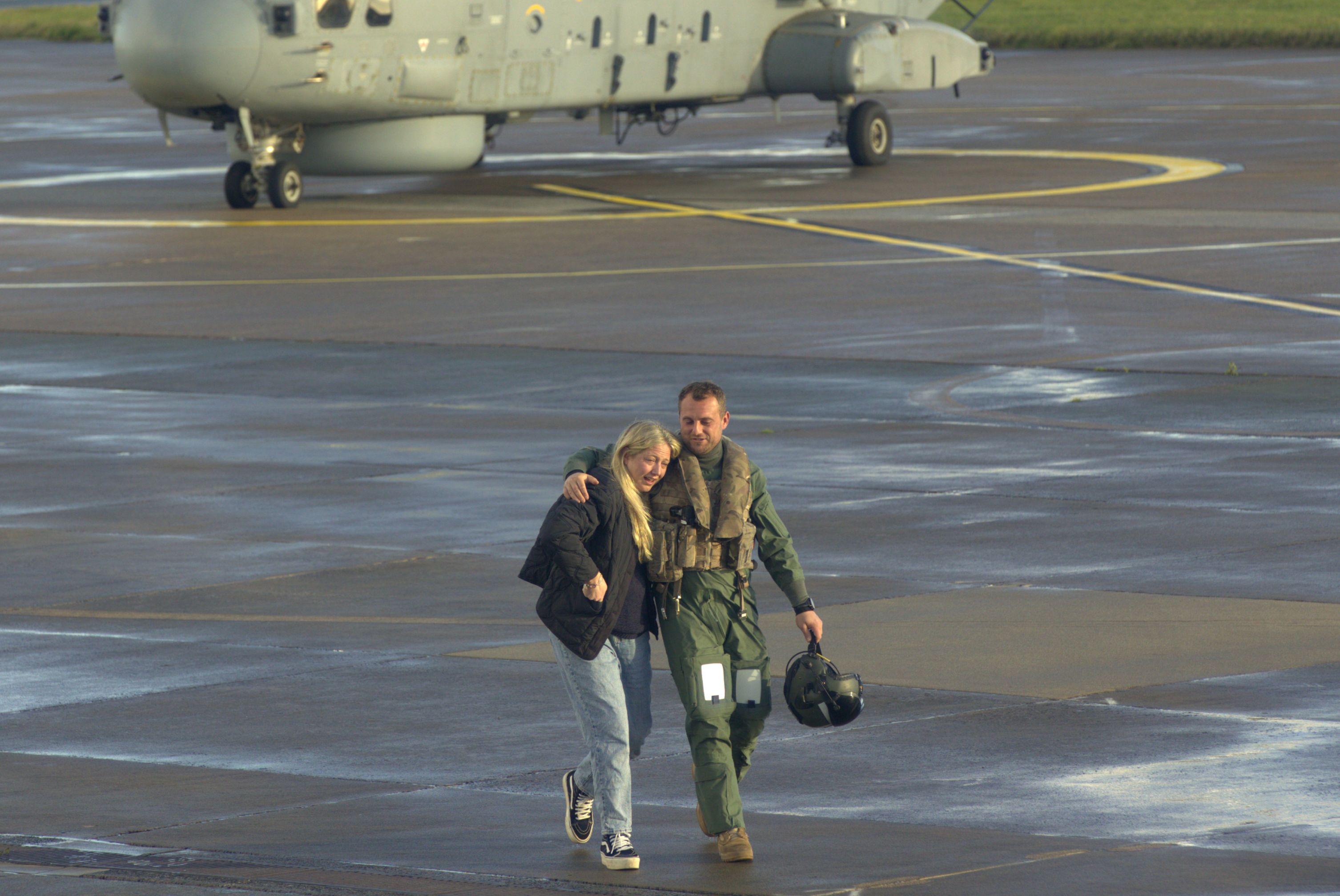
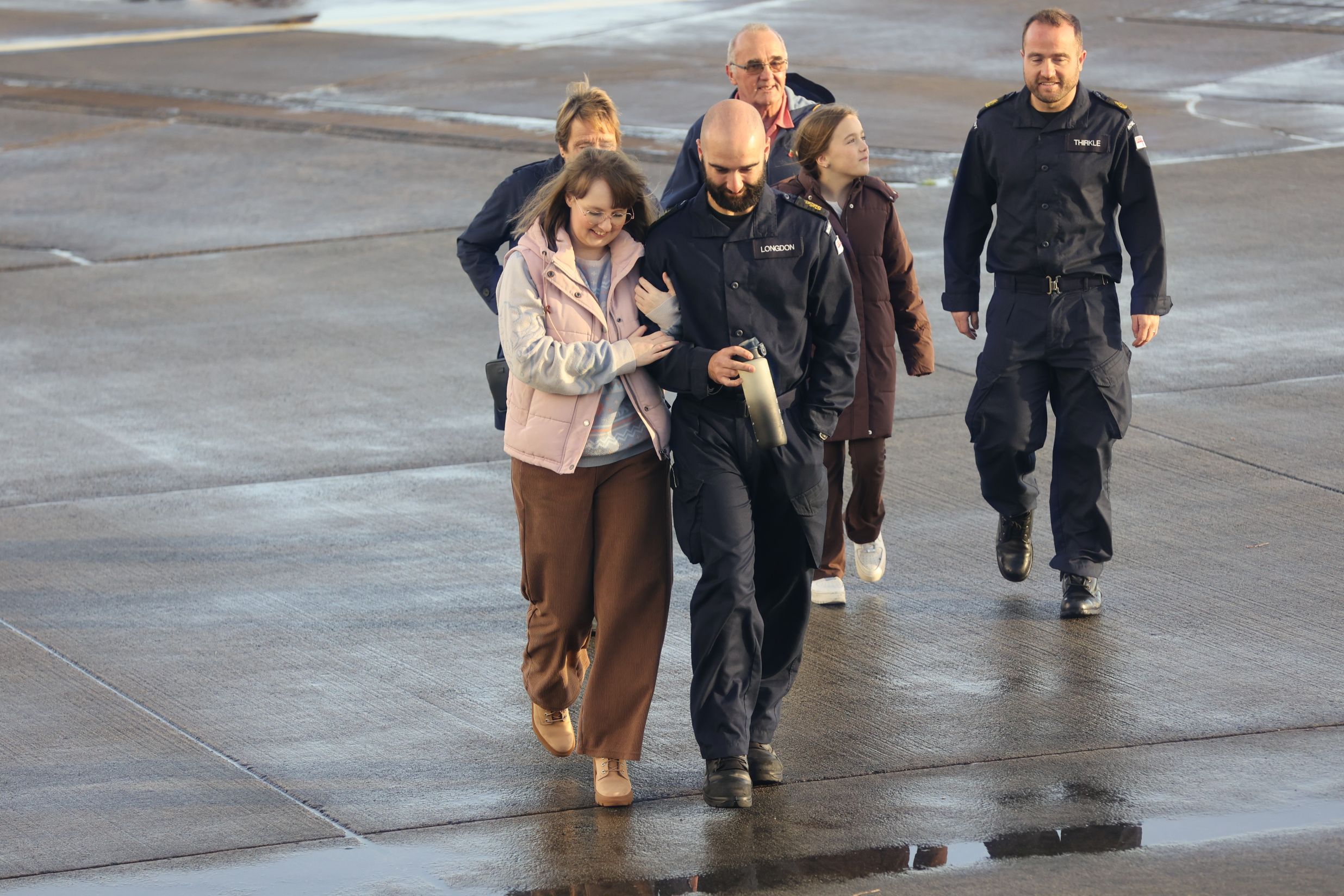
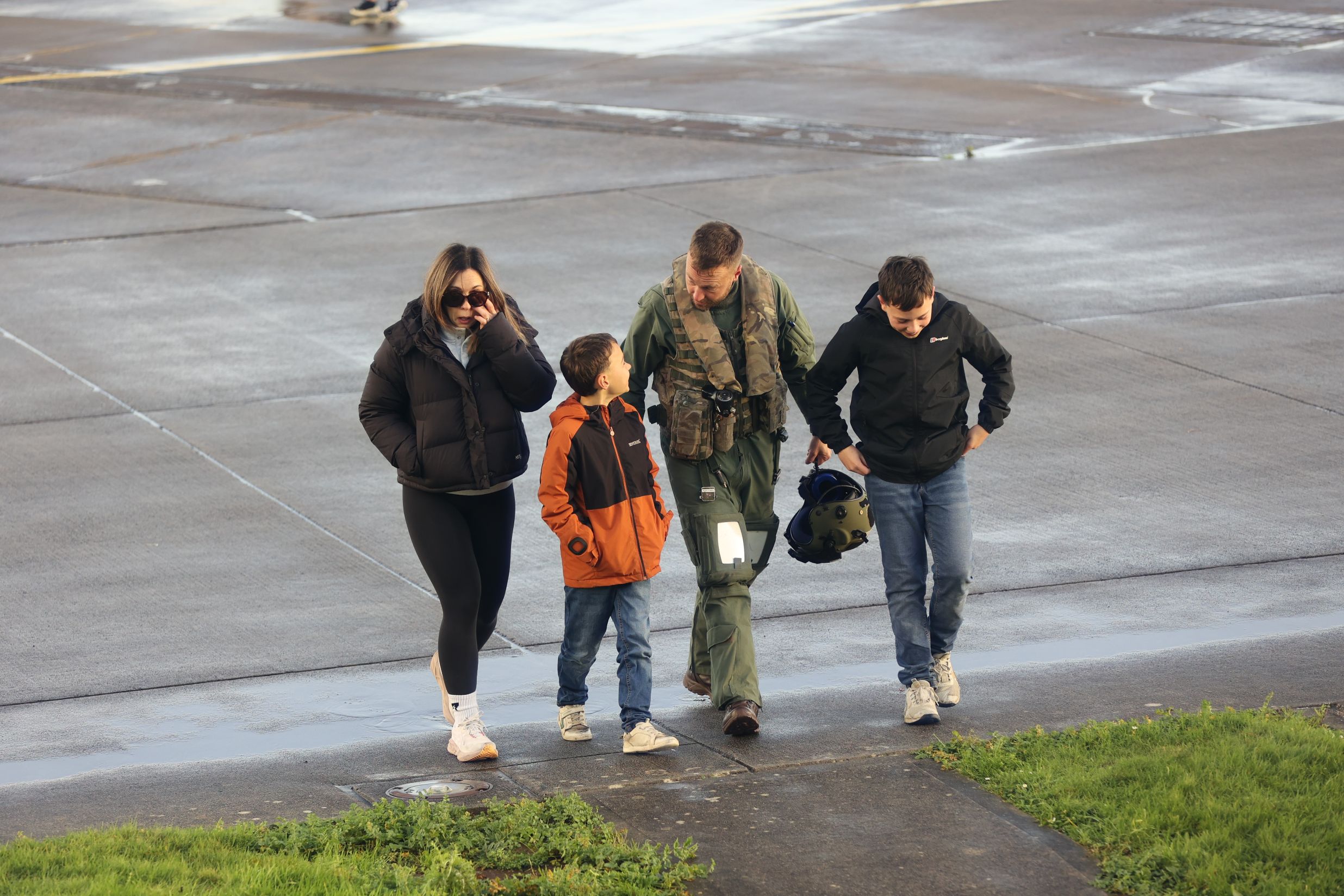
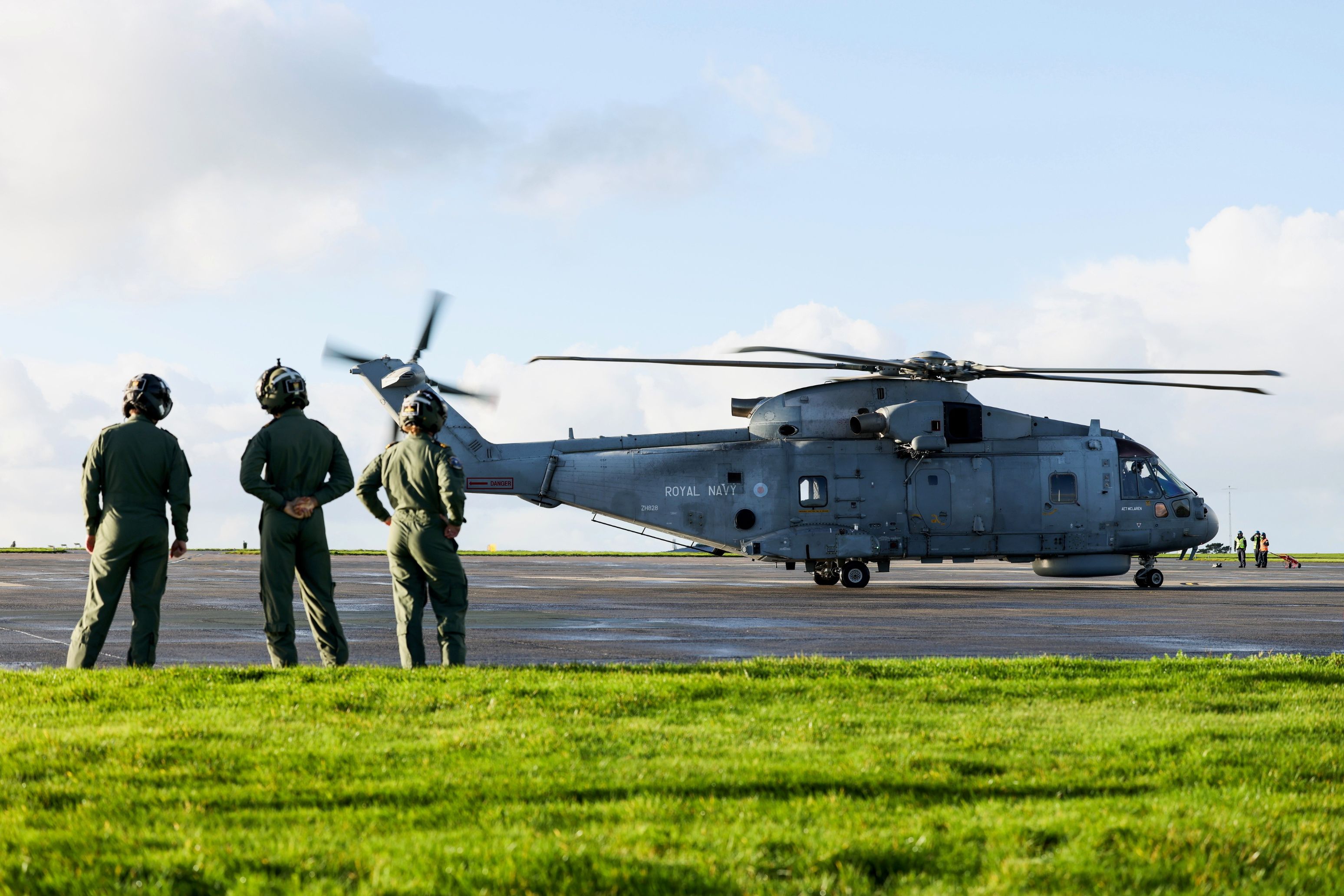
THERE were joyful scenes at RNAS Culdrose at the weekend as aircrew and engineers arrived home into the arms of their loved ones.
They have been away for eight months with the aircraft carrier HMS Prince of Wales, on the Royal Navy’s multi-national deployment to the Far East known as Operation Highmast.
These were the lucky ones who came home early with six of 820 Naval Air Squadron’s helicopters – the remaining squadron personnel return with the aircraft carrier and other ships to Portsmouth on Sunday.
Also returning at the weekend was a flight from 814 Naval Air Squadron which had been embarked with escort ship HMS Richmond. A second flight with tanker RFA Tidespring is due to return later in December.

While the 814 NAS flights switched personnel halfway through the deployment, the men and women of 820 NAS have been away from home since April.
The strike group has worked with the UK’s allies and partners across the Mediterranean, Indian Ocean and Far East, including visits to India, Singapore, Australia, South Korea and Japan.
Commander Al Woodward, who took command of 820 Naval Air Squadron just before the deployment, said: “It’s great to be home. It’s been a superb deployment looking at what we’ve achieved. There have been a lot of exercises and we’ve been halfway round the world and back.
“The squadron has been incredible. They’ve worked so hard at the challenge of keeping the aircraft serviceable and safe so we can fly.
“We’ve also been to some incredible places. These are the memories that we’ve built, as well as the successes. I hope people will look back fondly on this deployment.”
It was a special moment for air engineer petty officer Andrew Kiltie, whose aircraft was guided on the dispersal at Culdrose by his son, air engineering technician Taylor Kiltie. Also waiting for his return were his wife and four other children.
Petty officer Kiltie said: “I am absolutely delighted to be back here with my family. It’s such a long time to be away, so to come back straight into their arms - it’s very emotional.”
Leading survival equipment technician Andrew Smith, who had arrived home in time for his son’s fourth birthday, said: “I was just hoping the helicopter would be on time. It’s been great and we’ve been extremely busy with exercise after exercise on what’s been a high-tempo deployment.”
The Merlin Mk2s are just one element of the support Culdrose has provided to the carrier strike group.
The Royal Navy’s dedicated drone squadron 700X has continued its work with small Puma reconnaissance aircraft and Malloy ‘octocopters’ to push the boundaries of crewless flight, including moving supplies around the task group without the need to resort to crewed helicopters.
Personnel from 1700 Naval Air Squadron have bolstered ships across the task group with additional specialist personnel – particularly aviation support – to ensure the smooth running of the deployment.
Comments
This article has no comments yet. Be the first to leave a comment.