
“BELIEVE me, my young friend, there is nothing - absolutely nothing - half so much worth doing as simply messing about in boats.”
Many people will recognise this sentiment, and its source: Ratty the water-rat in Kenneth Grahame’s much-loved classic The Wind in the Willows. But did you know, writes Judith Field, that Truro Cathedral has a memorial dedicated to the man who inspired the character?
Arthur Quiller-Couch, better known by his concise pen-name Q, was a prolific writer. Born in Bodmin in 1863, he set many of his popular novels in Cornwall and also compiled the best-selling Oxford Book of English Verse.
During his many years as a professor at Cambridge, Quiller-Couch is credited with introducing English Literature as a subject for study at university. In his spare time, he was Commodore of the Royal Fowey Yacht Club from 1911 until his death in 1944. His absolute delight in sailing inspired his friend Kenneth Grahame, and Ratty was born.

.jpeg?width=209&height=140&crop=209:145,smart&quality=75)


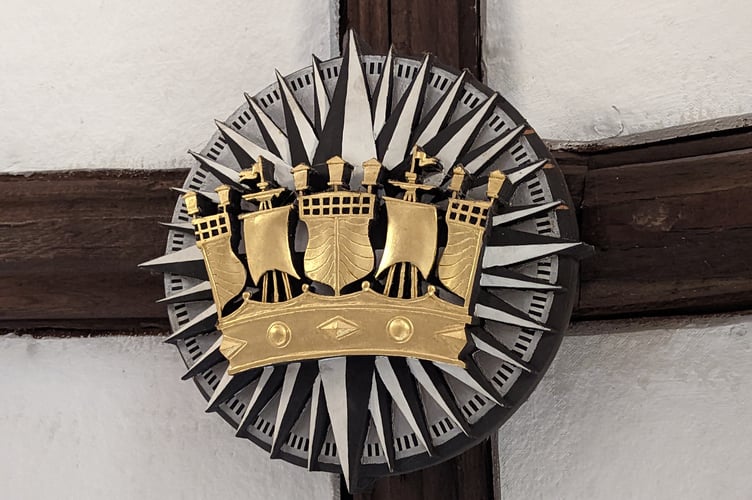
Truro Cathedral has a number of other memorials that remember Cornish sailors. Look up at the ceiling in St Mary’s Aisle, and you will see several ceiling bosses with nautical connections. One, depicting a naval crown on a compass background, honours three members of the Beatty family - dad Thomas and sons Thomas and James - all of whom served in the Royal Navy. The younger Thomas was a captain, decorated for gallantry in the Second World War.
There is a second ceiling boss in memory of Henry Morgan Lloyd, cathedral dean from 1960 to 1981. He served as a chaplain with the Royal Naval Reserve and was awarded the Distinguished Service Order (DSO) for his gallantry during a heavy attack on his ship, HMS Illustrious, in January 1941.
The future Dean Lloyd disregarded his own safety to help the large number of wounded men, and also had the bright idea of broadcasting updates on the battle from the bridge, so men working in the bowels of the ship could get a sense of what was happening. This caring act was so much appreciated by the crew, it was subsequently adopted as standard practice on other ships.
Away from the war, a third boss celebrates the lives of father-and-son vicars, Walter and Stephen Guest. Both were keen sailors, and Walter also took up boat-building as a hobby while he was a vicar at Fowey. The only problem was, he built the boat in an upstairs room, so they had to widen the vicarage window to get it out!
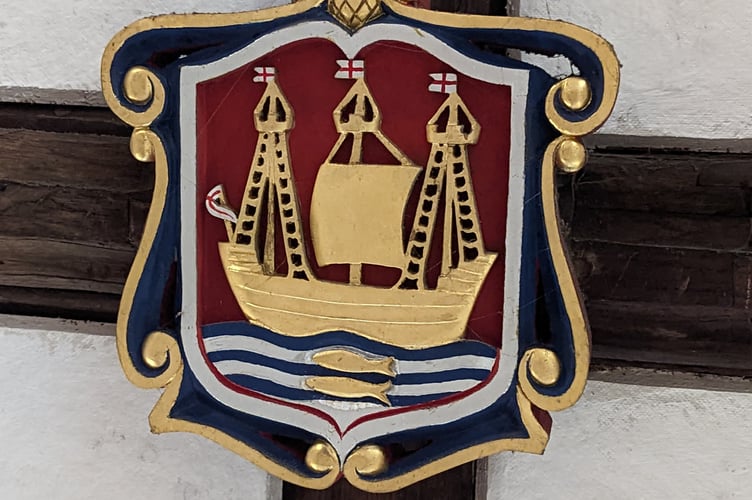
Of course, Truro Cathedral wouldn’t be complete without a boss of the old Arms of the Borough of Truro – a ship that signified Truro’s importance as a commercial port. This boss was given by local postman George Percy Webb, a keen bell-ringer who rang the joyous peals signifying the end of the war on VE Day, 1945.
From Ratty to extraordinary heroism at sea, Truro Cathedral is home to Cornwall’s stories. It is open daily, and welcomes visitors.
Comments
This article has no comments yet. Be the first to leave a comment.