
MY mother-in-law looked hangdog at lunchtime the other day. “I’ve been told off by South West Water,” she said, despondently.
She’d had an automated call the previous afternoon, telling her not to use water. None of the neighbours had had had any such call. “It must be because I water my plants and have a bath,” she added, looking suitably chastened.
I reassured her that it must have been a selective random call, as there’s no way an 86-year-old can be told off for using a watering can in her tiny garden – can there?
Then I noticed an old boss sounding off on Facebook about how he’d had the same call – at 1am. He’d jumped out of bed to answer it, assuming somebody had died, and was not impressed to hear a robotic voice informing him of rules he’d already heard from other sources.
South West Water (SWW) has since apologised for the inconvenience to customers – mostly elderly folk, presumably, because they only had landlines as point of contact and no email addresses - who complained in their droves about being aroused from slumber and scared half to death. (My inlaws wouldn’t have answered the call, as the hearing aids come out long before bedtime).
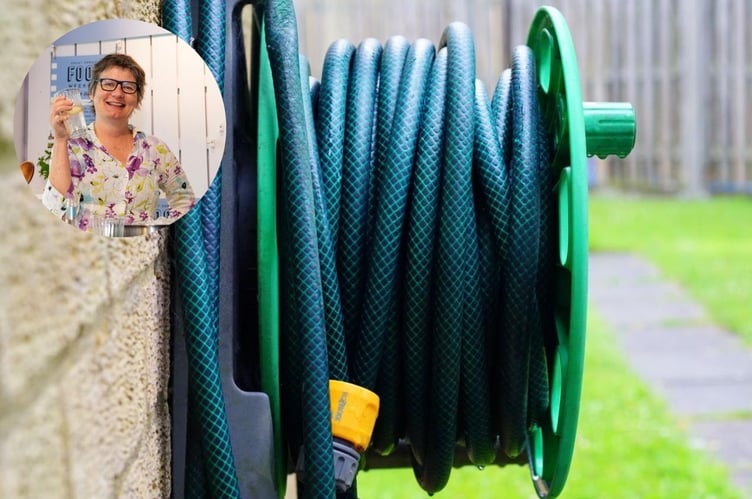
A temporary hosepipe ban came in for all SWW customers 00.01am on Saturday (August 8). To help protect water supplies, customers are asked not to use hosepipes for a variety of purposes, including watering gardens and plants, washing cars and boats, cleaning patios and driveways, and filling swimming pools, hot tubs and paddling pools.
Water can still be used as normal for drinking, flushing toilets, washing and cooking. Registered Blue Badge holders are exempt from the restrictions.
“We understand that hosepipe restrictions can be inconvenient, and this decision has not been taken lightly,” said Ian Cain, SWW’s chief executive for retail and customer markets (snappy title, Ian).
This decision, he explained, followed “one of the driest periods in recent years”, with South West rainfall well below seasonal averages. The Met Office has announced that England and Wales have provisionally recorded their driest July on record, while the Environment Agency has declared official drought in half of England, including the South West, with more potentially to come.
One and all are asked to use water wisely to protect essential supplies, by taking shorter showers, turning the tap off when brushing teeth, and running washing machines and dishwashers with full loads only. “Temporary restrictions help to protect water suppliers for homes, businesses and critical services at a time of increased demand for water,” Ian continued.



“Our teams have been working hard to protect water supplies for customers. We've maximised water production wherever possible, increased leak detection and repairs, moved water around our network and introduced a wide range of operational measures to make the best use of the water available.”
Almost immediately, social media swung into action. One woman took to Facebook to complain that a passer-by had berated her for washing her horse with a hosepipe, which apparently falls under the exception of animal welfare. It was reminiscent of the pandemic, when neighbours shopped each other for sitting outside in their gardens.
Others took to South West Water’s feeds to express their frustration at such restrictions in the light of the company’s poor performance. “People feel rightly aggrieved that a company which rewards executives for failure and pleads guilty to supplying water unfit for human consumption (Brixham) is now asking its customers not to use the very commodity that they pay through the nose for,” said one.
“I wonder how many will heed this ban, and how many will simply put two fingers up to a company they feel has betrayed them. SWW will reap the whirlwind of taking its customers and the environment for granted and they have only themselves to blame. They are a disgrace.”
“If I go into my local shop and they tell me I can only have half a chocolate bar,” said another, “I would expect (a) to pay only half as much, (b) the shops profits to be down and (c) the pay of those who work there will drop. Any news on a, b and c as far as they apply to South West Water?”
In the garden, The Eden Project suggests watering in the early morning or late evening to prevent life-giving liquid from evaporating in the sun. Longer term, it advises fixing dripping taps, installing rainwater butts and planting heat-resilient plants including lavender, sage and rosemary.
It all seems a far cry from the start of the year, when we were battling named storms and torrential downpours. While it’s easy, and justified, to berate an ineffective utility company, we do need to consider whether wetter, milder winters and parched summers are a sign of things to come, and act accordingly.
Comments
This article has no comments yet. Be the first to leave a comment.