
CORNWALL’S dependence on the Tamar crossings – and the cost paid by residents simply to live their lives – was laid bare in Parliament as MPs clashed over tolls, transport inequality and the region’s fragile connectivity.
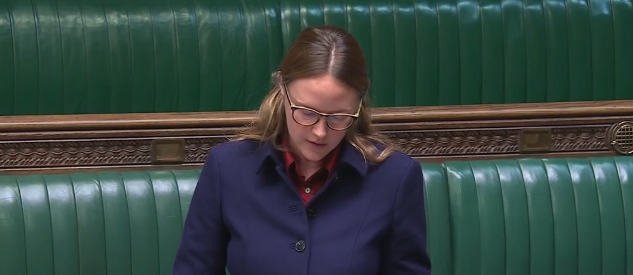
The debate secured by South East Cornwall MP Anna Gelderd, put the Tamar Bridge and Torpoint Ferry under the Westminster microscope, with calls for cheaper tolls for local people and renewed warnings that Cornwall is being left behind by a system that treats essential infrastructure as a revenue stream.
For communities in South East Cornwall, the Tamar Bridge and Torpoint Ferry are not optional routes. They are the only practical crossings link to Plymouth, Devon and key services beyond the Tamar. Around 16-million vehicles cross the bridge each year, alongside a further two million cars using the ferries, with thousands of residents relying on them daily to reach work, schools, hospitals and specialist care.
There is no realistic alternative route. For many Cornish residents and businesses, crossing the Tamar is unavoidable – and increasingly unaffordable.


Opening the debate, Ms Gelderd argued tolls have become a daily penalty on Cornwall residents, restricting access to opportunity and deepening regional inequality.
“I know just how important delivering cheaper tolls for local people is for residents in South East Cornwall,” she told MPs. “People shouldn’t be prevented from accessing essential services just because they live on the Cornish side of the Tamar.”
She said the issue goes far beyond transport policy, touching on productivity, workforce mobility, health outcomes and economic resilience in the far South West. With Cornwall already grappling with lower wages, long travel times and limited public transport, the cost of crossing the Tamar, she said, compounds existing disadvantage.
.jpg?width=752&height=500&crop=752:500)
Ms Gelderd also highlighted how the recent designation of Plymouth as a national defence growth area presents a moment for change. With defence investment set to increase traffic, skills demand and cross-border movement, she argued that tolled crossings should be recognised as enabling infrastructure, not treated as isolated local assets.
“Toll crossings are enabling infrastructure for defence, skills, productivity and resilience,” she said. “Addressing them alongside defence investment aligns local fairness with national priorities.”
The debate drew MPs from across Cornwall and Plymouth, including Fred Thomas, Noah Law, Perran Moon, Jayne Kirkham and North Cornwall MP Ben Maguire, reflecting widespread concern about the impact of the tolls across the region.
Ms Gelderd thanked local residents, campaigners and groups including the Tamar Tolls Action Group and Safe38, as well as local councillors and previous MPs, for what she described as years of united pressure to improve Cornwall’s transport links.
She also placed Tamar tolls within the broader context of Cornwall’s connectivity challenges, pointing to heavy reliance on the A38, the vulnerability of key rail routes – particularly at Dawlish – and patchy digital infrastructure that leaves communities isolated when networks fail.
Responding for the government, Lilian Greenwood, parliamentary under secretary of state for transport, acknowledged the pressures faced by people living in coastal and rural areas such as South East Cornwall and said improving transport connectivity was a priority.
“I recognise the importance of high-quality transport links and infrastructure, and the challenges people face with the cost of travel, especially those living in areas such as South East Cornwall,” she said.
Ms Greenwood outlined significant national investment in roads, buses, rail and active travel, including billions for highway maintenance, bus services and rail improvements across the South West. She also confirmed Cornwall would benefit from hundreds of millions of pounds in transport funding over the coming years.
However, on tolls, she was clear the Tamar crossings remain locally owned and operated by Cornwall Council and Plymouth City Council, funded entirely through toll income.
“There is no specific central government funding stream for the upkeep of tolled crossings such as Tamar,” she said, adding it remains government policy that river and estuarial crossings are normally funded by tolls due to their construction and maintenance costs.
She acknowledged toll increases are unpopular but said they were sometimes necessary to ensure long-term sustainability. Decisions on tolls, she stressed, sit with the Tamar Bridge and Torpoint Ferry Joint Committee under the Tamar Bridge Act 1957.
That response was met with frustration by campaigners, who argue Cornwall is being treated differently from other parts of the country.
.jpeg?width=752&height=500&crop=752:500)
Scott Slavin, vice chair of the Tamar Toll Action Group, welcomed the debate but criticised the government’s stance.
“We would like to thank all who participated in this debate, but Anna Gelderd in particular,” he said. “Both for requesting the debate in the first place, and her impassioned speech highlighting the impact the cost of these crossings has on us in the South West.”
Mr Slavin said the Minister’s response was “disappointing” and accused the government of failing to recognise how heavily Cornwall relies on the crossings.
“Local users who depend on major tolled crossings elsewhere in England already receive – or have historically received in the case of the Humber Bridge – financial support to offset the cost of that reliance,” he said. “That has never been available to users of the Tamar crossings.
“Had the issue been properly researched, it would be clear people in South East Cornwall are uniquely disadvantaged, paying daily just to access essential services, work and healthcare.
“The payment referenced from National Highways for operating the lane control system amounts to little more than a peppercorn rent when set against the true cost of maintaining the A38 trunk road as it passes over the bridge.
“We look to our MPs to keep pushing this issue forward to government, and the public to do likewise with their respective MP.”
The debate also saw North Cornwall Liberal Democrat MP Mr Maguire call for the Tamar Bridge toll to be abolished entirely as part of any future devolution deal for Cornwall.
Mr Maguire argued that a genuine devolution settlement should include a roads budget equivalent to Cornwall’s share of the strategic road network – estimated at around £95-million a year – more than enough, he said, to cover the roughly £15-million annual cost of removing the toll.
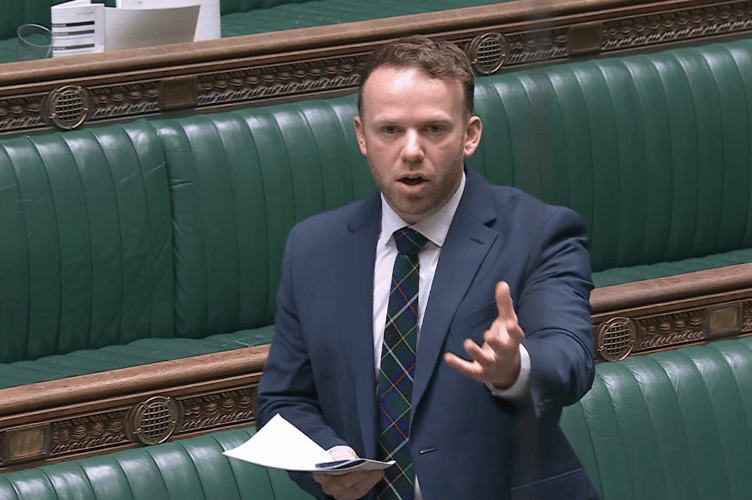
“For many of my constituents, the Tamar Bridge really is a lifeline,” he said. “To get to work, to attend vital healthcare appointments, and more. Yet despite its absolute necessity, they are still being charged every time they cross into Devon.”
He highlighted the reliance of communities in North Cornwall and surrounding areas on Derriford Hospital in Plymouth, noting limited public transport options and rising costs for fuel and parking.
“A proper Cornish devolution deal must give us fair control over roads funding like this,” Mr Maguire said. “With a budget equivalent to our share of the strategic road network, we could remove the Tamar toll cost altogether and still invest in the upgrades our roads desperately need.”
Ms Gelderd said she would continue to press the issue both locally and in Parliament, following previous success in pushing back against proposals to sharply increase TamarTag administration fees.
“I held this debate to bring these issues directly to ministers,” she said. “I’m determined to deliver cheaper tolls for local people – and this is not going away.”
For many in Cornwall, the message from the debate was clear that until the cost of crossing the Tamar is addressed, regional connectivity will remain a fault line – and residents will continue to pay the price for living on the wrong side of the river.
Comments
This article has no comments yet. Be the first to leave a comment.