
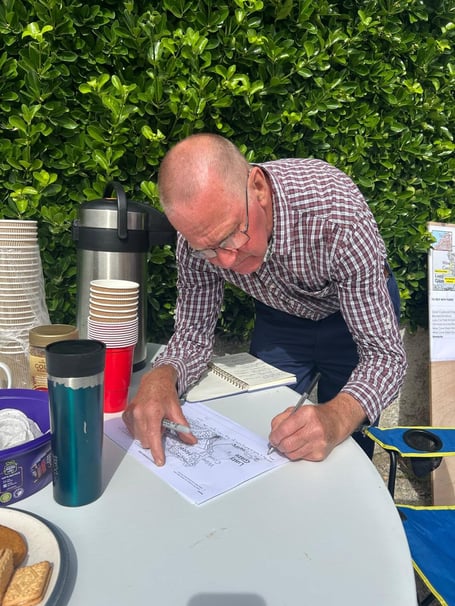
THE community has come out in force to ensure the public can enjoy strolling on a Newquay headland.
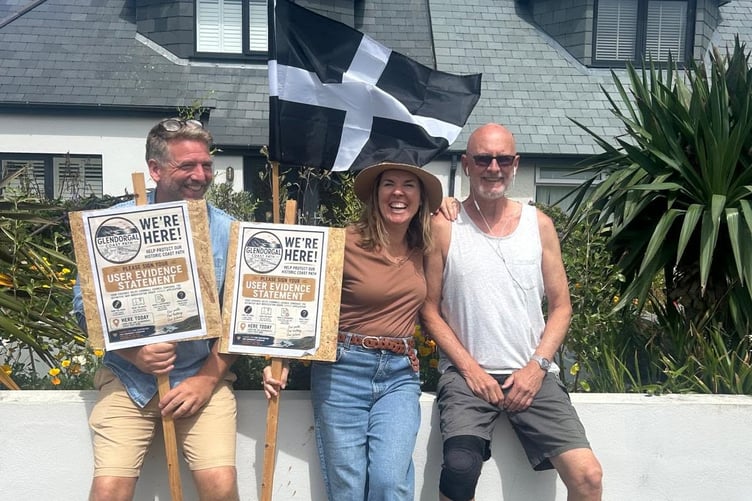
More than 100 people attended a Glendorgal Coast Path Campaign evidence gathering day after a developer blocked the route with gates ahead of a £9.5million redevelopment of the vacant Glendorgal Hotel in Lusty Glaze Road.
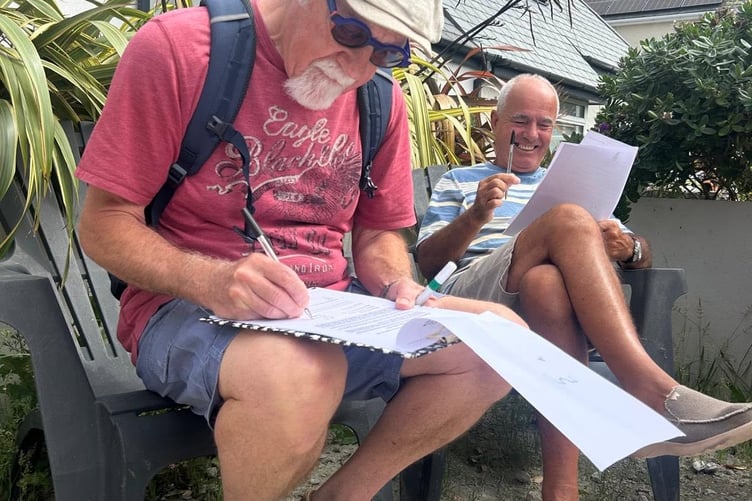
Residents, visitors and families gathered in Bonython Road to fill in formal user evidence forms as part of a definitive map modification order application being submitted to Cornwall Council, which is the legal process used to correct errors or record "lost" public rights of way.
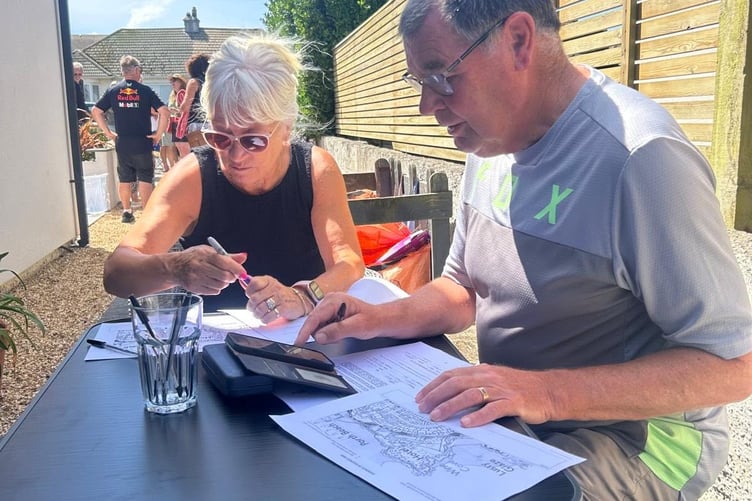


They gave evidence through written statements and photographs spanning from the late 1960s through to 2026 to help prove the route has been used for generations.
Glendorgal Coast Path Campaign believe they have a strong case to demonstrate there has been unobstructed use of the headland for more than 20 years.
The evidence gathered shows that from 112 responses 50 per cent said they used the route daily, 97.3 per cent believed the route was open to the public when they used it and 98.2 per cent stated they were never challenged, stopped or told they could not use the route.
It follows the landowner Seamus Redmond from Bluechip Hotels Limited insisting in a Facebook post there was no right of way along the path and threatened to prosecute anyone who tried to use it.
Work is underway to demolish part of the Glendorgal Hotel and construct 12 luxury holiday homes, which will include apartments, townhouses, semi-detached properties and duplex houses. Mr Redmond has upgraded the wooden barriers to a solid steel gate complete with signs warning it is private land.
He has offered locals a simple solution if they wish to keep using it then they must buy one of his new luxury holiday homes. The path has previously been a backdrop for proposals, wedding photos and the scattering of ashes, but is now off-limits.
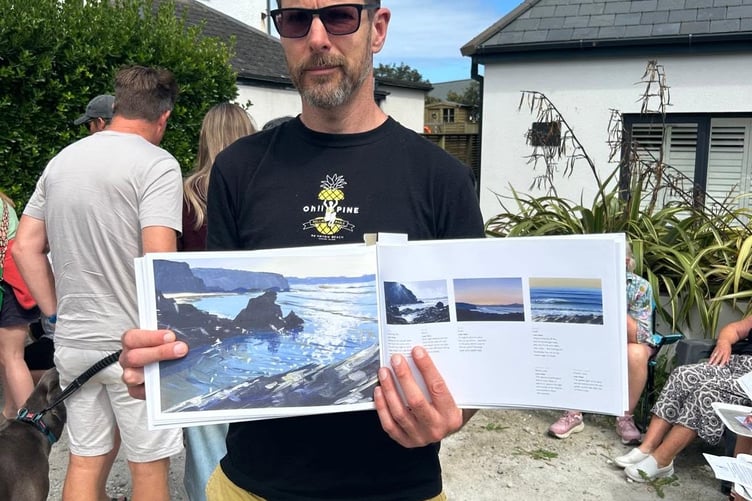
Matt Kennedy-Smith from the Glendorgal Coast Path Campaign said: “We held a community evidence gathering event, inviting people to complete official public right of way evidence forms in support of our application.
“The response exceeded all of our expectations. We printed 120 witness packs, all of which were handed out during the event, and even had to arrange emergency additional copies and email further forms to people after we ran out.
“Of those distributed over 100 completed witness evidence forms were returned on the day, with many more taken away to complete and return.
“Throughout the day we also spoke to countless local residents and visitors who shared their own memories of using the route over many decades, including one lady who has personally used it for around 70 years.
“For us, this campaign centres around three very simple principles. Firstly, this is about preserving local heritage, not attacking individuals. Our aim is simply to ensure that a historic coastal route around the Glendorgal headland is formally recognised and protected for future generations.
“We respect that there are different views, but our campaign is focused on preserving an important part of Newquay’s history and coastline.
“This has never been about targeting individuals or businesses; it is about protecting a route that means so much to so many people. Secondly, the community response has been extraordinary and mirrors what happened 150 years ago.
“As we researched the history of the route, we discovered newspaper reports from the late nineteenth century describing local people campaigning to preserve public access to exactly the same stretch of coastline.
“Around 150 years later, history appears to be repeating itself, with the people of Newquay once again coming together to protect something they clearly value. The support has been overwhelming.
“We have received witness evidence spanning several generations, together with photographs and personal stories from local families and visitors whose memories are tied to this coastline. What began as a small community campaign has grown into something much larger, bringing together people of all ages who simply want to preserve an important part of Newquay’s heritage.
“Finally, this campaign is about the future as much as it is about the past. The stories people have shared have reminded us that this route is far more than simply a footpath. It is where grandparents walked with grandchildren, where families explored the coastline together, where fishermen watched for shoals of fish, where local historians introduced visitors to the area’s Iron Age heritage, and where countless visitors experienced one of Cornwall’s most beautiful stretches of coast for the first time. Our hope is that future generations will still have the opportunity to create those same memories.
“We also believe this reflects the wider vision of improving responsible public access to Britain’s coastline. Preserving historic coastal routes encourages people to connect with nature, enjoy the outdoors responsibly and appreciate Cornwall’s remarkable heritage. In that respect, we believe our campaign is entirely consistent with the principles behind the King Charles III England coast path, which seeks to improve and safeguard public access around our coastline.
“Above all else, we’d like to thank the community. The support, kindness and willingness of people to come forward with their memories has been genuinely moving. This campaign has become about much more than establishing a route on a map. It has become about protecting a shared part of Newquay’s identity and ensuring that the memories people have treasured for generations can continue to be made by generations yet to come.
“The evidence is now being collated, and we will be submitting the definitive map modification order.
“Once done our focus will be to ensure the application is dealt with promptly as already the development is taking over the route.”
Comments
This article has no comments yet. Be the first to leave a comment.