
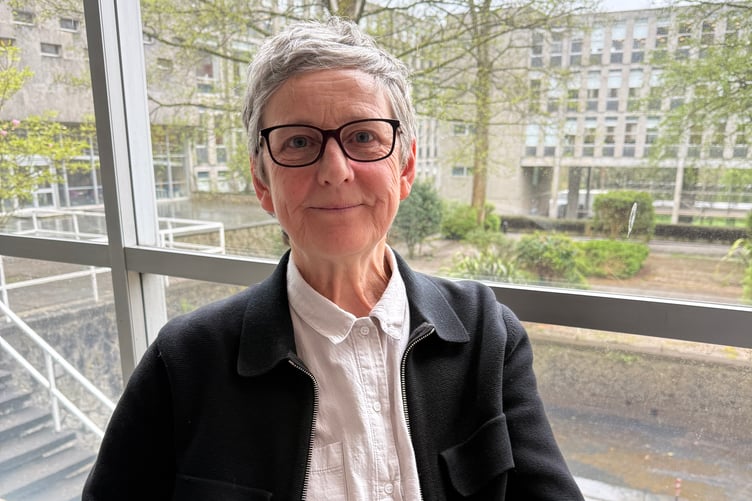
I HAVE been an organic gardener since taking on my first allotment at 18, writes Cllr Sarah Preece, divisional member for Lostwithiel and Lanreath.
Two allotments later, and now with a small patch at home, I still see myself as someone who works with nature and avoids chemicals wherever possible - not only in my garden, but across my wider life.
For that reason, the recommendation to reintroduce limited glyphosate use in maintaining Cornwall’s public spaces gave me significant pause. I was briefed on the consequences of the council’s 2013 decision to prohibit its use: pavements lifted by invasive weeds, obstructed footways and vegetation forcing its way through walls and structures. These are not minor inconveniences - they create hazards, restrict access and lead to rising long-term costs.
Since being elected, I have seen how strongly residents feel about the condition of their streets and pathways. This is not just about appearance. Neglected public spaces can increase safety risks, reduce accessibility, and impact community pride. For many, particularly those with mobility challenges, these issues are immediate and frustrating.


At the same time, I have heard the opposing view clearly. Residents in my area contacted me to prevent glyphosate use on a local green. In that case, the town council adapted its approach, and I welcomed what felt like a constructive outcome.
Against this backdrop, and with concerns being raised about the impact on biodiversity, soil and aquatic environments, and public health, the cabinet’s recommendation to reintroduce glyphosate across the highways network felt deeply uncomfortable.
The proposal was intended as a tightly controlled compromise, with mechanical methods remaining the default. However, in light of the strength of feeling expressed by residents and communities, the decision to move forward was paused. I believe this is the right step. It creates space to listen more carefully, to reflect on the concerns raised, and to ensure that any future approach is evidence based, proportionate and clearly understood. Listening must be more than a process, it must shape the outcome.
However, this moment raises a broader question: local government rarely operates in ideal conditions. Budgets are under sustained pressure while responsibilities remain unchanged. Alternatives are often labour intensive and less effective at scale, and doing nothing carries consequences, from infrastructure damage to genuine public safety risks.
As a councillor I have to take into account the multi-various views of my communities. As a cabinet member, I have a duty to maintain Cornwall’s infrastructure and to balance this alongside my personal values. Choices are rarely absolute - as someone who cares deeply about the natural environment, I ask myself - is it even possible to make the environment the singular lens through which every decision is made?
Meanwhile, I remain committed to listening and bringing local voices into the debate and to work wherever possible towards responsible, sustainable, affordable and deliverable policies. In the meantime, I will continue – as I always have – to pick up a broom and a rake and do my bit to care for the places we all share.
Comments
This article has no comments yet. Be the first to leave a comment.