
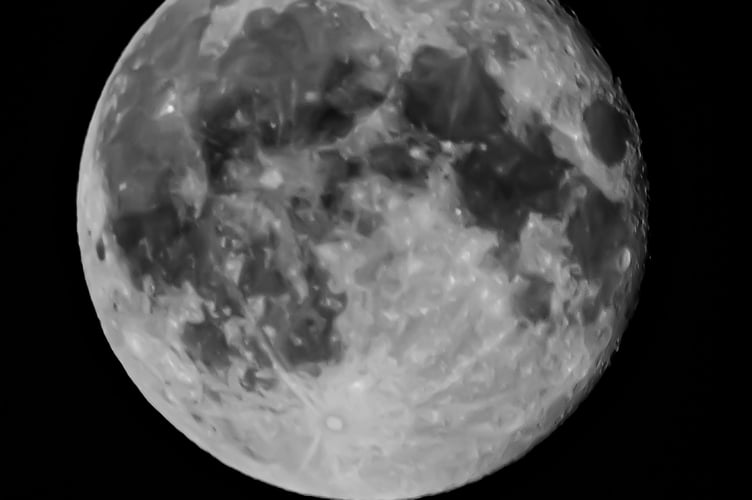
THE launch of Artemis 2 on a trip around the moon went well, and for those of us who can remember the Apollo Missions, it was very much: here we go again.
Much was made of the record-breaking greatest distance mankind has been from Earth, exceeding the Apollo 13 record. However, Apollo had no intention of flying that far. Apollo 13 was fitted with new electric motors running on 12v DC, with all 6v motors replaced save one that was overlooked in the oxygen tank. When the order came to stir the tank, the motor blew up and so did the service module.
As the crew said at the time: “We have a problem.” They couldn’t turn around and come home - they had to fly around the moon first, making best use of limited supplies. The rescue effort was the most difficult in the history of space flight.
Back to the night sky, take the opportunity to observe Orion and its attendant constellations as they prepare to slip below the western horizon before it gets properly dark. Check out the galaxies surrounding Leo, and look for the huge open star cluster Mellote 111.



.jpg?width=209&height=140&crop=209:145,smart&quality=75)
There are two full moons, on May 1 (Flower Moon) and May 31 (Blue Moon), with the remaining phases as follows: Last Quarter, May 9; New Moon, May 16; First Quarter, May 23.
As for the planets, Mercury is pretty bright as it moves from Pisces into Aries and on to Taurus; Venus starts in Taurus and moves into Gemini. Mars is close to Mercury during the month. Jupiter remains in Gemini; the other planets are not well placed this month.
Keep an eye on the constellation of the Northern Crown. Allegedly, one of its stars will go Nova in June - an invisible star will become as bright as the Pole Star for about a week.
Comments
This article has no comments yet. Be the first to leave a comment.