
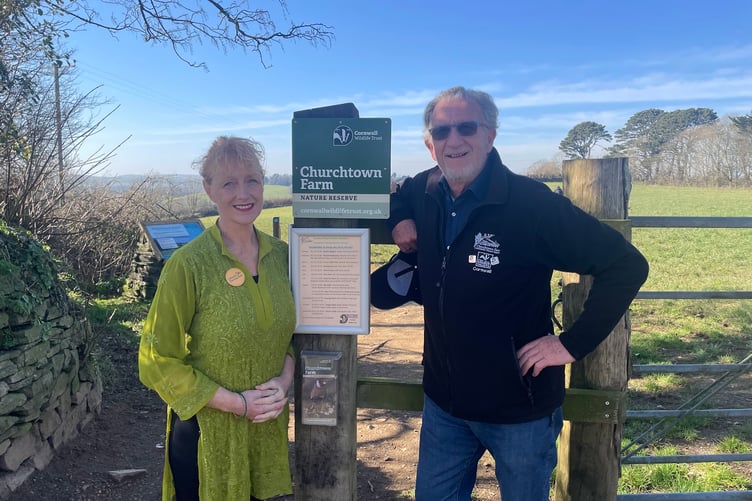
ANYONE who has watched the tide turn at Cotehele or Wacker Quay, or looked across the Lynher from Churchtown Farm will understand why this landscape matters.
We often talk about looking after places like this, but what does that actually mean in practice?
This month, Cornwall Council is considering the new Tamar Valley National Landscape Management Plan. It’s one of those documents that sits quietly in the background of public life, but in reality, it’s about something vital: how we care for one of Britain’s most remarkable river valleys.
Perhaps you’ll remember the Tamar Valley being called an Area of Outstanding Natural Beauty. In 2023, all AONBs were renamed National Landscapes, recognising that these places are not simply beautiful, but also important to our wildlife, heritage and wellbeing.



As vice chair of the Tamar Valley National Landscape Partnership, I’ve been closely involved in shaping the new Management Plan. Farmers, landowners, councils and volunteers in Cornwall and Devon bring different perspectives, all underpinned by a shared commitment to care for this remarkable landscape and the communities it supports. Cornwall Council contributes around £45,000 each year, helping to secure additional Government funding and support work across the Valley.
The protected landscape covers a surprisingly large area, spanning around 190 km² across the Cornwall and Devon border. On the Cornish side, it reaches from the slopes around Cotehele to the creeks of the Lynher and the tidal waters at Wacker Quay. Over 2,000 km of hedgerows stitch the landscape together, and nearly one fifth is covered by woodland. Together, they provide homes for wildlife, store carbon and help manage water.
Water flows through every part of the Valley’s story. The Tamar, Tavy and Lynher have carved deep valleys, sheltered creeks and wooded slopes, shaping our economy and identity for centuries. The valley sides have created a surprisingly mild microclimate where generations of growers have produced cherries, daffodils and other crops for markets far beyond the Valley.
We hold our partnership meetings at the Tamar Valley Centre in Drakewalls, set in the historic mining area that sits within the National Landscape. Looking out through the windows, I’m constantly reminded that every generation leaves its mark on this place - for better or worse.
One idea that has stayed with me as we've been shaping the plan is that no-one truly owns places like the Tamar Valley. We inherit them from previous generations and hold them in trust for those who come after us. That feels very close to a core Liberal
Democrat belief – that environmental responsibility is not somebody else’s job. It is something each generation must take seriously, working together through local communities and local partnerships.
The Tamar Valley has shaped our home for centuries. The new management plan sets out a shared vision for the next five years, but its real purpose is about making sure future generations inherit a Tamar Valley that is not only protected, but thriving.
After all, we are only borrowing it from the future.
Comments
This article has no comments yet. Be the first to leave a comment.