
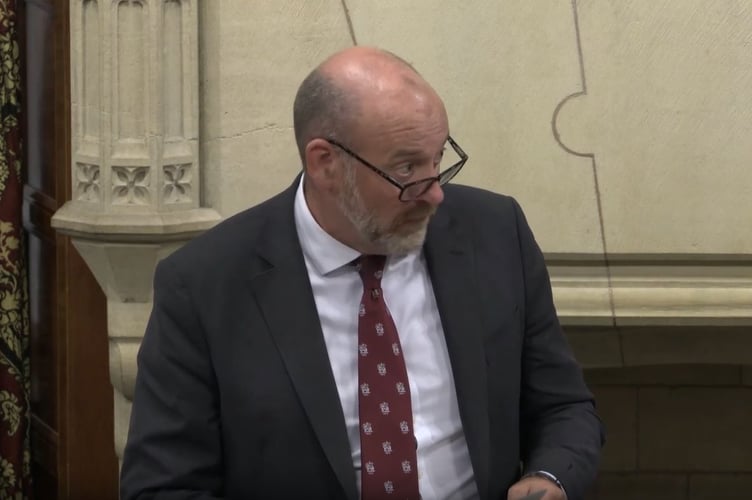
AS a member of the Labour Rural Research Group (LRRG), I work with 44 other Labour colleagues to lobby government to support the farming community.
Working in conjunction with the National Union of Farmers, our group was widely credited with helping to deliver the change in the government’s position on the Farming Inheritance Tax that removed thousands of small family farms from liability.
We have been pressuring government since then to focus on farming profitability and we were delighted last week when DEFRA Secretary, Emma Reynolds, published the Farming Roadmap setting a clear direction for profitable, productive, sustainable and resilient farming.
This marks a decisive break from decades of short-term, year-to-year policymaking. For the first time, farming is being backed by a clear long-term plan that looks beyond the next harvest to the future of the sector. It brings together existing strategies affecting farming into one framework, aligning policies on land use, environment, climate, animal health and food into one coherent approach. It makes an explicit commitment, for the first time, that domestic food production will be maintained at least at current levels in England.




This will be achieved through targeted land use change, protecting the most productive land for food. Sustainable productivity growth and efficiency improvements for example through healthier soils and access to technology and skills – will offset the impact of land use change.
The Farming and Food Partnership Board will bring government and industry together to strengthen supply chains and open clearer routes to market. Sector Growth Plans for horticulture and poultry are already in development. The Roadmap also defines the continued role of Environmental Land Management (ELM) schemes, which currently support the transition and will become more targeted over time. It commits to bringing at least 60 per cent of agricultural soil under sustainable management by 2030.
Soil health is a core productivity and resilience tool, improving yields, nutrient efficiency, drought tolerance and flood resilience. In terms of farming business resilience, global instability is not going away. The pressure on fertiliser and fuel prices underlines why we need farming systems that are less exposed to global shocks, while climate change is reshaping growing conditions and technology is moving fast.
We will invest in the skills and people the sector needs, supporting training and new entrants so that the hard-earned knowledge of farmers is passed down to the next generation.
The roadmap also sets out how we will give tenant farmers the confidence to invest and plan for the long term – through the reformed Farm Tenancy Forum, the Tenant Farming Commissioner and action to support longer-term tenancies. It sets out how ELM schemes will evolve, from its current role in supporting transition, to, over time, becoming more spatially targeted and focused on public goods.
The roadmap also sets out how co-operatives and mutual models are increasingly central to the future farming system, with a much larger role over time in enabling collective purchasing, shared services and joint investment. These models lower costs, spread risk and strengthen farm returns.
Comments
We've recently changed our login process. If you have an account for commenting, you will need to re-register on the login window.
This article has no comments yet. Be the first to leave a comment.