
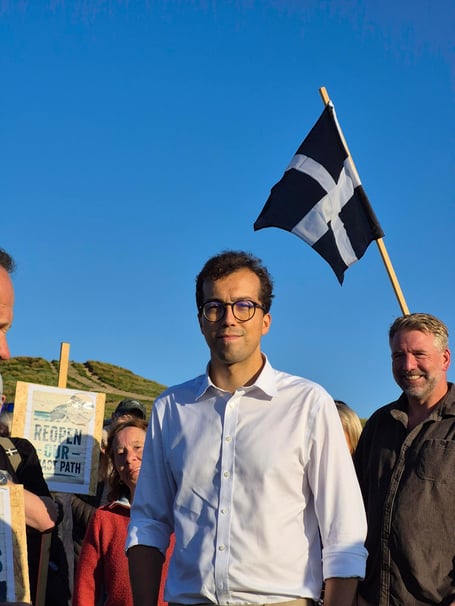
WHEN I backed our now PM upon his selection in Makerfield, I did so on one key condition: he would work with us to deliver a Cornish devolution deal that works for us.
Andy [Burnham]'s trip across the Tamar within his first month as Prime Minister showcased his very real commitment to, and affection for, the Duchy - not just for our pasties, which I note the leader of Cornwall Council provided a hearty supply of. In his first very address to Parliament, he reaffirmed that commitment. Now, he has tasked Number 10 North to work with myself and fellow Cornish MPs – across party lines, how we’ve always done things in Cornwall – to deliver a devolution deal.
The people of Cornwall know more about what devolution means than most, however, we do still have some work to do demystifying what it means in practice for those new to the party.
Cornwall’s economic growth potential is undisputed across the political spectrum. There’s broad cross-party alignment on the focus of the Good Growth Plan, introduced in 2024 and, following furious lobbying from myself and colleagues, we have successfully transitioned to a more investment-led model of economic development, in the form of the Kernow Industrial Growth Fund (KIGF). KIGF is injecting locally-managed capital – which it expects to see returned to taxpayers’ coffers – into Cornwall's most promising sectors: critical minerals, marine industries, renewable energy and tourism. This is laying the foundations for longterm prosperity, including developing local supply chains to create well-paying jobs and keep them onshore – this side of the Tamar. Further devolutionary powers of things like post-16 skills policy to align local college curricula with local employers would sustain and accelerate our progress, giving us more tools to spread good growth in every Cornish postcode.
Having rightfully recognised Cornwall as a "jewel in the Britain's crown”, Andy expressed what I have long said is the key ingredient needed to unlock a new era of reindustrialisation: transport infrastructure. Cornwall already has the innovative businesses and critical minerals needed for reindustrialisation, but a well-crafted devolution deal could give us the connectivity needed to help realise our full economic potential.
I was elected on a pledge to tackle our Cornish housing crisis, and devolution also means expanding Cornwall's capacity to deliver much-needed housing that local people can actually afford.
Arguably the most distinctive aspect of Cornwall's devolution ambition has always been that devolution is more than just economics. I have been clear that any devolution deal must reflect our unique geography, history, culture and language. A one-size-fits-all model designed for England's metropolitan areas will neither be sufficient, appropriate, or acceptable. Any deal must be bespoke to Cornwall, reflecting its National Minority Status, distinctive heritage, and protection of our language under the Council of Europe convention.



Ultimately, devolution is an opportunity for Cornwall: for our industry and local economy, our transport, our homes, and our cultural heritage. But most importantly, devolution gives us a greater say in shaping our own strategic destiny. After all, no one understands Cornwall's interests better than we do.
Comments
This article has no comments yet. Be the first to leave a comment.