
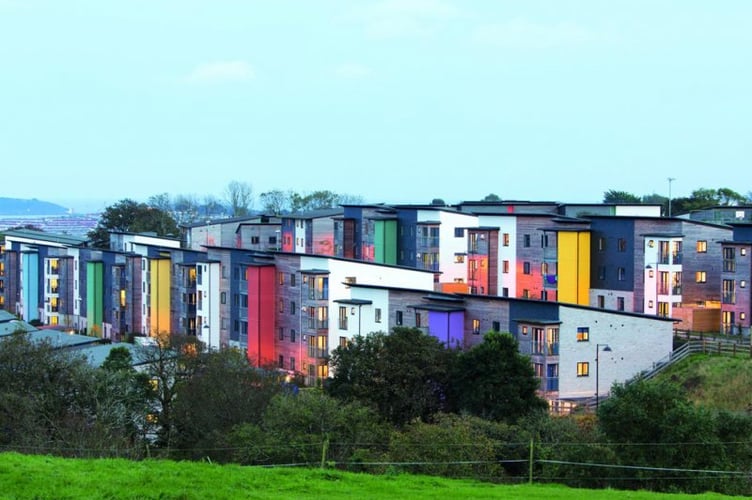
Proposals to build a huge student village, featuring almost 2,000 beds as well as shopping and leisure facilities on the outskirts of Penryn, hit a stumbling block when councillors refused elements of the plan due to ecological fears.
The Halo Village development, previously known as Penvose, near the Penryn Campus of Falmouth and Exeter universities was given outline permission in 2018 despite planning officers recommending refusal.
The 20 hectare site would see 1,858 beds for students, a park and ride facility, over 600 parking spaces, a 48-bed budget hotel, a pub, restaurant, café and hot food takeaway, a shopping parade, doctor’s surgery, children’s day nursery and sports facilities, including gym, yoga studio.
Reserved matters on appearance, landscaping, layout and scale came before Cornwall Council’s strategic planning committee last Thursday, which heard a lot of opposition to the scheme from members themselves, parish councils and a neighbour of the site who fears his business will be ruined.



Councillors were warned that any highway safety concerns were already addressed when outline permission was granted in 2018, and that matter was simply to seek consent for landscaping, ecology and design. That didn’t stop many councillors addressing road issues and questioning the need for such a development in the “different world we now live in” following the covid pandemic.
Many questioned the safety of a proposed cycle/footpath along the A39 which would run from the site to the Penryn Campus.
Ponsanooth parish councillor Lorna Jackson said: “It is difficult to put into a three-minute speech how objectionable this application is. A rural parish faced with a 40-acre island of concrete and Tarmac, which would be one of the largest developments in Cornwall and is totally out of any planning context.
“Of course we accept that planning permission was granted in outline, but that does not mean this application as now presented should be passed by default. There are many aspects to this which create harm and which can be reasons for refusal. You can see in the report that there are outstanding objections from landscape, ecology and the police in terms of site safety. It is not possible to design these concerns out.
The committee voted in favour of refusal on the grounds that “design and layout would lead to the fragmentation of ecologically important hedges” with light spill having an impact on the bat population and ecological value of the site.
Comments
This article has no comments yet. Be the first to leave a comment.