
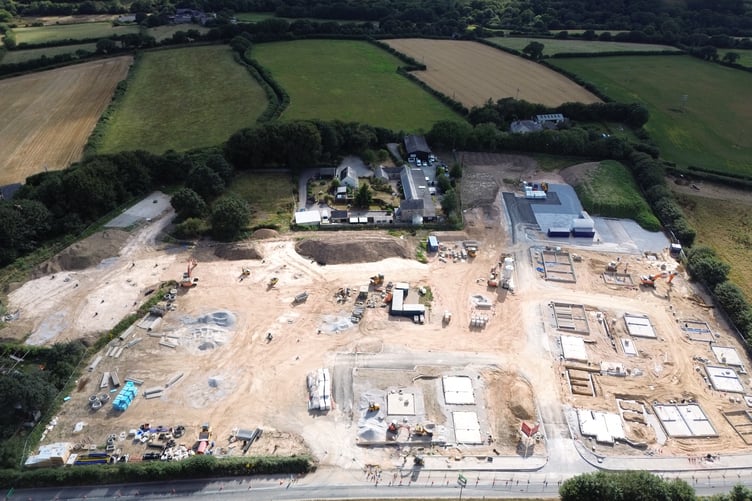
THE Cornwall branch of the Campaign for the Protection of Rural England (CPRE) have added their weight to calls for Cornwall Council to refuse a bid by a developer to be removed of their obligations to pay nearly £350,000 in infrastructure payments.
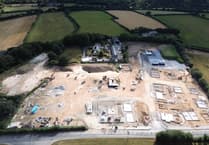
Wainhomes South West Ltd obtained planning permission in March 2026 for the construction of 58 open market dwellings on land to the east of Pandarosa Farm on St Lawrence Road, St Lawrence, Bodmin.
It is seeking an amendment to the planning obligation agreed in a Section 106 agreement on March 20, 2026 that would see it removed from an agreement to pay £348,798 towards education places and healthcare infrastructure.
The developer has cited unviability of the development, which is presently under construction if it is required to make the payments, submitting a document from Vickery Holman that stated that with the payments removed it anticipates a profit of just over 13 percent, whereas with the payments retained it drops to 10 per cent.
While both figures are under the 17.5 per cent profit that it states are necessary for the scheme to be considered ‘viable’, the application by Wainhomes states that if it was excused of the infrastructure payments, it would lessen the amount the project was ‘unviable’ by.
Mrs Paula Johnston, on behalf of the Cornwall CPRE, stated in their objection: “CPRE Cornwall objects to this application and asks that the Council refuse it and determine that the planning obligation shall continue to have effect without modification. “The approved scheme includes no affordable housing whatsoever. The Planning Statement is explicit that the scheme is 100 per cent open market, and that the sole justification for providing no affordable housing was viability, based on the developer transferring land to the Council for a new primary school which may never be built. The community has therefore already given up all affordable housing on this allocated site.
“The developer now returns, five months later, to ask that the infrastructure contributions be removed as well. Having accepted zero affordable homes, the public is now asked to accept zero infrastructure funding. That is not a reasonable request.”
Cornwall CPRE said that in its view, with the application being made less than five months after approval, the Town and Country Planning Act 1990 permits the council is free to decline it, and in its view, should.
They added: “The test under section 106A is deliberately narrow. It is not a fresh assessment of the whole scheme. The question is whether the obligation still serves a useful purpose. If it does, the Council may determine that it shall continue without modification.
“Each of these contributions plainly still serves a useful purpose, because each is tied to a specific and continuing need. Fifty-eight new homes will still add pupils to Bodmin College, patients to the Bosvena Health practice, and traffic to the Bodmin network. That need has not changed since March. The obligations therefore still serve the purposes for which they were created and there is no proper basis to discharge them.”



The CPRE also stated that there had been no evidence that other methods, such as alternative housing mixes, phasing strategies, tenure variations, reductions in landowner premiums or alternative calculation methods and cost inflation scenarios had been considered in the viability report. The campaign group continued: “In this context, "unviable" does not mean the scheme loses money. It means the profit would fall below 17.5 per cent.
“So, the developer is not facing a loss. It is facing a slightly lower profit than it would like. That is not a proper reason to remove infrastructure funding that the community needs. Three further facts undermine the claim.
“First, the scheme is already under construction, conditions have been discharged, and the developer is actively delivering its other obligations under this very agreement, including submitting its open space plans for approval. A developer building the scheme and working the agreement has plainly decided it is worth building.
“Second, the contributions are phased to occupation, with 25 per cent, 50 per cent and 100 per cent falling due as homes are occupied and sold, so they are paid out of the revenue the sales generate, not up front.
“Third, permission was granted only five months ago; the developer knew of these contributions and its own costs when it chose to proceed, and national guidance is clear that the price paid for land is never a justification for failing to meet policy requirements. “This scheme comprises 58 open-market homes with no affordable housing.
“The Council's own CIL Liability Notice for this permission assesses the Community Infrastructure Levy at £0.00, because this is an allocated strategic site with a nil CIL rate. Section 106 is therefore the only way this development contributes financially to infrastructure.
“If these contributions are removed, a 58-home scheme on a strategic allocation will contribute nothing towards secondary school places, primary health care, or the town's transport network. The need does not go away. It is simply passed to the public, or the college, the surgery, and the highway network, leaving communities to bear the cost of unmitigated development impacts.
“If a developer can sign an agreement, begin building, and then apply a few months later to remove its contributions on viability grounds, the obligation is worth very little.
“Approval here would tell every developer in Cornwall that infrastructure contributions can be renegotiated away soon after consent. That would undermine the plan-led system and the Council's ability to secure infrastructure from development. This is a serious concern and a strong reason to refuse.”
Wainhomes have been approached for further comment.
Find out about planning applications that affect you by visiting the Public Notice Portal.
 Bodmin Town Council demands Pandarosa funding removal bid resistance
 North Cornwall MP slams developer for ditching £348k Bodmin infrastructure pledge
 Bodmin Town Council slam bid to remove Pandarosa infrastructure contribution
- Wainhomes seeks removal of Bodmin £348k contribution over viability concerns
 Land set aside for new school in Bodmin might never be built
- Wainhomes confirms details of upcoming Bodmin housing development
Comments
We've recently changed our login process. If you have an account for commenting, you will need to re-register on the login window.
This article has no comments yet. Be the first to leave a comment.