
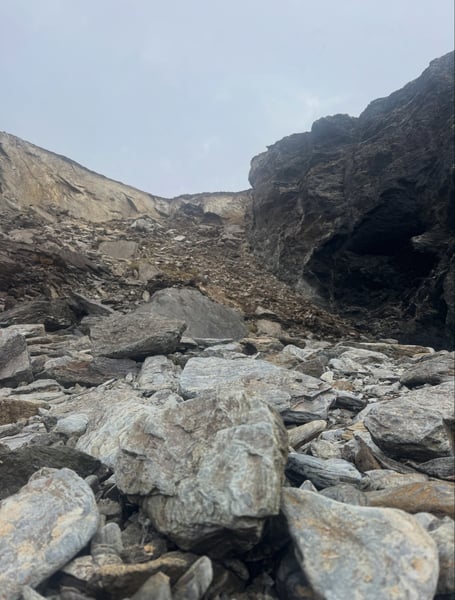
MEMBERS of an organisation in Holywell Bay have high hopes the holy well has been preserved following the major cliff collapse.
Holywell Surf Life Saving Club believes the top section of the cliff collapsed smothering the front of the cave sometime overnight Saturday (August 30).
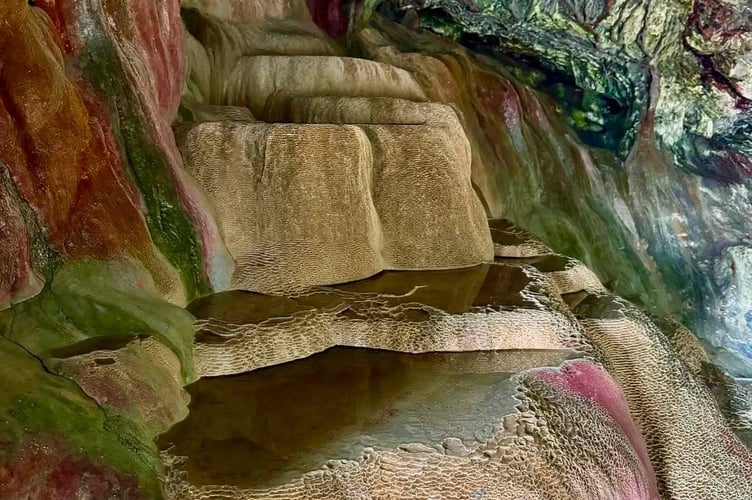
The cave, also known as St Cuthbert’s Cave or the Pink Cave, has become a landmark as a natural spring drips from the roof, creating colourful red, blue, and white mineral deposits and stepped limestone pools. People for centuries have made pilgrimages to the sacred spring water to heal sick family members.
Many people from far and wide now hope the holy well is just hidden from view rather than being destroyed following the cave becoming inaccessible after the huge rockfall. But people are predicting it could take years for the debris to be cleared before it is known whether the holy well is still intact.
Holywell Bay Surf Life Saving Club said: “At least half of our club members are geologists…the armchair variety. The majority of these qualified people believe the top section of the cliff collapsed smothering the front of the cave, evidenced by hearsay of several large cracks appearing in the ground above the cave in the preceding weeks.
“We’ve examined the photos, stood pensively on the beach, chatted at length and wholeheartedly believe the holy well has been preserved far behind the rockfall.
“We must point out that our deep-rooted love for the well and lack of any formal training or qualifications in geology or erosion may slightly impair our belief.
“What we do know for sure is the photographs don’t accurately convey the scale of the fall. The amount and size of the rock debris is immense. You really do have to see it to believe it, so please don’t comment that we could all just pop down there and chuck a few rocks out the way. “Luckily, it’s still a must-see beach in Cornwall and if you turn your back on the sadness and debris the view is still wonderful.
“Our namesake, the holy well was more than a beautiful and unique geological rock formation. For hundreds of years the legend of the holy well attracted thousands of medieval pilgrims who journeyed to the Cornish coast seeking miracles.


-RNLI-lifeguards-Elodie-Sykes-Louis-Harris-and-Harry-Barea.png?width=209&height=140&crop=209:145,smart&quality=75)
“It seeped with history and purpose. It provoked awe and wonder. And most of all it gave us our identity; Holywell Bay. We wandered there to marvel at low tides, swam and paddled there at high tides.
“We clambered up its vibrant basins and drank from it. We sat beneath the stalactite roof over colourful mineral deposits and just breathed deeply. We filled it with candlelight to amaze our nippers.
“We scooped water out to share at summer solstice celebrations. We ventured there to share its beauty with family and friends. And for all those memories we are thankful, how lucky we were. “And maybe, just maybe, the holy well still exists intact, water peacefully dripping until next time it’s uncovered.”
Comments
We've recently changed our login process. If you have an account for commenting, you will need to re-register on the login window.
This article has no comments yet. Be the first to leave a comment.