
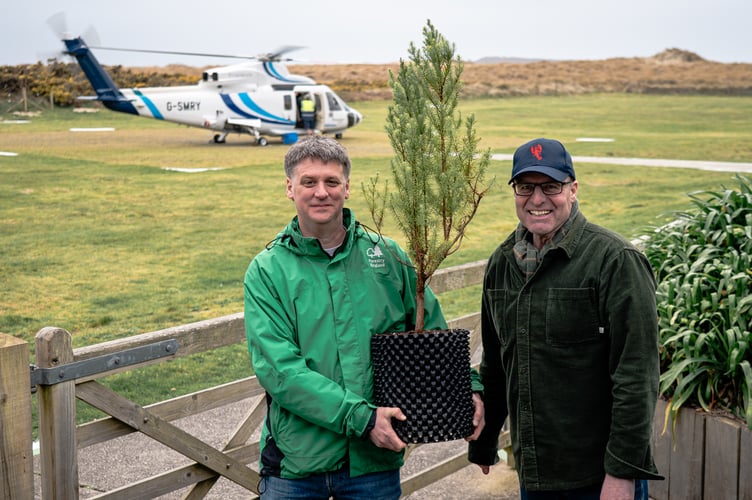
A rare and critically endangered Mulanje cedar tree (Widdringtonia whytei) was flown to the Scilly island of Tresco on Monday [March 16].
The young tree was accompanied on the Penzance Helicopters flight by Dan Luscombe, curator of Forestry England’s Bedgebury National Pinetum, to be planted in collaboration with Tresco’s garden team.
The planting marked an important step in both international plant conservation and Tresco’s island-wide replanting and restoration programme following Storm Goretti.
Native to Mount Mulanje in Malawi, the Mulanje cedar is a remarkable but tragic example of how overexploitation can drive a species to the brink. While it was once prized for its durable and fragrant timber, decades of unsustainable harvesting - combined with illegal logging, fires and land pressure – resulted in the species becoming the first tree in Africa to be declared commercially extinct in 2018.
.jpg?width=209&height=140&crop=209:145,smart&quality=75)


Today, there are no known mature, seed-producing Mulanje cedars remaining in the wild. However, conservationists were able to preserve a small quantity of seed in seed banks in Malawi and the UK.
The young tree brought to Tresco was grown from stored seed as part of Forestry England’s ex situ conifer conservation work at Bedgebury. While the Mulanje cedar is sensitive to frost and cannot tolerate prolonged cold, Tresco’s mild maritime climate offers one of the few UK locations where the species could successfully grow outdoors. “It represents an important effort to safeguard living genetic material for the future,” said Mr Luscombe.
“This is a wonderful opportunity for Tresco to work with Forestry England to help conserve a critically endangered tree, given the unique nature of our island’s plant collection,” added Tresco head of estate Alasdair Moore. “It’s also a joyful moment for us to focus on planting trees and restoring our woodland in the wake of Storm Goretti.”
Comments
This article has no comments yet. Be the first to leave a comment.