
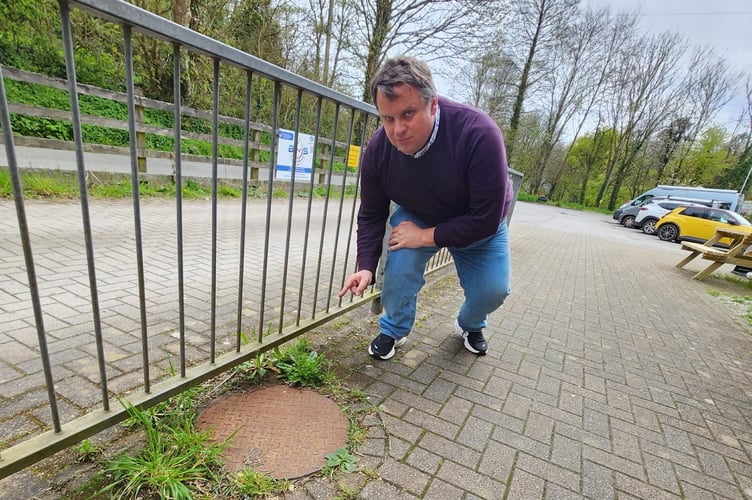
THERE is growing anger among councillors, MPs, environmental bodies and healthcare professionals at Cornwall Council’s decision to reintroduce chemical weed treatment using glyphosate, which is considered to be a significant risk to health and ecology.
Councillors across Cornwall have condemned the move, describing it as “a complete U-turn” on the decision to stop the use of glyphosate ten years ago. They are demanding the council pauses the start of its chemical weedkilling programme until a “meaningful” public consultation process has been completed.
Town and parish councils had until Monday (April 20) to opt out, which Cornwall Council itself notes is “short notice”.
A public demonstration against the move is planned to take place outside County Hall/Lys Kernow in Truro, before a full meeting of Cornwall Council next Tuesday (April 21) which will discuss a motion against the cabinet’s decision.
.JPG?width=209&height=140&crop=209:145,smart&quality=75)


.jpeg?width=209&height=140&crop=209:145,smart&quality=75)
Two petitions are currently underway, one by Redruth Town Council and another led by environmental campaigner Tom Scott on change.org, which has already exceeded 5,400 signatures.
A letter was also due to be handed in at County Hall for the attention of council leader Cllr Leigh Frost, signed by more than 200 healthcare professionals and allied services, including more than 70 doctors currently working across the NHS in Cornwall from general practice to psychiatry and paramedics. The letter highlights the association between glyphosate exposure and various health issues, including carcinogenicity, liver disease, birth and neurological defects.
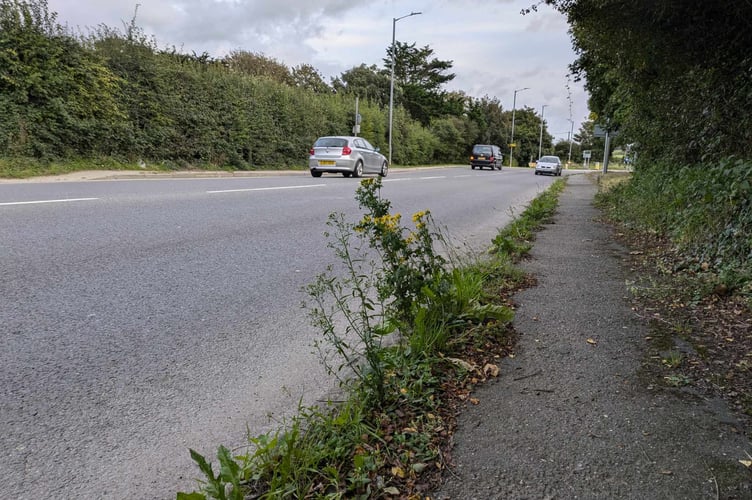
Town and parish councils were sent a letter by Cornwall Council at the end of March stating that its Liberal Democrat/Independent cabinet had instructed Cornwall Highways & Environment Services to begin a programme of targeted weed treatment and public realm improvements across Cornwall, tidying up verges, kerbsides, pavements and carriageway edges.
A council spokesperson confirmed the programme would see a £5 million investment over the next three years, with the use of a diluted glyphosate mix on all adopted highways within urban areas.
The councils were told: “This decision follows evidence of declining standards since routine weed management stopped in 2013, resulting in increasing complaints, narrowing footways, damaged surfaces and perceived reduced community pride.”
The letter added that the default position is that all Cornwall Council-maintained areas are opted in, with an opt-out option available for that wish to manage their areas without chemical treatment, “provided they can meet the required standards and protect asset integrity”.
Glyphosate, the active ingredient in many weedkillers, is a subject of major debate, with the International Agency for Research on Cancer (IARC) classifying it as “probably carcinogenic to humans”. While industry studies often point to low, short-term toxicity, it has been linked to cancer risks, eye/skin irritation and potential endocrine disruption.
Cornwall Council stopped using glyphosate and neonicotinoids in 2016 on all public-access land it owns/manages, except for controlling invasive plants or preventing asset risk. Its cabinet now favours reintroducing chemical herbicides, including glyphosate, up to three times a year on the highway network to reduce weed growth “for a short period to bring sites back to a good standard”.
The council has stressed that it is not a return to blanket weed spraying, but it will use a diluted glyphosate mix which is “widely used and HSE-approved for safe use on public highways and in amenity areas”. It says it will only treat within urban limits, within reduced speed limits, and only on roads which have weeds present.
Cllr Dan Rogerson, Cornwall Council’s Lib Dem cabinet member for transport, posted a short video on the authority’s Facebook feed to explain its rationale.
“As a local councillor, I get a huge number of complaints about weeds that are growing in the kerbline and footway, making things look unsightly,” he said. “In the past three years, the council has had around 2,000 of these and we’ll get more as we get into growing season.
“In addition to how it looks and how people feel about their areas being tidy and well cared for, there’s also the issue that it attracts litter, and the damage it can do: if weeds are growing unabated, they are getting into the pavement and the kerbline, which will ultimately damage the footway and cause trip hazards.
“We’re looking to improve things by using a controlled drop application method, using glyphosates which are commonly on sale in supermarkets and DIY shops for use at home, in a one-to-40-part dilution with water – so very dilute - and no drift application or broad spraying. That approach seems to work very well.”
Cllr Rogerson explained that other councils had tried vinegar, burning and mechanical removal, with the latter option in particular proving “very time-consuming” and requiring repeated attempts. “Controlled drop application is more consistent,” he said. “We think this option is something we should have in our arsenal to manage the problem.
“I understand people will have concerns about the use of chemicals in the environment, but a very diluted system and drop application method is a much safer way of doing things. We are talking to town and parish councils and the public about how we go about it, and will keep it under review.”
Criticism was swift and widespread. Dr Robert Cook, GP partner at Bodriggy Health Centre in Hayle, will hand over a letter from healthcare professionals on Monday morning. “It’s fair to say there is widespread disappointment and surprise at this decision,” he said. “What Cornwall Council is saying about the health risks, namely that controlled drop application of a dilute solution is safe, is not backed up by evidence.
“In contrast, there is data to say repeated exposure to glyphosates has significant health risks. What’s more, because the glyphosates will be applied to kerbsides in housing estates, children will be affected most of all, and will have the longest time to accumulate exposure and suffer the consequences.”
Newquay Town Council was due to discuss the weed treatment plan at an extraordinary environment and facilities meeting on Thursday night. Town mayor Cllr Drew Creek, who is a Green Party Cornwall councillor for Trenance, has proposed a motion against Cornwall Council cabinet’s decision, to be discussed at the council’s next full meeting on Tuesday (April 21).
The motion, which is supported by Conservative, Green, Mebyon Kernow and Cornish Independent Non-aligned councillors, asks the cabinet to “recognise that the decision to reintroduce chemical weed treatment using glyphosate represents a significant policy reversal with ecological, public health and democratic implications for communities across Cornwall”.
It also asks cabinet members to “recognise the wholly inadequate three-week opt out window provided to parish and town councils which included Easter”, and calls for a pause on the start of chemical weed treatment currently scheduled for May 2026 until a meaningful public consultation process has been completed”.
Cllr Creek told the Voice Cornwall Council cabinet was “putting a gun to the head” of town and parish councils by threatening to stop undertaking “enhanced environmental maintenance” of those who challenged its proposal.
“If the town council does decide to opt out, it could receive £343/km for weed treatment from Cornwall Council, which would be £20,000 a year for Newquay,” he said. “But they say if we do opt out of the management of vegetation on the road network, we will also lose the ability of Cornwall Council and Cormac managing our verges, so it’s a coercive opt-out.”
At its recent full council meeting, Redruth Town Council resolved to start a petition urging Cornwall Council to undertake a number of actions, and called on all town and parish councils throughout the Duchy to back it. If it receives 5,000 signatures, the petition - signed by Redruth mayor Cllr Alison Biscoe and Redruth Town Council clerk Charlotte Williams - will be submitted to Cornwall Council for inclusion on a future agenda for debate.
Redruth Town Council wants the council to accept its statutory responsibility “to maintain all highways controlled areas … in line with their declaration of climate emergency, using non glyphosate methods of weed management”, and to “fully acknowledge the noxious and harmful long-term effects of using glyphosate in any form on the eco-system, human, animal and environmental health of Cornwall”.
If the above action is not agreed, the town council wants Cornwall Council to delay the date for a decision by town and parish councils to opt out until the end of May on the grounds that the short notice period given “has not enabled the sector sufficient quality time to explore and cost alternative methods, including collaborative working between councils and potential sharing of equipment schemes to facilitate positive change”.
Cllr James Mustoe (Mevagissey & St Austell Bay, Conservative) supported the successful 2016 campaign, led by the late Liberal Democrat councillor Edwina Hannford, to make Cornwall Council a “bee-friendly local authority”. As a result, the council committed to cease “the use of neonicotinoids and glyphosate on all public access land”.
Cllr Mustoe described the new policy as “a complete U-turn”, adding: “What the council is now proposing is an absolute reversal of everything it said it was going to do. I don’t have a problem with an ambition to weed and make public realm less untidy, but there are ways of doing that without introducing harmful chemicals into our environment.
“I think it’s a decision they’ve rushed out and haven’t considered the implications.”
Cllr Kate Ewert, Labour councillor for the Rame Peninsula and St Germans division of Cornwall Councill, asked for residents to leave comments or email her with their opinions, and expressed “real concerns … about the way this decision has been handled.
“Town and parish councils were given just a few weeks to decide whether to opt in or out of glyphosate spraying in their areas. That simply isn’t enough time to meet and make an informed decision.
“Opting out would also mean those councils becoming responsible for clearing weeds themselves, at significant cost and at a point in the year when budgets have already been set and agreed. This effectively leaves town and parish councils with little realistic choice but to accept the use of glyphosate for at least the next year. That does not feel like genuine partnership working with our local communities.”

Cllr Ewert added: “Most of the concerns raised with me about the public realm relate to the length of grass on roadside verges, yet there is no plan to change how verges are managed as part of this proposal. I would much rather see the £5 million set aside for ‘public realm improvements’ invested in better verge management instead.”
The motion to full council adds that public concerns on the use of glyphosate are well-known, with several town and parish councils resolving to ban its use. Wadebridge Town Council is extolled in the Nature Recovery Strategy for its decision in 2016 to become a glyphosate-free town; Bude, Newquay and Perranporth followed suit.
A report to full council cites human epidemiological studies from March 2026 which have definitively linked glyphosate use/exposure with development of non-Hodgkin lymphoma, and claims the use of glyphosate in public places is banned in France, Germany and Italy, with total bans on its use in Mexico and Vietnam.
“The UK government has licensed glyphosate only until December 2026 pending results of research by the Health and Safety Executive,” the report added.
Cornwall Wildlife Trust raised “significant concerns about the potential impacts on biodiversity and the apparent conflict with the Cornwall & Isles of Scilly Nature Recovery Strategy”, and asked Cornwall Council to delay the reintroduction of glyphosate, giving town and parish councils more time to opt out.
Noah Law, Labour MP for St Austell and Newquay, posted a video on Facebook saying: “Cornwall Council, in their clearly infinite galaxy-brained wisdom, are trying to reintroduce carcinogenic toxins back into their weed clearing schedule.
“We all know Cornwall Council has a problem digging up weeds. We all know it needs to be sorted. But not like this. I'm calling on the Lib Dem and Independent administration at Cornwall Council to do the job they were elected to do, without reintroducing these forever chemicals.”
Reporting by Lee Trewhela (LDRS) and Voice staff
Comments
We've recently changed our login process. If you have an account for commenting, you will need to re-register on the login window.
This article has no comments yet. Be the first to leave a comment.