

A HOMELESS mum who has been forced to live apart from her ill daughter is fighting to create a “forever home” in a Cornish community where she has lived for over 20 years.
Esther Clarkson was hoping Cornwall Council would approve a planning application to convert a stable/barn she owns into a single-storey home, but the proposal was refused last week.
A previous application to demolish the stable and build a new home in its place was also refused last year. Esther is now appealing both decisions as she says she has proof planning precedents have been set with similar barn conversions in the Cornish countryside.
Esther brought up her three daughters in St Erth Praze, near Hayle, but was forced to sell her house after her marriage broke down. She rented a nearby property for nine years, but after the owner decided to sell, the family was separated in January and Esther found herself homeless.


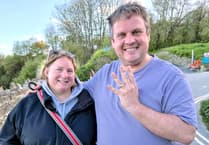
She has since been sharing with a friend in Camborne, while her 21-year-old daughter – who has Idiopathic Intracranial Hypertension (IIH), a neurological disorder – is sharing with a friend in Perranporth.
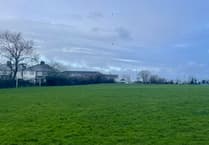
“I have lived in my small community in Cornwall for over 20 years and my family history in the county goes back to 1678,” said Esther. “After my divorce, I sold my home but retained a small field with an existing permanent structure, along with electricity, water, parking and a septic tank already in place.
“My aim has simply been to replace this with a modest self-build home so I can remain in the community where my children have grown up.
“I cannot afford the so-called affordable housing and the rental market is expensive and unstable.”
She added: “I believe my case may illustrate a wider issue affecting many local families who are trying to remain within their communities, but are finding the planning system increasingly difficult to navigate or challenge.”
Planning agent Sara De Barros said of the barn conversion: “It’s not like Esther is being greedy and extending right out; she’s just making it liveable. It’s previously developed land.” She added there are other barn conversions in the immediate area.
Esther said immediate neighbours living near the barn are supportive, but people who live further away have complained via the council’s planning portal. “It doesn’t seem to count if you’re Cornish and local,” she said. “I’ve lived on this site for 20 years and now I’ve had to move away. This is the only way I can afford a home in this area. It’s tucked away here. It’s hardly visible.”
Sara added: “The existing structure is here and Esther is going to improve it and tidy it up, plus it’s an extra person off the housing register.”
They both argue there is a cluster of housing alongside the barn, so it’s not outside an existing settlement. They also have examples of how similar applications have been approved elsewhere in Cornwall.
Esther’s applications have failed despite a “massive campaign” to highlight her plight to Cornwall Council’s planning department, senior officers, cabinet members, local councillors and local MP Andrew George. Mr George shared her case with housing ministers.
The latest application was refused on Friday, April 10 with the decision notice stating that the “introduction of a residential use on the site … will give rise to a detrimental change in character, thereby harming the intrinsic beauty of the countryside”.
The notice added: “Notwithstanding that the applicant has submitted a structural survey which considers the existing building is suitable for conversion, the proposed plans shows significant levels of new build which is not addressed within the aforementioned structural survey.”
Esther said: “I’m going to appeal – they’re forcing me to appeal. That will mean I’m appealing two applications now.
“I’ve just been diagnosed with rheumatoid arthritis, which the doctor has said has been brought on by stress. I’ve been in flight or fight over this for a long time.”
There were 20 comments on the council’s planning portal concerning her latest application, 13 of which were in support, while seven were against.
One of those in support wrote: “The proposal constitutes an appropriate and sustainable reuse of an existing rural building and is sympathetic in scale, design and materials to its setting. It would not result in harm to residential amenity, landscape character, highway safety or local ecology, and would generate minimal traffic.
“I have known Esther for many years and am aware of the severe impact her displacement has had on her and her family, including the enforced separation from her children.
“She has deep roots in the local community and this proposal would provide a stable, long-term home rather than a commercial development. The objections raised do not identify material planning harm, while the appeal would deliver clear social benefit.”
One of those against commented: “The proposed stable conversion will have a detrimental effect on the immediate and wider countryside, with urban sprawl and undesirable domestic paraphernalia being brought down into the wildlife rich environment.
“It lies in a prominent exposed position in an open field within 100m of the wildlife conservation area. It is neither infill or rounding off nor has it any defined physical features that will act as a barrier to prevent ‘future proposals’.”
Comments
We've recently changed our login process. If you have an account for commenting, you will need to re-register on the login window.
This article has no comments yet. Be the first to leave a comment.