
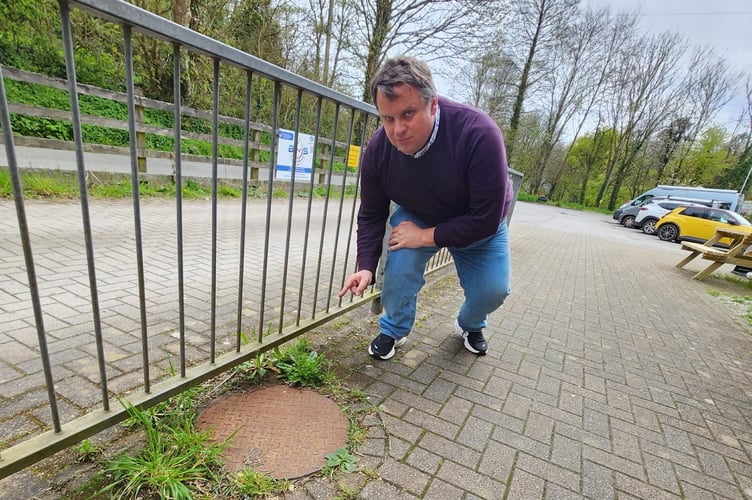
THERE is growing anger at Cornwall Council’s decision to reintroduce chemical weed treatment using glyphosate, which is considered to be a significant risk to health and ecology.
A number of councillors have condemned the move, describing it as “a complete U-turn” on the the council’s decision to stop the use of glyphosate ten years ago. They are demanding the council pauses the start of its chemical weedkilling programme until a “meaningful” public consultation process has been completed.
Town and parish councils were sent a letter by Cornwall Council at the end of March stating that its Liberal Democrat/Independent cabinet had instructed Cornwall Highways & Environment Services to begin a new programme of weed treatment and public realm improvements across Cornwall.
The councils were told: “This decision follows evidence of declining standards since routine weed management stopped in 2013, resulting in increasing complaints, narrowing footways, damaged surfaces and perceived reduced community pride.”
.jpeg?width=209&height=140&crop=209:145,smart&quality=75)


The letter added that the default position is that all Cornwall Council-maintained areas are opted in, with the use of a diluted glyphosate mix on all adopted highways within urban areas.
However, an opt-out option is available for town and parish councils that wish to manage their areas without chemical treatment, “provided they can meet the required standards and protect asset integrity”.
They have until Monday (April 20) to opt out, which Cornwall Council itself notes is “short notice”. Many of the councils have complained about a lack of time to consider the option.
We have already reported how Redruth Town Council is calling on all town and parish councils throughout Cornwall to back its petition against the unitary authority’s bid to start using glyphosate weedkiller again on its land within Cornwall’s parishes.
Cornwall Wildlife Trust, Cornwall’s local wildlife charity, has now written formally to Cornwall Council requesting that the plans are delayed and that the current opt-out deadlines are extended and replaced with a timetable that better supports local consultation and due diligence.
Cllr James Mustoe (Mevagissey & St Austell Bay, Conservative) was one of the supporters of a successful 2016 campaign led by the late Liberal Democrat councillor Edwina Hannford to make Cornwall Council a “bee-friendly local authority”.
As a result of that, the council committed to cease “the use of neonicotinoids and glyphosate on all public access land (to include office, depot, housing surroundings, highways, street scene and natural environment assets) that it owns or manages except for invasive species control or genuine material risks to asset integrity”.
Cllr Mustoe told us: “What the council is now proposing is an absolute reversal of everything it said it was going to do. I don’t have a problem with an ambition to weed and make public realm less untidy, but there are ways of doing that without introducing harmful chemicals into our environment.
“It is a complete U-turn and I think it’s a decision they’ve rushed out and haven’t considered the implications.”
A public demonstration against the move is planned to take place outside County Hall/Lys Kernow in Truro before a full meeting of Cornwall Council next Tuesday (April 21).
The meeting will discuss a motion against the cabinet’s decision. Proposed and seconded by Green Party councillors Drew Creek and Karen La Borde, the motion asks the cabinet to “recognise that the decision to reintroduce chemical weed treatment using glyphosate represents a significant policy reversal with ecological, public health and democratic implications for communities across Cornwall”.
Supported by Conservative, Green, Mebyon Kernow and Cornish Independent Non-aligned councillors, the motion also calls for a pause on the start of chemical weed treatment currently scheduled for May 2026 until a meaningful public consultation process has been completed.
It asks cabinet members to “recognise the wholly inadequate three-week opt out window provided to parish and town councils which included Easter and commits to extending this to 30 days after the public consultation results have been published”.
Their report to full council adds: “Across the globe glyphosate is considered to be a significant risk to health and ecology even when spot spraying techniques are used. Recent human epidemiological studies (March 2026) have now definitively linked glyphosate use/exposure with development of non-Hodgkin lymphoma.
“Thousands of lawsuits have been filed against Bayer and Monsanto, alleging the glyphosate in their Roundup weed killer may cause cancer. Billions of dollars have already been paid to victims in the US with many more cases to be heard.
“Consequently, the use of glyphosate in public places is banned in France, Germany and Italy. There are total bans on its use in Mexico and Vietnam. Many states and cities in America and provinces in Canada have banned its public and home use.
“The UK government has licensed glyphosate only until December 2026 pending results of research by the Health and Safety Executive.”
The councillors stress the decision to spray glyphosate “to improve the aesthetics of the public realm” is a material reversal of Cornwall Council’s own environmental commitments accumulated over more than a decade.
The motions adds that public concerns on the use of glyphosate are well known and several of Cornwall’s town and parish councils have resolved to ban its use.
Wadebridge Town Council is extolled in the Nature Recovery Strategy for its decision in 2016 to become a glyphosate free town. Other parishes have followed suit including Bude, Newquay and Perranporth.
A spokesperson for Cornwall Council told us: “Over the last three years we’ve received almost 2,000 complaints about weeds on pavements and in the public highway.
“We are committed to enhancing biodiversity, improving access and supporting safe and vibrant community spaces across Cornwall.
“As part of this we are investing £5 million over the next three years to help tidy up our verges and kerbsides including using targeted weed treatment on hard surfaces such as pavements and carriageway edges.
“To help protect and recover nature we will continue to limit the cutting of most of our highway verges to once a year, benefiting pollinators and wildflowers. More frequent cutting at junctions and other areas where visibility is affected will also continue.
“On urban roads where weeds are present and at risk of damaging pavements and narrowing footways, we will carry out targeted weed treatment using droplets of heavily diluted chemical.
“We have looked at best practice methods used in other areas across the UK, and this is the most cost-effective way to tackle roots in hard surfaces.”
Comments
We've recently changed our login process. If you have an account for commenting, you will need to re-register on the login window.
This article has no comments yet. Be the first to leave a comment.