

A TOWN council is taking on the much bigger authority of Cornwall Council in a bid to stop it reintroducing the use of a “noxious and harmful” weedkiller on land across the county.
Redruth Town Council is calling on all town and parish councils throughout Cornwall to back its petition against the unitary authority’s proposal to start using glyphosate weedkiller again on its land within Cornwall’s parishes.
Town and parish councils were sent a letter by Cornwall Council at the end of March stating that its Liberal Democrat / Independent cabinet had instructed Cornwall Highways & Environment Services to begin a new programme of weed treatment and public realm improvements across Cornwall.
The councils were told: “This decision follows evidence of declining standards since routine weed management stopped in 2013, resulting in increasing complaints, narrowing footways, damaged surfaces and perceived reduced community pride.”

.png?width=209&height=140&crop=209:145,smart&quality=75)

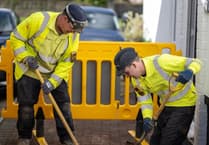
The letter added that the default position is that all Cornwall Council-maintained areas are opted in, with the use of a diluted glyphosate mix on all adopted highway within urban areas.
Glyphosate, the active ingredient in many weedkillers, is a subject of major debate, with the International Agency for Research on Cancer (IARC) classifying it as “probably carcinogenic to humans”. While industry studies often point to low, short-term toxicity, it has been linked to cancer risks, eye/skin irritation and potential endocrine disruption.
An opt-out option is available for town and parish councils that wish to manage their areas without chemical treatment, “provided they can meet the required standards and protect asset integrity”. They have until next Monday (April 20) to opt out, which Cornwall Council itself notes is “short notice”.
At its recent full council meeting, Redruth Town Council resolved to start a petition to Cornwall Council to urge it to undertake a number of actions.
It wants the council to accept its statutory responsibility “to maintain all highways controlled areas … in line with their declaration of climate emergency, using non glyphosate methods of weed management … in so doing, fully acknowledge the noxious and harmful long-term effects of using glyphosate in any form on the eco-system, human, animal and environmental health of Cornwall”.
If the above action is not agreed, the town council wants Cornwall Council to delay the date for a decision by town and parish councils to opt out until the end of May.
“Due to the short notice period given, this has not enabled the sector sufficient quality time to explore and cost alternative methods, including collaborative working between councils and potential sharing of equipment schemes to facilitate positive change,” added the petition letter, which is signed by Redruth mayor Cllr Alison Biscoe and Redruth Town Council clerk Charlotte Williams,.
The town council also wants the larger council to “acknowledge the fact that the financial offer of £343.45 per km is an insufficient and inappropriate amount for town and parish councils who wish to take on the maintenance using non glyphosate methods”. It has asked Cornwall Council to reconsider and increase the amount to £1,000 per km.
Redruth councillors also want Cornwall Council to call in and revisit the Cabinet decision to use glyphosate as part of the weed management process in Cornwall.
Redruth Town Council is calling on all other town and parish councils, and other interested parties, to sign its petition. Once its receives a total of 5,000 signatures, the petition will be submitted to Cornwall Council for inclusion on a future agenda for debate.
In 2016 Cornwall Council stopped using glyphosate and neonicotinoids on all public-access land it owns/manages, except for controlling invasive plants or preventing asset risk. Its cabinet has now favoured an option which will include reintroducing chemical herbicides, including glyphosate, up to three times a year on the highway network to reduce weed growth “for a short period to bring sites back to a good standard”.
The council has stressed that it is not a return to blanket weed spraying, but it will use a diluted glyphosate mix which is “widely used and HSE-approved for safe use on public highways and in amenity areas”. It says it will only treat within urban limits, within reduced speed limits, and only on roads which have weeds present.
A Cornwall Council spokesperson said: “Over the last three years we’ve received almost 2,000 complaints about weeds on pavements and in the public highway. We are committed to enhancing biodiversity, improving access and supporting safe and vibrant community spaces across Cornwall.
“As part of this we are investing £5m over the next three years to help tidy up our verges and kerbsides including using targeted weed treatment on hard surfaces such as pavements and carriageway edges.
“To help protect and recover nature we will continue to limit the cutting of most of our highway verges to once a year, benefitting pollinators and wildflowers. More frequent cutting at junctions and other areas where visibility is affected will also continue.
“On urban roads where weeds are present and at risk of damaging pavements and narrowing footways, we will carry out targeted weed treatment using droplets of heavily diluted chemical.
“We have looked at best practice methods used in other areas across the UK, and this is the most cost-effective way to tackle roots in hard surfaces.
“This is a three-year recovery programme that will stop our pavements from deteriorating, address trip hazards for pedestrians and improve the safety of our public spaces.
“There will be no maintenance changes to our town centres and surrounding areas which are already cleansed regularly through our waste contract.”
Comments
We've recently changed our login process. If you have an account for commenting, you will need to re-register on the login window.
This article has no comments yet. Be the first to leave a comment.