
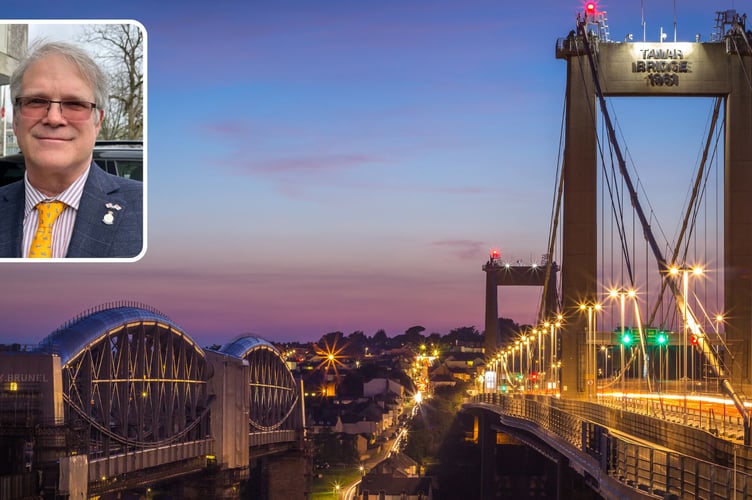
A TAMAR tolls campaigner has stepped up pressure on MPs with a strongly worded intervention, warning of growing anger locally over what he sees as an unfair system.
Scott Slavin, vice chairman of the Tamar Toll Action Group, has written to South East Cornwall MP Anna Gelderd demanding urgent action over the cost of using the Tamar Bridge and Torpoint Ferry.
In a detailed letter, also copied to Plymouth MPs Luke Pollard and Fred Thomas, as well as key figures including Philip Robinson, chief officer for Tamar Crossings, Mr Slavin lays out what he describes as a “stark imbalance” between how crossings in the South West and London are funded.
His intervention follows Ms Gelderd’s adjournment debate in Parliament earlier this year, where ministers reaffirmed that crossings like the Tamar are expected to be funded through tolls, with no dedicated central government support.


However, Mr Slavin has pointed to fresh developments that he says undermine that position. Reports that the government could help fund repairs to Hammersmith Bridge have sparked frustration, particularly after comments from roads minister Simon Lightwood suggesting the project may benefit from a £1-billion infrastructure fund.
He contrasts that with a statement from transport minister Lilian Greenwood, who told MPs there is “no specific central government funding stream” for tolled crossings and that river and estuarial routes are expected to fund themselves through user charges.
According to Mr Slavin, that argument does not stand up when compared with the situation in London.
Highlighting the tidal stretch of the River Thames, he notes there are dozens of crossings – including bridges, tunnels and ferries – yet only a small number impose tolls. Those that do, such as the Dartford Crossing, Blackwall Tunnel and Silvertown Tunnel, offer significant discounts for local users, with some routes effectively free.
By comparison, he argues, the Tamar crossings serve communities with no viable alternative routes, yet still rely heavily on toll income from local residents and businesses.
Describing the situation as “untenable”, Mr Slavin said it was unfair that taxpayers in Cornwall could end up contributing towards infrastructure projects in London while receiving no comparable support locally.
He has now called on Ms Gelderd to raise the issue formally in Parliament, either through an oral or written question to ministers, in a bid to force clarity on government policy.
The letter also shines a spotlight on the proposed “cheaper tolls for locals” policy, which has been backed by MPs on both sides of the Tamar. Mr Slavin questioned how such a scheme could be delivered without additional funding, warning it could place serious strain on the long-term finances of the crossings.
With the majority of users drawn from the local area, he warned any reduction in toll income without government backing could threaten the sustainability of the Tamar Bridge and ferry services.
The intervention marks a renewed escalation in the long-running tolls debate and increases pressure on MPs to turn political promises into tangible action for communities on both sides of the river.
Comments
We've recently changed our login process. If you have an account for commenting, you will need to re-register on the login window.
This article has no comments yet. Be the first to leave a comment.