
DID you know there are two springs in March? The first is recognised by the weather forecasters dividing up the calendar months into four-month segments. The second is recognised by astronomers, and that is the equinox which occurs on March 20 this year. British Summer Time (BST) starts on March 29, so one hour less of a lie-in that Sunday morning.




Make the most of the remaining hours of darkness. Spring will soon turn to summer, when TCrB - the "Blaze Star” - is expected to erupt in a explosion visible to the naked eye. It’s still dithering, but one day it will blow and become as bright as the Pole Star - for about a week!
The phases of the moon this month are as follows: Full Moon, March 3; Last Quarter, March 11; New Moon, March 19; First Quarter, March 25. This month’s Full Moon this month is known as the Worm Moon, because in cold climates, the ground begins to thaw and earthworms appear. Note the much-promoted total eclipse on March 3 will not be visible this side of the Atlantic.
The best planet to watch out for this month is Venus, close to the western horizon. On March 20 and 21, the Moon is a thin crescent - hard to see, but not far from Venus.
Jupiter is still in Gemini. The constellations in the north include Cassiopeia (the straggly W) and Cephus the King - looking strikingly like a house. Of course, if you have binoculars or a small telescope, you can point out the double star in the Plough Mizar and Alcor. In ancient days, those two stars were used to test the eyesight of potential soldiers.
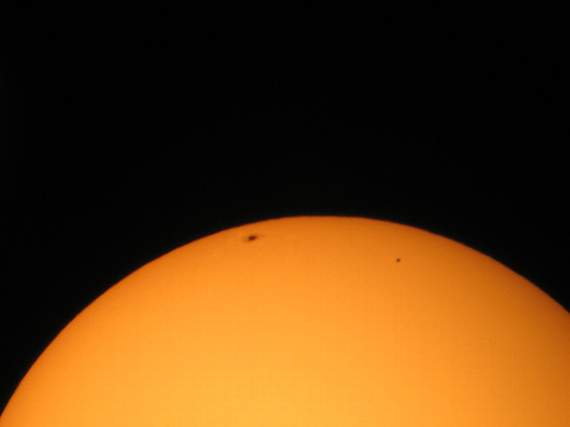
The sun is very quiet, with no sunspots at this time - compared with lots of activity and auroras a few weeks ago. No one is quite sure of the cause.
Comments
This article has no comments yet. Be the first to leave a comment.