
.jpg?trim=0,0,3,0&width=752&height=422&crop=752:422)
ANYONE who lives in Cornwall or the wider Westcountry will appreciate the important work carried out on a daily basis by the RNLI.
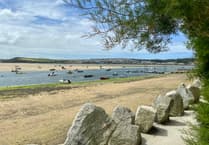
Only last weekend, we were enjoying some late summer sunshine at Perranporth beach. It was a veritable city of windbreaks, with families making the most of the last few days before the school year began in earnest.
Daughter was visiting a friend who lives in the village, but does not especially like the sea or beaches (something I assumed was a legal requirement to live in Perranporth). So the Other Half (OH) and I bundled his parents in the car and took everyone out for some fresh air.
The oldies found a bench with a sea view while we headed down to the shoreline. We’d barely got there when the siren blared from the RNLI four-wheel drive; a lifeguard with a loudhailer warned swimmers near Chapel Rock to avoid the area, known for its dangerous currents, and head for the flagged areas at the other end of the beach.
“Daughter would have known to do that in the first place,” said OH with some pride.
I’m not a fan of north coast sea swimming – the salt makes my eyes sting, and I’m terrified of rips. But if I do, I’d always head for an RNLI lifeguarded beach, safe in the knowledge eagle-eyed experts are on hand - as they have been for 25 years, having started the service as a trial on England’s south coast in 2001.
The lifeboat arm of the charity has been in action for much longer - since 1824, celebrating its bicentenary two years ago. Its sterling efforts to avert tragedy at sea have led its volunteer workforce to be revered as pillars of the coastal community.
We are avid viewers of the BBC series Saving Lives At Sea, and it was an honour for me to make a substantial donation recently from a funeral collection, which was used to add the names of my mother and her late partner to a new Shannon class lifeboat in Exmouth.
So I was appalled to see just how much flak the RNLI is taking in present times, simply for doing its job unconditionally. The august organisation has been forced to issue several statements this week in defence of its policy of coming to the aid of anyone in need, including migrants in difficulty in the English Channel.
On the same day that we enjoyed a beautiful Cornish beach, the RNLI attended a large dinghy in the Channel and escorted its 100 passengers to Portsmouth, attracting the attention of right-wing activists (I’m using that word generously) who gathered a vocal group of pumped-up blokes in masks to besiege the terrified party.
.jpg?width=209&height=140&crop=209:145,smart&quality=75)


If that weren’t bad enough, thousands took to social media to accuse RNLI volunteers of manning a “taxi service for migrants” and being “traitors” to their country. Some were approached and insulted in person at lifeboat stations, leading the RNLI to authorise closing them if staff felt threatened, and to advise members not to wear uniforms to avoid confrontation.
Others were “named and shamed” on social media. “They and their families are being threatened by those who would hide behind a balaclava or a keyboard,” said RNLI chief executive Peter Sparkes, accusing naysayers of “deliberate misinformation and misunderstanding about the RNLI and our lifesaving work”.
I find this kind of rhetoric utterly repulsive. The idea our valiant lifeboatmen should be expected to turn away people with the wrong colour skin, or demand to see papers before escorting someone back to British shores, is beyond abhorrent.
I left a Cornwall-related Facebook group that shared a spurious social media post claiming an RNLI lifeboat was sailing around the coast of West Penwith carrying migrants to be disembarked. The poster warned of “an invasion”, and suggested residents watch over their womenfolk. Pointing out what little evidence there was for such a claim simply drew voluble protests from those for whom that presented no obstacle.
I should probably have stuck around to disrupt the echo chamber, but my blood pressure just couldn’t take it and I decided to quiet-quit rather than waste precious time arguing the toss. (In fact, the lifeboat contained only RNLI personnel en route to Ireland with a scheduled stop-off in Newlyn).
It’s heartening, however, that so many people are responding by putting their hands in their pockets and making their own financial statement in favour of the RNLI. In Cornwall, many named without shame the crew of the ill-fated Solomon Browne as examples of volunteers who put their lives on the line so others might be rescued, without question.
I’m sure this column will draw plenty of online vitriol, but it would be more satisfying to think I’d inspired someone to give generously to the people who might one day save them from the sea.
Comments
This article has no comments yet. Be the first to leave a comment.