
HOW far does what you decide today determine the future? That rather depends on how influential you are, writes Judith Field.
In the sixth century, Europe had no modern countries with borders, and Christianity, though spreading, was yet to reach every corner. Travel was quickest by sea, and the peoples of Cornwall, Ireland, Wales and Brittany were strongly interconnected.
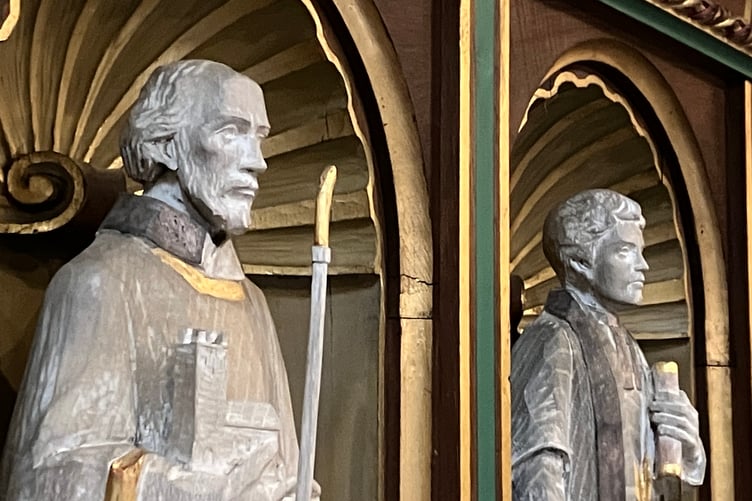
It was Cornwall’s era of saints, and when Truro Cathedral was built, it named carved wooden seats in the Quire after them. Alongside Piran and Petroc are 22 others, including Welsh princess Adwenna, Irish monk Columb and Breton nobleman Meriadoc.
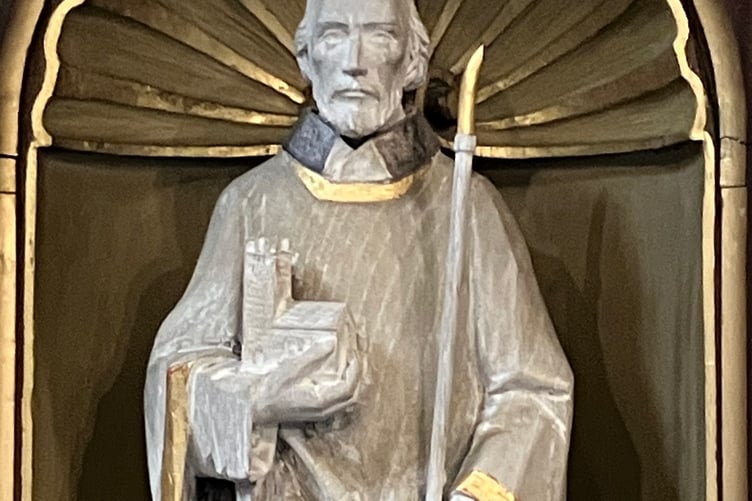
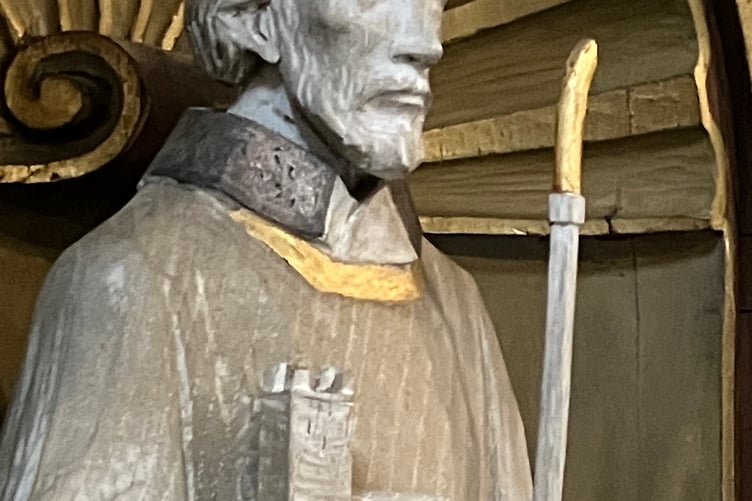
Arguably the most influential, though, was St Samson, whose participation in the Council of Paris in 557AD had a lasting impact on social norms for well over a millennium. Samson (not the one with Delilah!) had been born in Glamorganshire, and educated by St Illtud the Knight (allegedly a cousin of King Arthur, according to a history written in 1140).
Samson was famed for his holiness and learning, and one Easter night, he heard an angel tell him to leave Wales and superintend the Church abroad. He obeyed, and sailed from the Severn Estuary.
Historic accounts tell us Samson’s ship moored in the River Camel, and he announced he intended to stay at the nearby monastery at Docco (now called St Kew). However, his impending arrival caused consternation, because the monks’ laid-back lifestyle was about to be found out! Tactfully, their spokesman persuaded Samson to keep going.
He did so, by horse and cart to Fowey (and thence to Europe). You can retrace his footsteps along the Saints Way pilgrimage route, and visit St Samson’s church in Golant - you could even do so on his saint’s day, which is July 28.
Crossing what the Cornish called the ‘Southern Sea’ to the Channel Islands and then Brittany, Samson established a monastery at Dol. Much respected, he was invited to the Council of Paris, and signed its decree that a man may not marry his brother’s widow, nor his dead wife’s sister. Although the effects were finally reversed in the delightfully-named ‘Deceased Wife’s Sister’s Marriage Act’ of 1907, this ‘canon law’ lasted for generations – and played a part in one of the pivotal moments in Tudor history.




Henry VIII’s love-match to Catherine of Aragon, his brother’s widow, was permitted only on the basis that she swore her first marriage had never been consummated. However, almost 24 years later, in 1533, the heartless King decided to divorce Catherine because she had produced only one living child, a girl. He now argued that she had lied about his brother, and that therefore his marriage was never valid.
The Pope disagreed. In retaliation, Henry seized control of the English church and destroyed its monasteries; the birth of the Church of England followed soon after.
Truro Cathedral is Cornwall’s cathedral, giving daily access to beauty, inspiration and faith. Visit it for an altered perception of time, and explore how your own life is rooted in our shared European heritage. www.trurocathedral.org.uk
Comments
We've recently changed our login process. If you have an account for commenting, you will need to re-register on the login window.
This article has no comments yet. Be the first to leave a comment.