
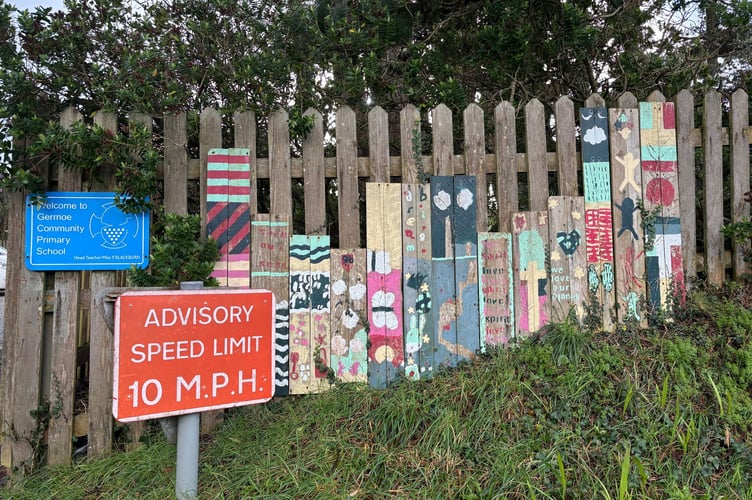
A CORNISH primary school has responded to concerns by neighbours that it is running a forestry school where children are “playing in soil that is highly contaminated with arsenic”.
The head of Germoe Community Primary School, between Helston and Penzance, denied “an unsubstantiated allegation” that the school grounds are on a former mining waste site and therefore dangerous for the children to use.
However, Paula Blackburn commented that nearly every school in West Cornwall is likely to be built in an area with elevated arsenic levels, adding that parents of Germoe pupils “have full confidence that the risk of any child becoming ill because of using the space are minuscule”.
She added: “All parents have signed to say they are aware of the risk and support our mitigation. Setting a precedent that elevated arsenic levels in surface soil is a reason to restrict educational use would have massive ramifications for dozens of schools in Cornwall, and it is sensible to be proportionate.”


The matter was first raised at a meeting of Cornwall Council’s cabinet in December when a Germoe resident asked a question about Nysgerrig Forest School and Kindergarten, which is part of the primary school’s site.
The LibDem/Independent administration was asked: “Germoe Nysgerrig forest school is an outdoor classroom sited on an historic mine and a mine waste tip. Very high levels of arsenic are likely. Soil analysis has not been undertaken but we believe that one is planned. Pending the soil analysis results, why are young children still playing on this potentially dangerous mine site?”
Cllr Hilary Frank, cabinet member for children, families and schools, responded: “It’s entirely understandable that people want reassurance that their environment is safe, and I want to be clear that the concerns you have raised have been taken very seriously.
“I want to reassure you that Germoe primary school has risk assessments in place for the forest school site. These are being actively used to manage how the space is accessed and used by children.
“I also just want to take this opportunity to clarify exactly where the responsibility sits. So Germoe primary school is a foundation school and that means that the land is owned by the school’s governing body, not by Cornwall Council, so decisions about the site rest with the governors. This includes decisions about commissioning surveys and agreeing mitigation measures.”
Germoe Community Primary School is part of the Helston and Lizard Peninsula Trust alongside Boskenwyn Community Primary School.
Cllr Frank said that despite it being a foundation school, a range of council officers had visited Germoe primary to advise and support the school. She stressed that mitigations were in place and the way the site is currently managed is designed to break any potential pollutant contaminants.
She added: “We have offered as a council to fund the soil testing itself if the governing body should choose to go down that route.”
A meeting was due to be held at the school between Cllr Frank, the council’s head of education effectiveness and Germoe primary’s governing body to discuss soil testing and the concerns raised by neighbouring residents but it was postponed due to last month’s Storm Goretti.
Another neighbouring resident Jason Platt contacted us with his own concerns following the December cabinet meeting.
He told us: “The area they have chosen to site the pre-school is in amongst some trees, which has a great aesthetic for a forestry school but, unfortunately, this is also a historic mine site.
“The mine shaft(s) have been capped and made safe, so no problems with anyone falling down a hole. This is about soil contamination from heavy metals, specifically arsenic.
“The background levels of arsenic near the school are more than four times the level of acceptable risk – there is no safe level for arsenic. The amount of arsenic in the soil at the pre-school is unknown, but could be much higher than this.
“The school are saying they are still deciding about whether or not to carry out soil testing, despite advice from experts at the council and the offer of funding.
“Why are the school trying to avoid soil testing? Are the school nervous that if the soil tests come back at unsafe levels, then they will not be able to use the site for their forest school? Surely, they have the health and safety of the children first and foremost?”
Mr Platt claimed: “We can see young children, three to five years of age, playing in soil that is highly contaminated with arsenic, well above acceptable levels. It doesn’t matter that they have washed their hands an hour before, or will do so again later.
“This all started off with a very valid noise complaint to the school from our neighbours. Our house is not directly adjacent to the school, so we are not affected by noise to the same degree.
“However, we always knew the site to be a historic mine. My wife alerted the head teacher to this at the beginning of October and voiced her concerns about potentially high levels of arsenic in the soil, believing the head teacher was perhaps unaware of this.
“My wife assumed once the head teacher and governors realised this, they would take the children off immediately for their safety. We have been horrified by their lack of concern given what we have alerted them to and can’t understand why the school and council are allowing this to continue.”
Germoe Community Primary School’s executive head teacher Paula Blackburn has responded to the concerns.
In a written statement, she told us: “There has been an unsubstantiated allegation that the school grounds are on a former mining waste site and therefore dangerous for the children to use due to elevated arsenic levels in the soil.
“Whilst there are safely capped mineshafts in the area, we are unable to find any evidence that this specific location was used for mining waste. We have viewed historic maps and documents and found nothing to substantiate this claim. We would be happy to review if evidence was provided.
“Our own research shows that nearly every school in West Cornwall is built in an area with elevated arsenic levels.”
She added: “For reference, in assessing the risk from arsenic to sensitive receptors (e.g. humans), a Category 4 Screening Level (C4SL) of 37 mg/kg is used. This is a generic assessment criteria for arsenic in residential soils in England. Much of the South West is above the 37 mg/kg threshold.”
Miss Blackburn said that a 2017 study found that 69% of soils in Cornwall exceed the C4SL for arsenic.
“Given the above lack of evidence of mining waste and overall setting of the site within a historic mining landscape, it is likely that any soil tested in the area is contaminated with arsenic and it is for this reason that we have taken steps to mitigate any risk from the children using the area.
“These include wearing of appropriate clothing that covers legs and arms, and thorough hand washing after each session. They do not grow or prepare food in the area and children are always supervised to prevent accidental ingestion of soil.
“These measures have been agreed with the parents who have full confidence that the risk of any child becoming ill because of using the space are minuscule and are far outweighed by numerous documented benefits of learning outdoors in a natural setting.
“All parents have signed to say they are aware of the risk and support our mitigation. Setting a precedent that elevated arsenic levels in surface soil is a reason to restrict educational use would have massive ramifications for dozens of schools in Cornwall and it is sensible to be proportionate.
“I believe the sudden concern of the neighbour regarding potentially contaminated land is simply an attempt to stop the children using the area as he dislikes the noise of their play and learning.”
Residents deny their current concerns have anything to do with noise issues and state they have genuine worries about arsenic levels.
Comments
This article has no comments yet. Be the first to leave a comment.