
Restrictions on the felling and movement of timber in six areas in England impacted by a tree disease that first appeared in Cornwall are to be lifted.
The restrictions aimed at controlling Phytophthora pluvialis will be lifted, the Forestry Commission announced.
The UK chief plant health officer Nicola Spence has confirmed the changes following updated research which shows the risk of the disease spreading via the movement of timber and wood materials into wider sites is low.
Phytophthora pluvialis is a fungus-like pathogen known to affect a variety of tree species, including western hemlock, Douglas fir, tanoak and several pine species.
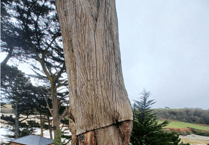


It is reported to cause needle cast (where needles turn brown and fall off), shoot dieback, and lesions on the stem, branches, and roots.
Current restrictions in England on the affected sites in Cornwall, Devon, Cumbria, Herefordshire, Surrey, Gloucestershire, and Shropshire restrict the felling and movement of susceptible timber and wood materials (wood, bark and trees), as well as plants for planting which originate within the areas.
The new demarcated area notices will no longer restrict the felling and movement of susceptible timber and wood material but will continue to restrict the movement of plants for planting.
Nicola Spence said: “Following findings of Phytophthora pluvialis, swift, robust and precautionary action was taken at the affected sites to limit the spread of this potentially harmful pathogen into wider areas.
“Some of these restrictions are now being lifted, in line with the latest science which shows the risk of the disease spreading via timber movement pathways is low.
“We are confident that this move strikes the right balance between stringent biosecurity and supporting forestry sector trade.
“I urge all sectors to continue to be vigilant for signs of Phytophthora pluvialis by checking the health of western hemlock and Douglas-fir trees. Key symptoms to look out for are lesions on the stem, branch or roots.
“Any sightings should be reported to the Forestry Commission via its TreeAlert online portal at www.forestresearch.gov.uk/tools-and-resources/fthr/tree-alert
“We continue to research and monitor the level of risk and likelihood of entry of the disease into the wider environment and will keep the revised demarcated area restrictions under review.”
Phytophthora pluvialis was first identified in Britain in August 2021 on a stand of western hemlock in Cornwall.
Comments
This article has no comments yet. Be the first to leave a comment.