
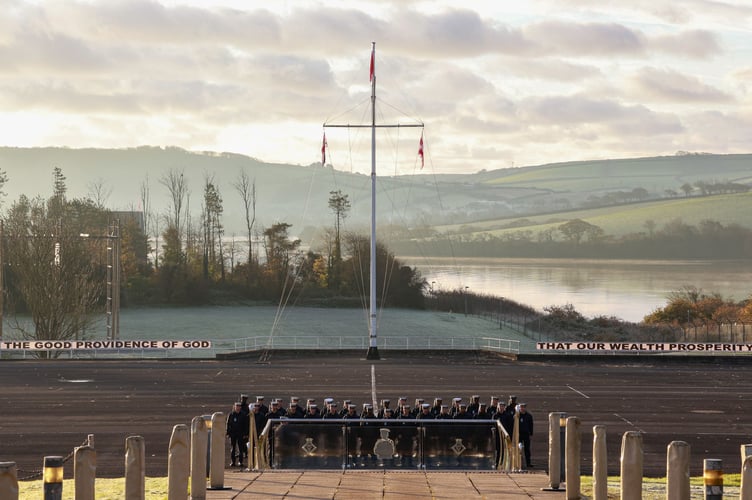
THE Royal Navy is overhauling how it trains its people, scrapping long-standing divisions between officers and ratings in favour of a single, streamlined entry system designed for a more demanding, warfighting future.
From June 1, every new recruit – regardless of rank – will begin with the same 10-week Initial Naval Training course at HMS Raleigh in Torpoint. The move replaces parallel training pipelines and is intended to reflect the reality of modern naval operations, where officers and ratings work side by side from the outset.
The Navy said the changes are aimed at ensuring all entrants develop the “skills, values and resilience needed for service in a war fighting focused fleet.” By creating a shared foundation, the service hopes to remove duplication and improve cohesion across its ranks early in their careers.
Under the new structure, officer cadets will then move on to a redesigned 14-week commissioning course at Britannia Royal Naval College in Dartmouth. While the pathway is changing, the Navy insists standards will not.




“This modernised system strengthens our ability to generate capable, confident and mission ready leaders,” said Rear Admiral Andrew Rose, director of people and training. “It is the right change, at the right time, to ensure we remain ready to fight and win.”
The overhaul is part of a broader push to “modernise the process” and align training with evolving operational demands. Centralising the initial phase at HMS Raleigh is expected to make better use of facilities and specialist equipment, while also introducing a more flexible, modular structure that can adapt to future needs.
HMS Raleigh in Torpoint is the Royal Navy’s main basic training establishment, preparing thousands of recruits each year for operational service through intensive military, fitness and seamanship training programmes.
A Navy spokesperson said co-locating training would enable a “more effective use” of resources, while also allowing the system to respond more quickly to changing threats and entry routes.
Capt Andrew Bray, captain of Britannia Royal Naval College, acknowledged that the shift represents a significant adjustment for personnel and partners.
“I recognise that change can be unsettling, both for our people and for our partners, but this approach has been carefully designed, informed by evidence and shaped by those who deliver training every day,” he said. “There will be no redundancies and we will support every individual affected by realignment.”
The changes also sit within a wider transformation of officer development tied to the First Sea Lord’s “Warfighting Ready by 2029” plan, which emphasises leadership, character and operational effectiveness.
Despite the ambition, challenges remain. The Navy continues to grapple with a shortage of experienced personnel while simultaneously struggling to provide enough sea-going opportunities for new recruits. With fewer ships in service, some newly trained sailors and officers face delays in gaining the frontline experience needed to progress their careers.
Even so, the service is pressing ahead, betting that a unified, modern training pipeline will better prepare recruits for the realities of 21st-century naval warfare – and ensure the Royal Navy remains competitive in an increasingly contested global environment.
Comments
This article has no comments yet. Be the first to leave a comment.