
A MINING company hoping to create hundreds of jobs in Cornwall says it is entering 2026 with strong momentum.
Cornish Lithium has announced that 2025 was year of significant progress as it continued to reach milestones across its hard rock and geothermal projects while strengthening its position in the UK’s critical minerals sector.
The company says it achieved growth in its operations and reinforced its commitment to securing a domestic supply of battery-grade lithium.
Cornish Lithium became the first company to produce lithium hydroxide monohydrate (LHM) mined and refined in the UK.


.jpg?width=209&height=140&crop=209:145,smart&quality=75)

LHM is a critical raw material for lithium-ion batteries which form the foundations of nearly all modern-day electronics – from electric vehicles (EVs) and smartphones to energy storage and drone technology.
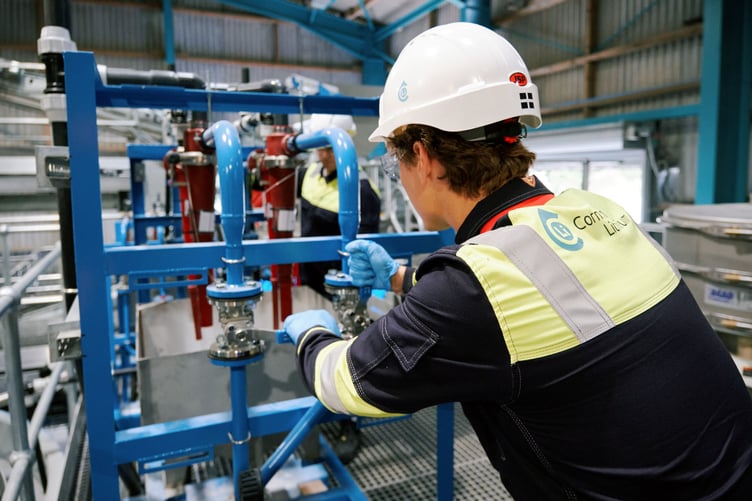
Samples of LHM were produced at the company’s demonstration plant at Trelavour, near St Dennis, which integrates all processing stages from crushing and grinding rock to separating lithium-bearing minerals.
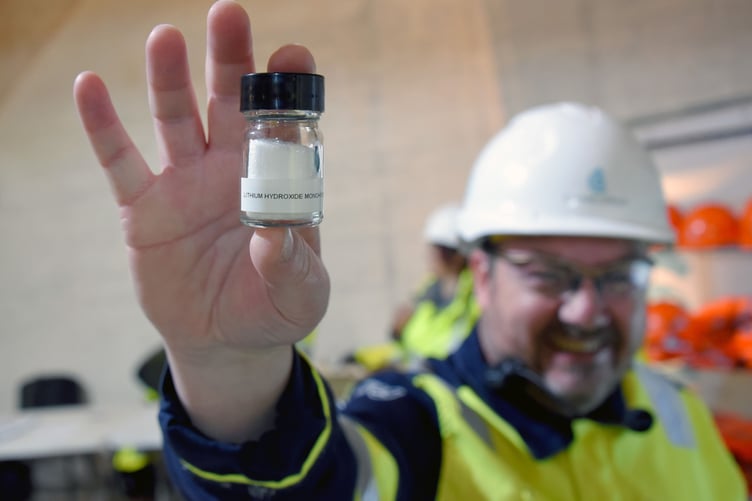
Following the success of the demonstration plant, Cornish Lithium plans to build a full-scale processing and refining plant with an annual capacity of up to 10,000 tonnes.
Alongside the breakthrough, Cornish Lithium announced that its Trelavour Lithium Project had been officially designated as an MSP Project by the Minerals Security Partnership (MSP), a multi-national initiative. The recognition underscores the project’s global significance in critical mineral supply chains.
To advance the company’s projects to commercial production, Cornish Lithium launched a new crowdfunding campaign. This followed the announcement of £35-million of funding from institutional investors, the National Wealth Fund (NWF) and TechMet, and raised an additional £2.6-million from 3,719 investors in just 14 days.
The Trelavour project aims to create approximately 800 jobs during construction and around 300 jobs during its 20-year operational life, delivering high-quality careers. Once development consent is secured, construction is expected to take around two years, with operations targeted to begin in 2029.
Comments
We've recently changed our login process. If you have an account for commenting, you will need to re-register on the login window.
This article has no comments yet. Be the first to leave a comment.