
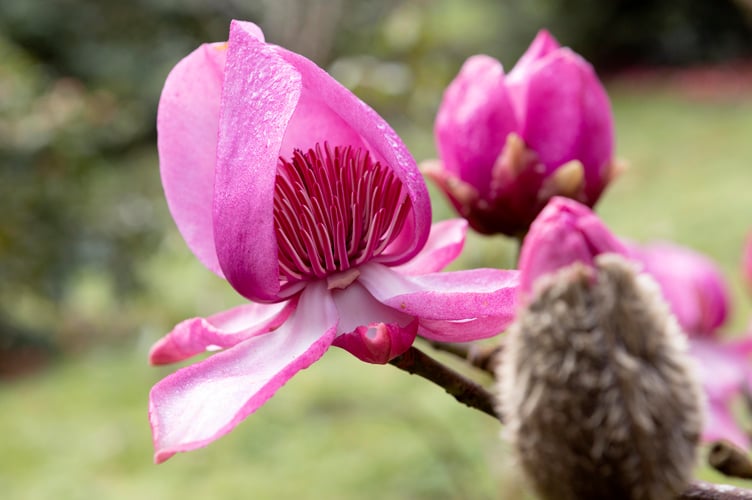
CORNWALL’S world-class magnolias remain undamaged in the face of the hurricane-force winds that felled thousands of trees during Storm Goretti.
The 14 gardens of the Great Gardens of Cornwall have confirmed an extraordinary outcome in the aftermath of Storm Goretti: at last count, not a single magnolia tree across the entire network was lost.
Storm Goretti tore across the South West with sustained gale-force winds and gusts exceeding 100mph, accompanied by torrential downpours over a 48-hour period. Thousands of trees are reported to have fallen across Cornwall, and many more were so severely damaged they have been deliberately felled to ensure public safety.
Roads were blocked, historic parkland altered and swathes of woodland left scarred in what is being described as one of the most destructive weather events to hit the county in recent decades.




Across the 14 gardens of the Great Gardens of Cornwall - which includes the Eden Project and the Lost Gardens of Heligan, and encompasses hundreds of cultivated acres and some of the most significant plant collections in the UK - many acres experienced storm damage.
Mature shelterbelts were breached, pathways obstructed and long-established trees lost. Following phenomenal clearance and restoration efforts, the majority of the gardens are open as usual to welcome in the magnificent Cornish spring.
Amid the devastation, one remarkable fact stands out: Not a single magnolia tree was felled. One of Europe’s most important magnolia collections resides at Caerhays Castle and Gardens, part of the historic Caerhays Estate. Many of these magnolias are rare, heritage specimens and carefully cultivated hybrids, some more than a century old and recognised internationally by horticulturists and plant collectors.
Estate owner Charles Williams said: “Across Cornwall, the scale of damage caused by the hurricane is immense, and within the gardens network there has been significant devastation. We have lost trees that have stood for generations.
“But the magnolias have shown extraordinary strength. Every single one remains standing.”
Famed globally for their spectacular spring flowering, magnolias are not typically associated with storm resistance. Yet across exposed coastal headlands and sheltered inland valleys alike, they withstood hurricane-force gusts and saturated ground conditions that uprooted countless other mature specimens.
“There is something profoundly symbolic about their survival,” Mr Williams added. “Some of these magnolias have lived through world wars and countless Atlantic gales. Their resilience in the face of Hurricane Goretti reflects the resilience of Cornwall itself.”
For an international audience, Cornwall’s gardens represent more than regional heritage. The duchy’s maritime climate has allowed it to cultivate globally significant plant collections, attracting visitors, botanists and horticultural enthusiasts from around the world.
The survival of its magnolia collections, particularly at a moment when extreme weather events are increasing in frequency and intensity, underscores both the strength of these historic landscapes and the careful stewardship behind them.
As clean-up operations continue across the Great Gardens of Cornwall, attention is now turning to the imminent spring flowering season. In a matter of weeks, branches that endured 100mph winds will unfurl into bloom, a vivid reminder that even after the fiercest storms, renewal follows.
Comments
We've recently changed our login process. If you have an account for commenting, you will need to re-register on the login window.
This article has no comments yet. Be the first to leave a comment.