
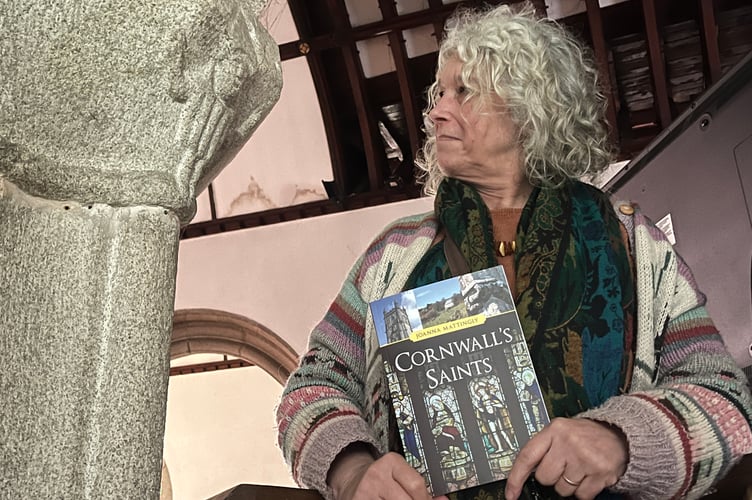
IF you have ever marvelled at the sheer breadth of saints in evidence in Cornwall’s churches, then the latest book by Dr Joanna Mattingly will feed your fascination.
Cornwall's Saints examines the identities of those who gave their names to some of our best-loved, most recognisable sanctuaries, from churches and chapels to crosses and holy wells, and even sacred chairs and trees.
Few people know as much about Cornwall’s churches and their saints as Truro-based Jo, who has lived in the duchy for 35 years and studied its religious buildings in depth.
For this edition, she turned her attention to saints. Cornwall has more varied dedications than any other county, with no fewer than 140 Celtic or local saints - including Piran and Petroc - in addition to conventional Roman-approved saints such as Peter and Paul.


Jo was keen to explore surviving church artwork, which is often focused on the saints and was at risk during the Reformation and the Civil War, when statues were often removed, destroyed or beheaded. “The book is about what you can see in churches today, and how that reflects what people believed in during the late medieval period,” she said.
Many saints come with colourful tales: think St Piran travelling across the Irish Sea on a millstone; St Agnes outwitting the giant Bolster; and the 24 sons and daughters of Welsh King Brychan, whose evangelised and gave their names to churches across Cornwall: for example, Mabyn, Tudy and Keyne.
It might surprise you, however, to learn that some saints may not have existed at all. Talland church is dedicated to St Tallan, which is thought to mean the Holy Place (Tal) on the Brow of the Hill (Lan). Similarly, Jo thinks St Kenwyn takes his name from the Celtic Keynwen (meaning "white/blessed ridge"), and St Ludewon – depicted holding a cross and a spade in Ludgvan – from the Cornish for "place of ashes".
“Having so many saints meant every church could a different one,” Jo explained. “In a way, it didn’t matter if they existed or not; as long as they had an image and a story – which often borrowed from other saints’ lives – that was enough for people to believe.”
When it comes to Cornwall’s saints, Petroc is the daddy, with churches large (Bodmin) and small (Little Petherick), and visual depictions aplenty. Look out for local one-upmanship: “St Petroc had a very similar life to St Neot, but where Neot made a pilgrimage to Rome, Petroc went out to India, and lived on an island in the ocean for seven years,” said Jo.
Cornwall's Saints will tell you where to find saints in parish churches (it’s less likely to be the tower or the porch; look inside, by the east window), and where to see the best examples of depictions, whether in stone, wood, metal, stained glass, embroidery or wall paintings.
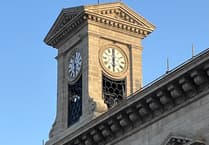
For a fine example of a church tower, Jo recommends Holy Trinity in St Austell. “It’s an amazing survivor, with 18 statues – some restored, but they still have their heads.”
Meet Jo Mattingly and obtain a signed copy of Cornwall’s Saints at Cows and Sows, Idless on Saturday, February 21 from 2pm to 4pm.
Comments
We've recently changed our login process. If you have an account for commenting, you will need to re-register on the login window.
This article has no comments yet. Be the first to leave a comment.