
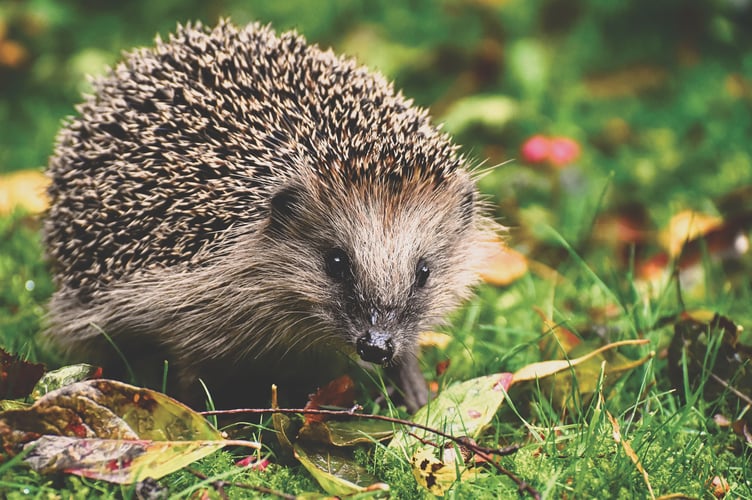
WHAT has been described as most important global summit for nature in decades – the UN Convention on Biological Diversity, also known as COP15 – is taking place in Canada and what happens there will directly affect wildlife in Cornwall, says the county’s wildlife trust.
The conference comes at a time when the latest study suggests the Earth’s wildlife has plummeted by almost 70 per cent in the last 50 years.
Cornwall Wildlife Trust says the UK is one of the most nature-depleted countries in the world – and in Cornwall, wildlife has suffered over recent decades for a number of reasons.
Between 2002-2019, Cornwall’s human population grew by almost 13 per cent, leading to more development.
.png?width=209&height=140&crop=209:145,smart&quality=75)
Consumer demand has meant much of Cornwall’s farmland – 75 per cent of Cornwall – has been farmed more intensively.
Climate change means the average temperature in the county has increased by nearly 1°C in last 35 years.
These and other factors have led to a worrying decline in wildlife in the region over the last 30 years, says the trust.
Since the 1970s there is evidence that 21 breeding birds, four plants, and eight bumblebees have become extinct in the Duchy.
Cornwall Wildlife Trust’s 2020 State of Nature report concluded that “nature is in decline in Cornwall. Over the last 30 years, nearly half of terrestrial mammals and three-fifths of butterflies are found in fewer places... Whilst a few species have prospered, it is clear that an ecological emergency is unfolding”.
Matt Walpole, chief executive of Cornwall Wildlife Trust, said: “Bold action is needed to tackle the twin nature and climate crises at COP15.
“The next eight years need be ones of dramatic improvement for nature in order to fulfil the proposal to protect 30 per cent of land and sea by 2030 – something that the UK has already promised to do.
“In Cornwall we are working hard to restore nature – to help wildlife recover and to help us mitigate and adapt to a changing climate.
“But recent government decisions – as well as lack of action in other areas – undermine nature’s ability to recover.
“We believe, for example, that diluting plans to support nature-friendly farming would be devastating.
“Healthy nature and secure food production go hand in hand – our farm advisors at Cornwall Wildlife Trust see this every day in their work with farmers.
“Our specialist staff work to support farmers, working together to benefit long-term food production and biodiversity.
“We need to see the government set out far more ambitious targets for nature if it’s to keep its commitment to pass the environment on in a better state to the next generation.
“Shockingly, the government’s proposed targets could mean even less wildlife in 20 years’ time than we have now. We want to see a truly ‘world leading’ target that aims to leave the next generation with more nature – not less.”
Cornwall Wildlife Trust wants to see the government:
Set ambitious targets to restore the abundance of nature at home. The government is due to publish their Environment Act targets – but proposals could mean less wildlife in 20 years’ time than there is now, says the trust, which wants a target to increase species abundance by at least 20 per cent by 2042, compared to 2022 levels.
Help set ambitious global targets to halt and reverse “catastrophic declines” in habitat and wildlife by 2030 at COP15
Scrap the Retained EU Law Bill, which is passing through Parliament, because it threatens the laws which protect wild places and species across the UK.
Comments
This article has no comments yet. Be the first to leave a comment.