
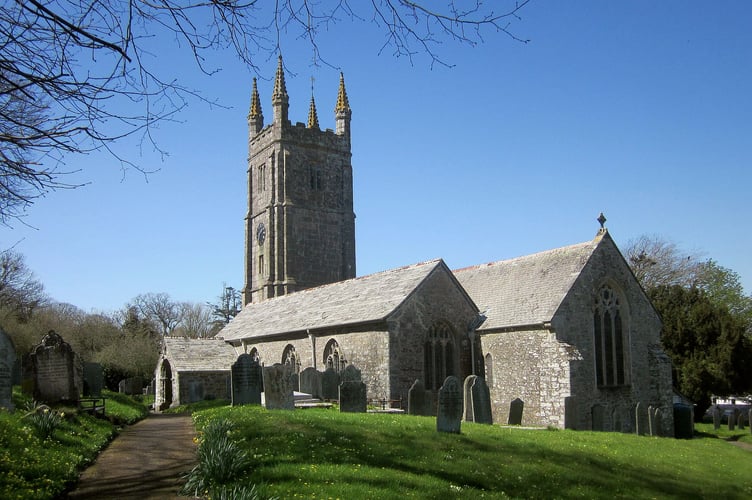
Lannsans: Lann – religious enclosure, Sans - holy
What3words - ///deeds.honeybees.later
Peswar mildir hepken dhe’n soth a Lannstevan, kudhys yn powdir ammethel, ha hedhadow dre vownder ynn, yma treveglos pur vyghan, Lannsans hy hanow.
An hanow kernewek yw tamm koynt, dell hevel, drefen bos ‘klos sans’ styr an ger ‘lann’ herwydh usadow – ytho pur sans yw an hanow! Omres yw an eglos dhe Sen Briocus, kepar ha’n eglos yn Nanssans, ogas dhe Bonswad.




Yma rann a Bluw Lannsans a-berth yn Ranndir a Dekter Naturek a Vri Nans Tamar, ha, kyn nag yw an bluw ma aswonys yn ta avel ranndir balweyth, yth esa bal arghans ha plomm yn Koos Meynloos y’n nownsegves kansbledhen, le may ma mengleudh bras y’n dydhyow ma.
Ogas dhe’n koos yma Pons Meynloos, yw onan a’n kottha ponsyow yn Kernow, drehevys yn 1439. Ha kudhys y’n keth koos y hyllir trovya hendhorgeow hirgylghyek, hag o dinas martesen.
Nyns yw hemma ranndir meurgerys gans havysi, mes y talvia y vysytya.
Only four miles south of Launceston, hidden in agricultural countryside and accessible by a narrow lane, there is a very small village called Lezant.
The Cornish name [Lannsans] seems a little strange because ‘lann’ is usually ‘religious enclosure’ – so the name is very holy! The church is dedicated to St Briocus, as is the church in St Breock [Nanssans], near Wadebridge.
Part of Lezant parish lies within the Tamar Valley Area of Outstanding Natural Beauty, and, although this parish is not well known as a mining district, there was a silver and lead mine in Greystone Woods in the 19th century, where there is nowadays a big quarry.
Near the wood is Greystone Bridge, one of the oldest bridges in Cornwall, built in 1439. And hidden in the same woods you can find ancient oval earthworks, which may have been a hillfort.
This is not a favourite area for tourists, but it is worth visiting.
An Rosweyth promotes the use of the Cornish language. Visit www.speakcornish.com
Comments
We've recently changed our login process. If you have an account for commenting, you will need to re-register on the login window.
This article has no comments yet. Be the first to leave a comment.