
THE triangle between Truro, Falmouth and Redruth was once one of the busiest on this earth. Had he been around during the 19th century, Donald Trump would surely have wanted a stake in what was referred to as “the richest square mile in the world”, a leading producer of minerals including tin and copper that powered the Industrial Revolution.
This area is considerably quieter and more rural today, albeit pockmarked with the engine houses that would once have been noisy with activity. And yet, there is the occasional nod to its illustrious past, and the tantalising promise of its future.
Two landmark industrial events took place this week, one offering a nostalgic glimpse into the tin mining heyday, the other an exciting leap forward into the expanding market of renewable energy and lithium production.
Tucked away off the back roads between Carnon Downs and Chacewater is Wheal Jane Group Earth Science Park, a hub for businesses in mining, engineering and environmental sectors. Look closely, and you’ll see clues to its history as one of Cornwall’s last working mines.


Wheal Jane mine opened in the 1860s, and its fortunes rose and fell with fluctuating tin prices. It ceased production for good in 1992, and all that’s left today is a modest smelting shed and a treatment plant to avoid toxic metals – including arsenic - leaching into local watercourses (as happened post-closure in the 1990s).
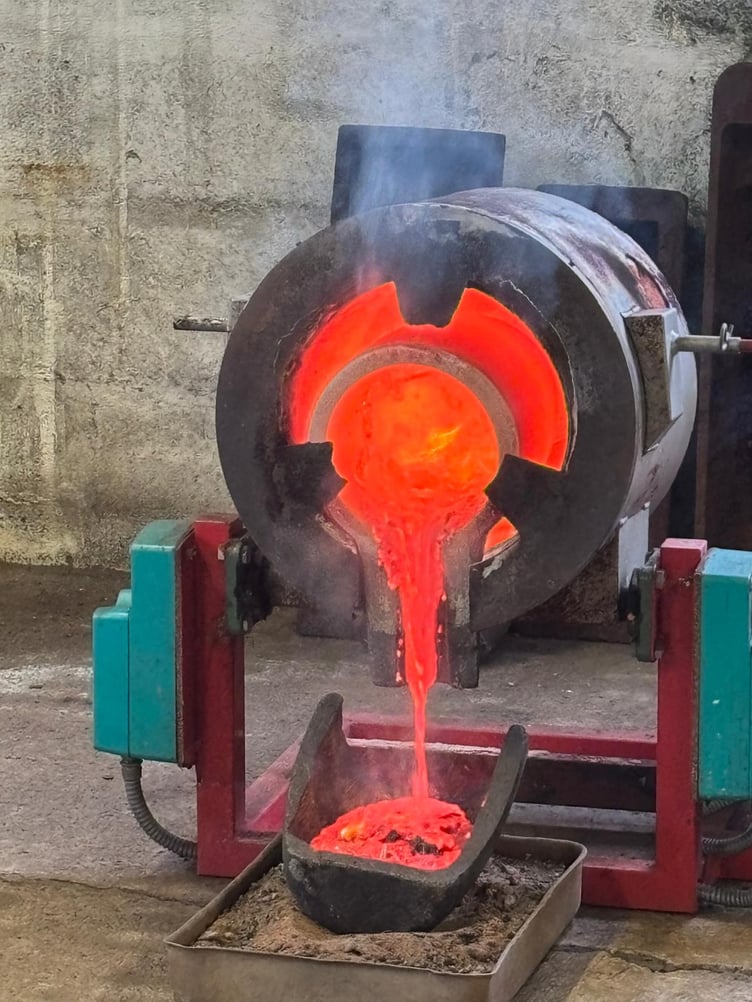
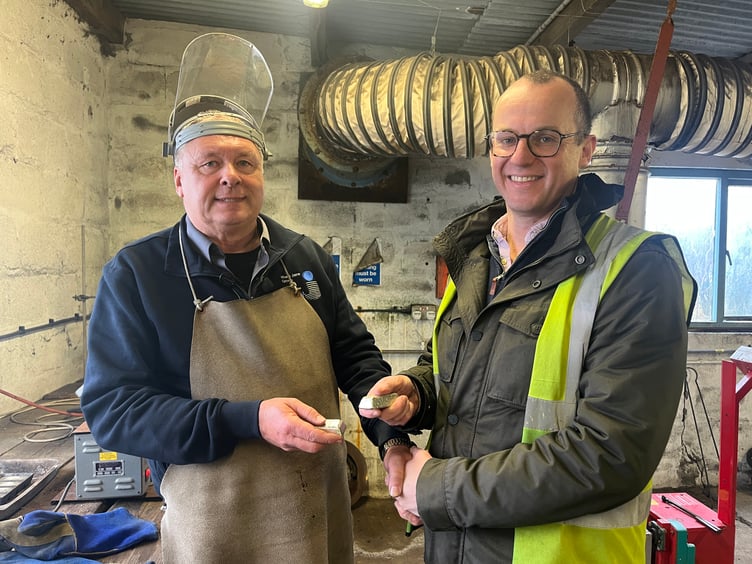
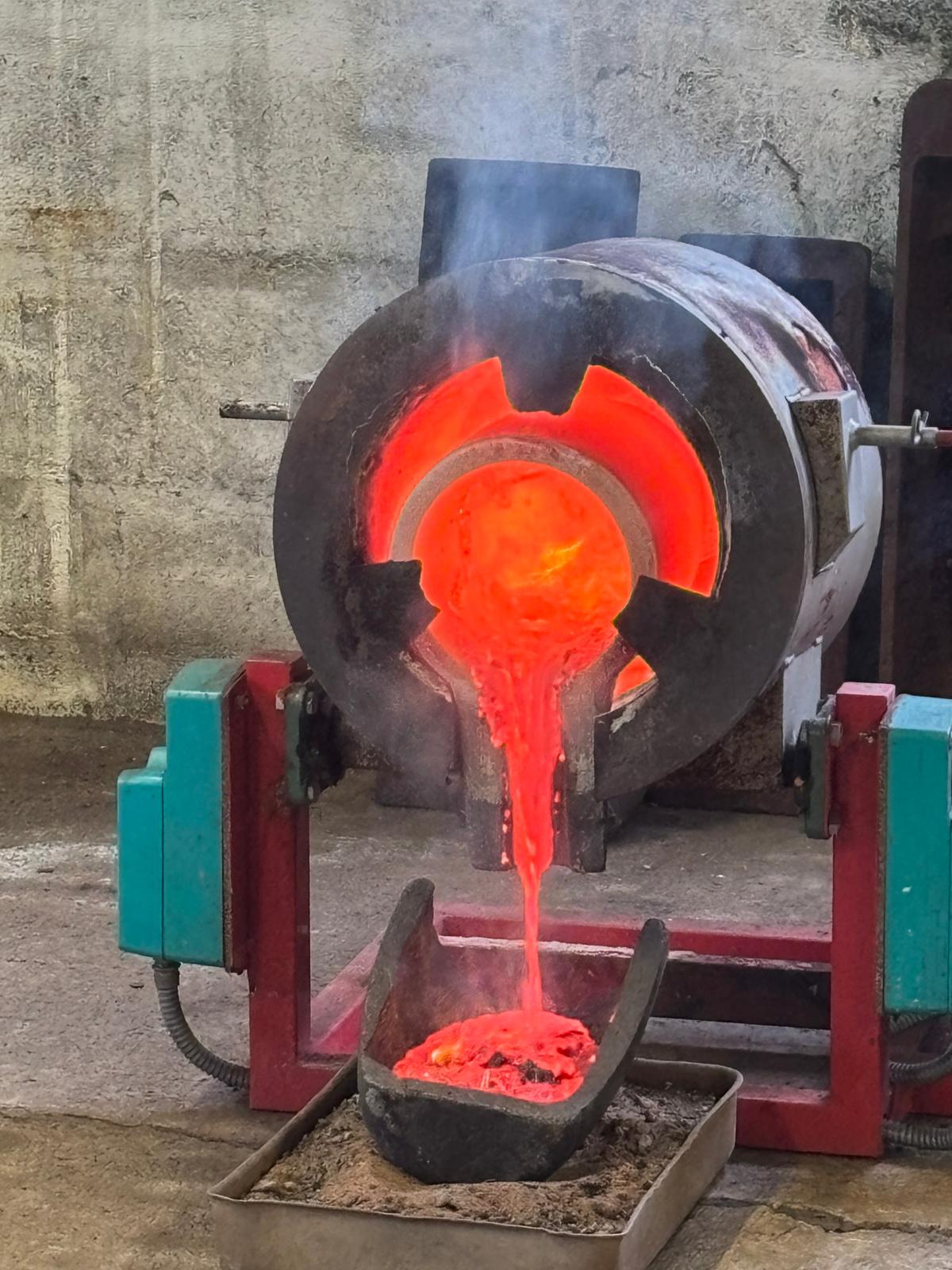
The shed doesn’t look like much, but it’s toasty inside, thanks to a furnace of molten tin that has reached a temperature of 1200C. A group huddles around it for what proves to be a surprisingly moving moment: Cliff Rice, lab director for Wheal Jane Group, tilts the cauldron to tip the glowing orange liquid into a container, where it cools and develops a thick black crust of slag to be skimmed off.
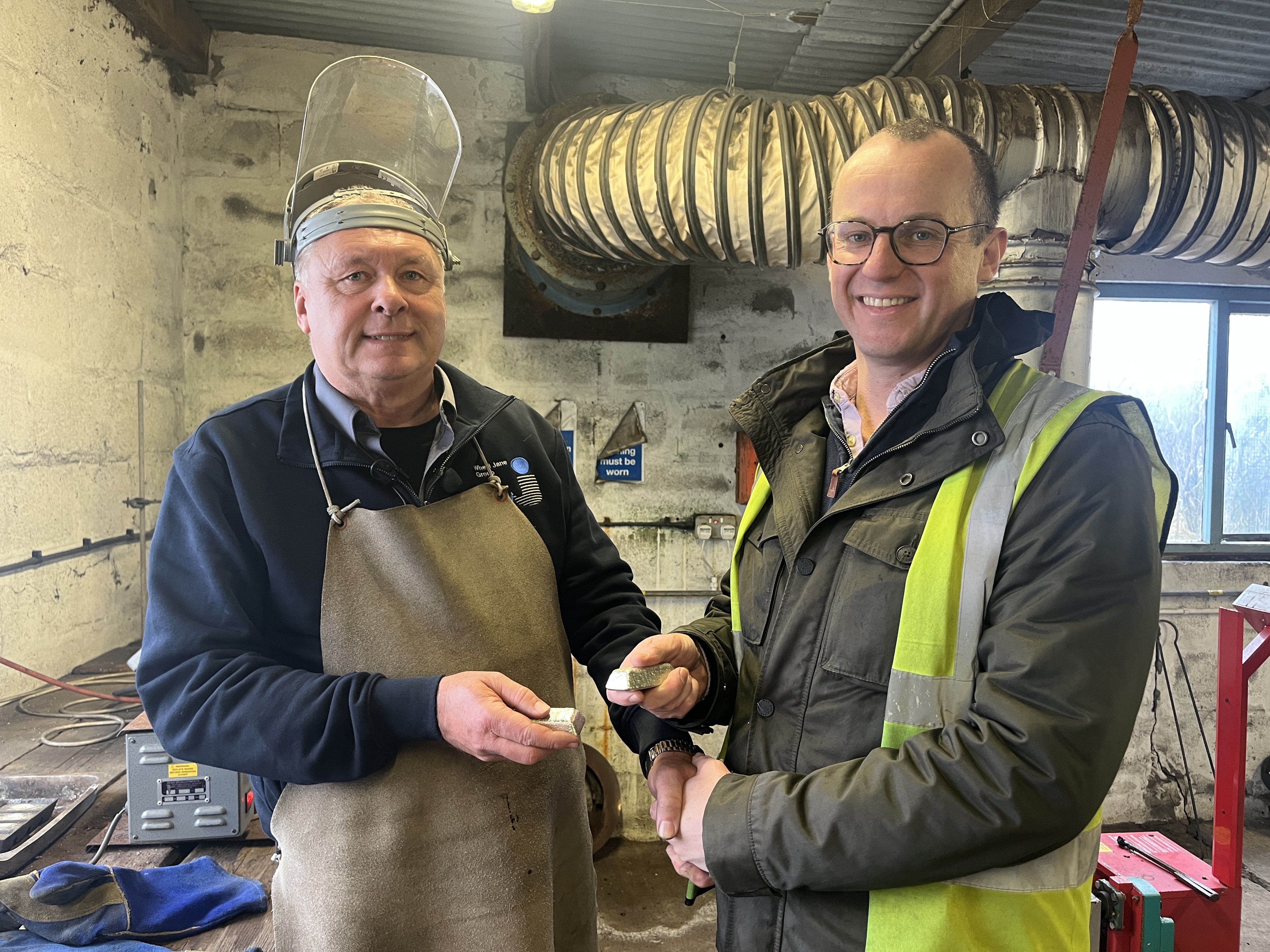
Cliff treats the tin with care verging on reverence, pouring it into moulds. There are already half a dozen ingots on the bench; these are surprisingly heavy, and some are still warm.
This is the last batch of tin to be smelted in this shed, which is scheduled to be retired permanently and converted into a house for the colony of bats already roosting here. It’s thanks to them the shed is still here: “The bats helped Tolgus,” says Cliff.
The shed was decommissioned last year, after the last batch of South Crofty tin was smelted, and Cliff thought that was that. Then Cornwall Gold came calling.
Its jewellery showroom is located between Redruth and Portreath, on the site of Tolgus Mill. The last working tin-streaming mill of its kind in Europe, it processed local mining waste to extract the last remaining tin content.
The site has been run as a visitor attraction for 40 years, and in 2014 Cornwall Gold regenerated the mill to the point of producing tin for the first time in decades. Its 19th-century stamps and barrel pulveriser crushed Wheal Jane’s ore, and its shaking tables and round frame separated the resulting materials to produce concentrate.
The tin is used in Cornwall Gold’s Tolgus jewellery range, with a percentage of the sale price directly funding the restoration of the mill buildings. These receive zero government or grant funding because it is viewed as a jewellery showroom rather than a heritage site.
On Monday, the last of the 2014 ore was smelted, producing enough tin for 15 years’ worth of jewellery. Would Cliff fire up the furnace for one last hurrah? You bet he would.
“I’ve been in the mining industry since 1980, and I love it,” he said. “Helping Tolgus is helping to preserve Cornish mining.”
Cornwall Gold managing director Mike Taylor described the moment as “a great example of how Cornish mining business are still working together”.
He added: “While we certainly hope to produce more Tolgus tin in the future, this is entirely dependent on us being able to keep the mill in good condition so it can produce tin concentrate once again.
“Our machines are not currently running. It will take a lot of refurbishment to get them back in use, and then we’ll have to find tin ore to run through the mill. So this could be the last tin smelted by us, at least for some time.”
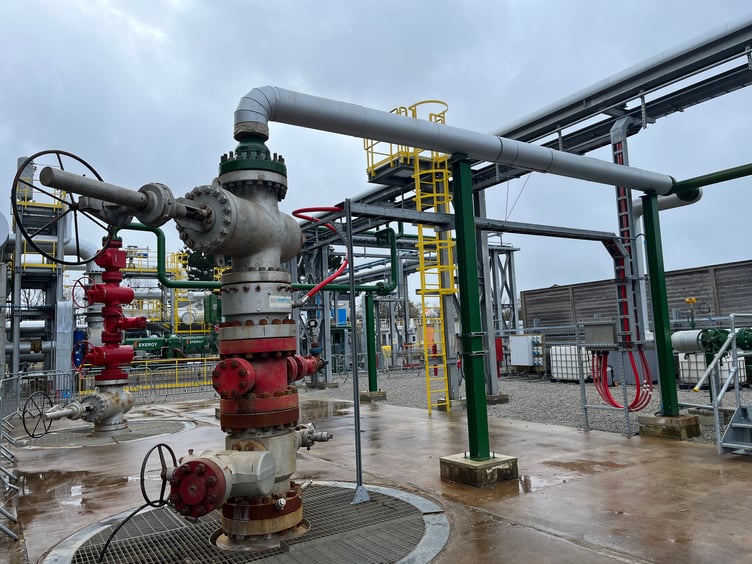
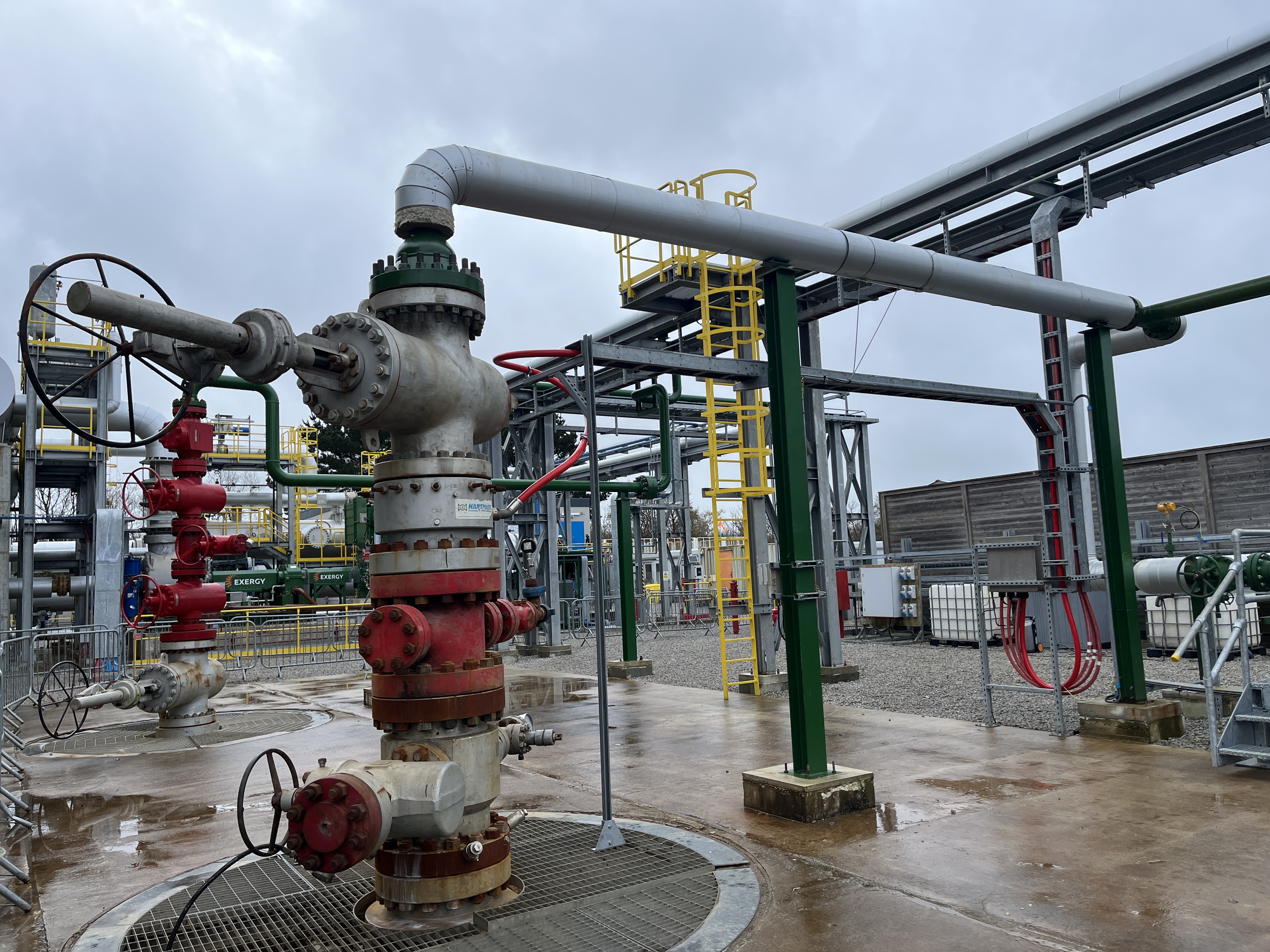
A few days later, the journalist pack was invited back to see how 21st-century technology is forging ahead in the renewables sector. Run by Geothermal Energy Lithium (GEL), the United Downs deep geothermal project is the first power plant of its kind in the UK, and home to two onshore wells including the country’s hottest and deepest, drawing water from over five kilometres underground.
By the time it reaches the surface, the water is 175C, and is used to create green electricity; this is now being delivered 24/7 to the National Grid. Octopus Energy has signed a long-term deal to purchase at least 3MW of constant, weather-independent power from United Downs - enough to supply 10,000 homes.
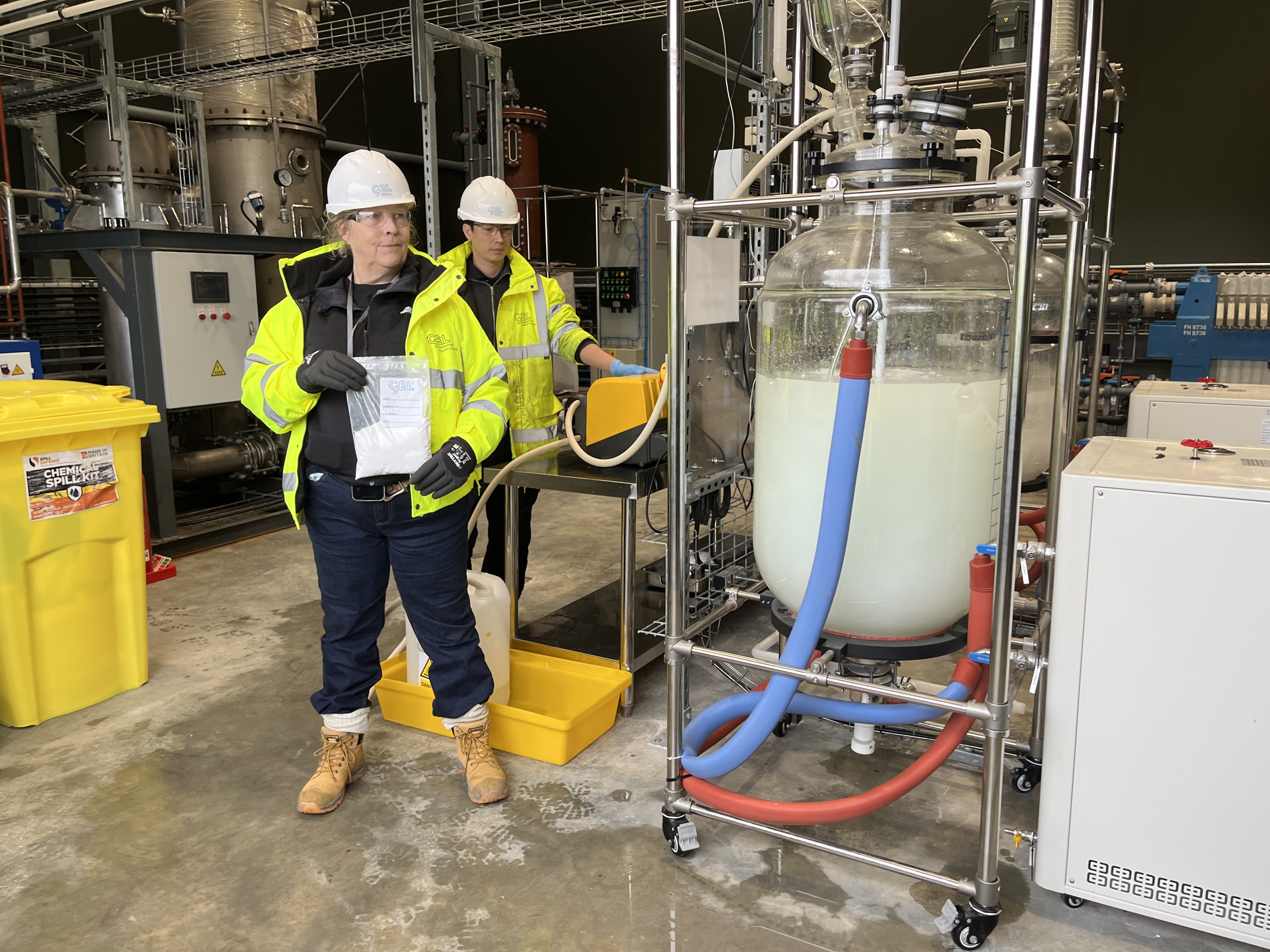
As if that weren’t enough, the mineral-rich brine undergoes chemical processes to isolate its lithium content, producing an element that is as much in demand for rechargeable batteries as ever tin and copper were for machinery and transport.
The plant has the capacity to produce 100 tonnes of zero-carbon lithium carbonate per annum. Within the next decade, GEL is aiming to scale up to producing 18,000 tonnes annually, enough to supply batteries for around 250,000 electric vehicles.
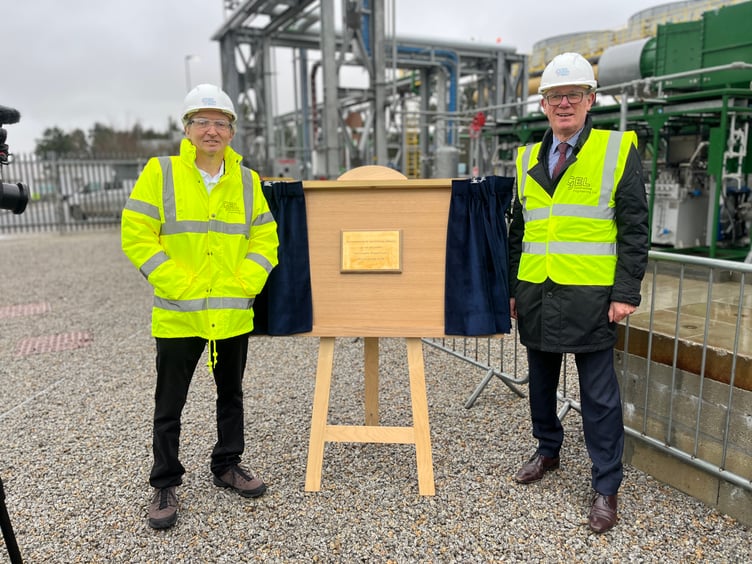
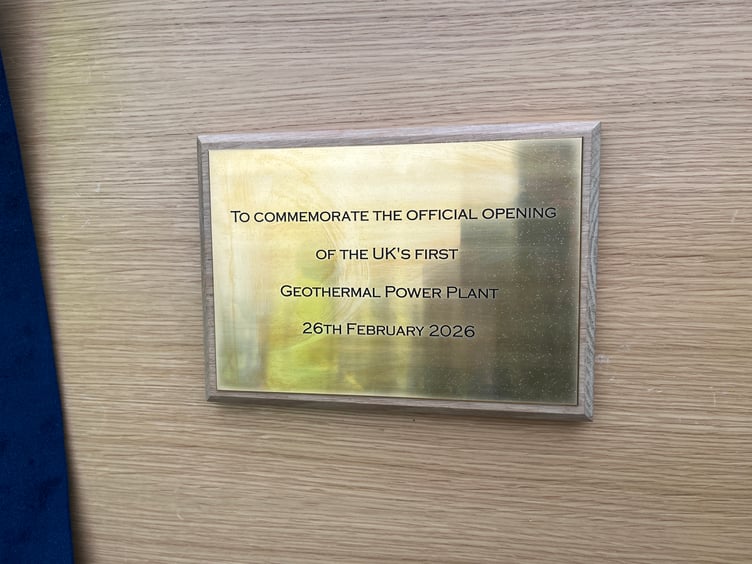
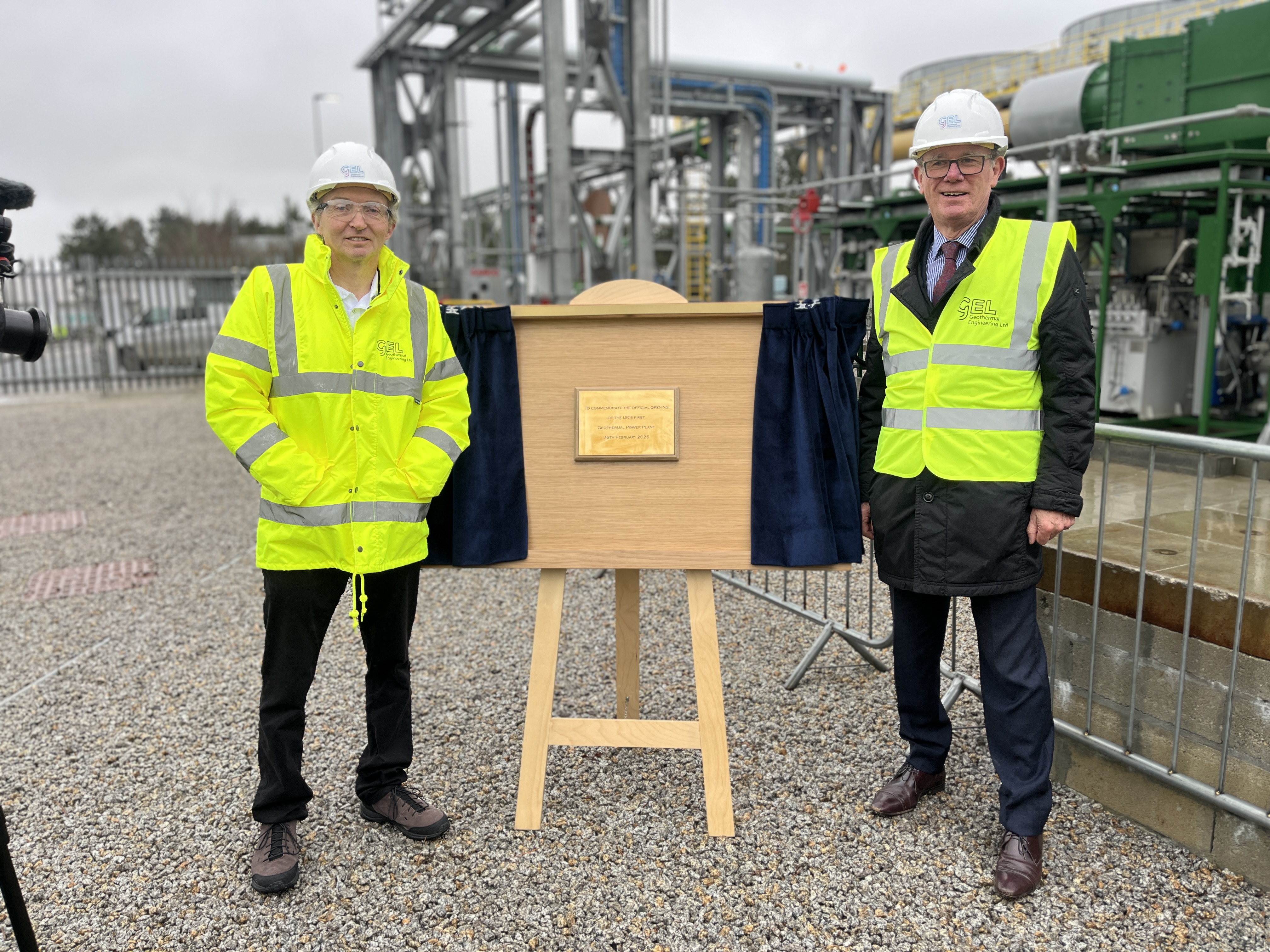
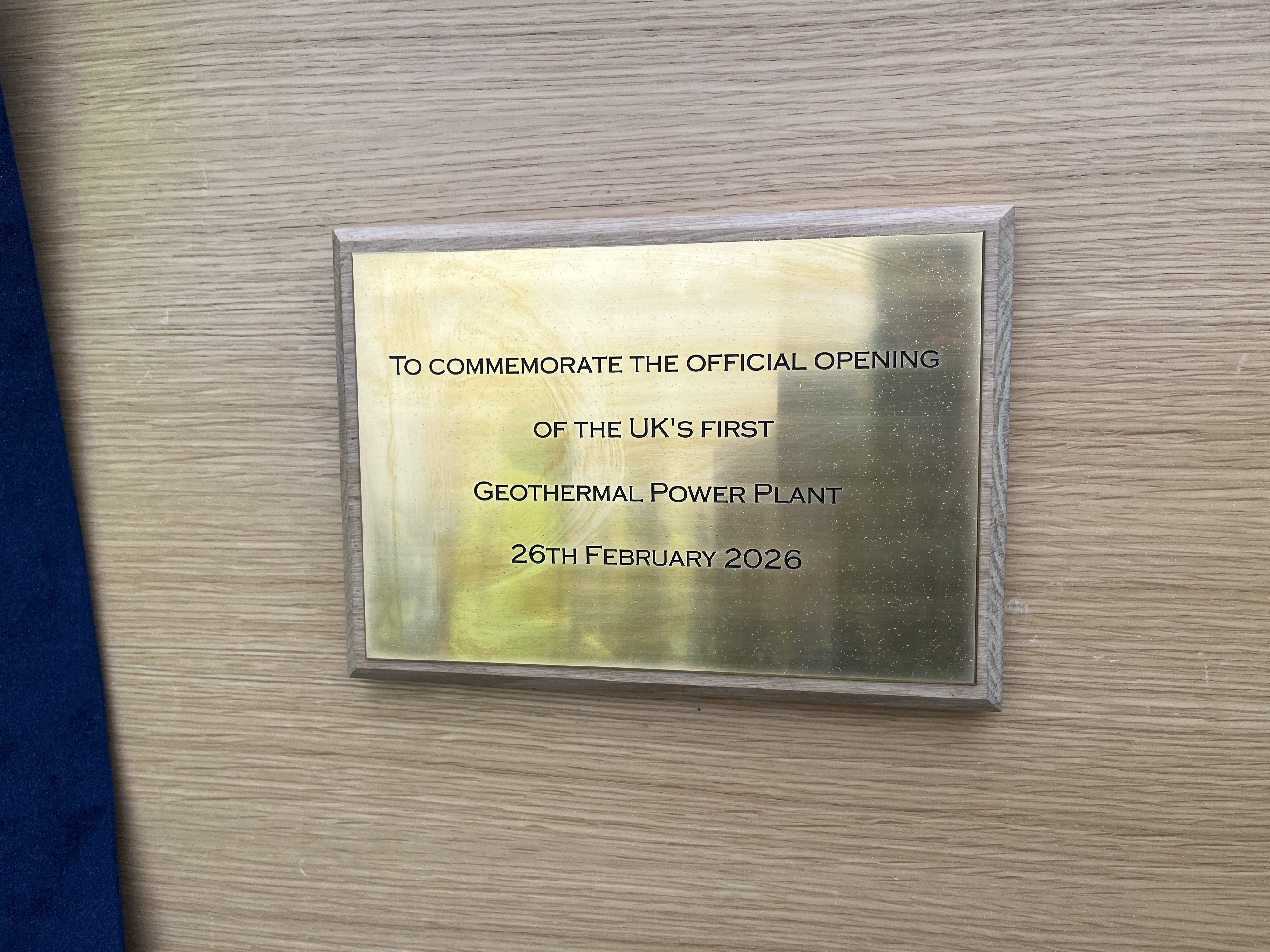
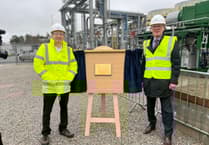
It's a moment that has been 15 years in the making; small wonder there’s a palpable buzz in the air. Staff watch a recorded message of congratulations by Ed Miliband, Secretary of State for Energy Security and Net Zero, then head outside for the unveiling of a plaque by GEL chief executive Dr Ryan Law and Lord Teverson, who championed this technology as a member of the European Parliament during the 1990s.
Dr Law beams with a mixture of pride and relief. “People think it’s easy to be the first to do something, not just in Cornwall but in the UK – it isn’t. Renewable energy is having a renaissance right now; we need to find 24/7 renewable power, and Cornwall will be at the forefront of the next decade because it has such rich geothermal resources.”
Lord Teverson is “genuinely elated - despite all the sceptism, and barriers including financial, today shows that it has come together and it really works.”
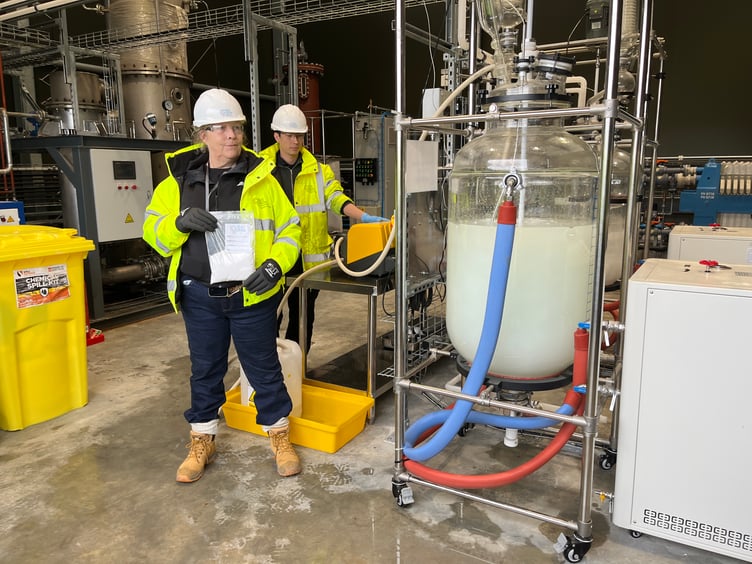
In the laboratory, “delighted” head of lithium projects Charlotte Wilkins adds lithium chloride solution to a sodium carbonate solution, resulting as if by magic in a sodium chloride (table salt) solution and swirling lithium carbonate solids, which can be used to produce the elemental form. “Beneath our feet, there are limitless resources of heat,” says Charlotte. “Lithium made using geothermal energy will be the world’s greenest lithium. I’m proud to be show that to the world today.”
GEL has two other deep geothermal sites currently under development in Cornwall. “This is a sophisticated, safer, zero-carbon form of mining,” says Dr Law, adding: “Lithium is just the beginning. There are other interesting minerals down there.” He won’t be drawn on which ones, promising a forthcoming announcement, which suggests there will be more stories to come from this understated part of Cornwall.
Comments
We've recently changed our login process. If you have an account for commenting, you will need to re-register on the login window.
This article has no comments yet. Be the first to leave a comment.