
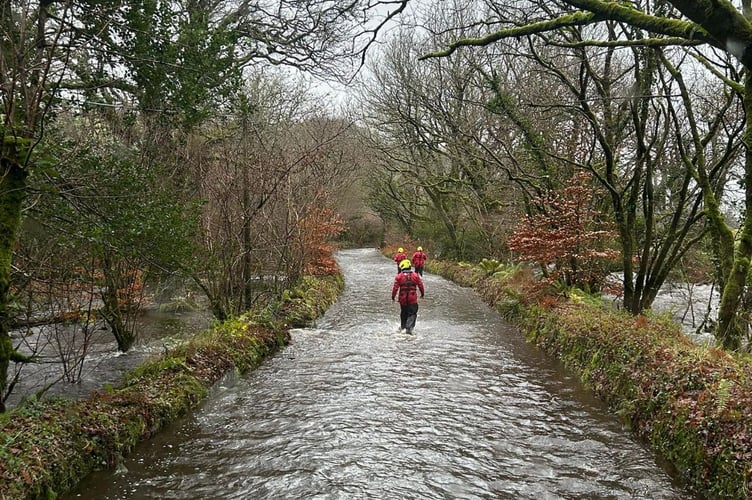
IT is safe to say that Cornwall has welcomed in the New Year with some incredibly wet conditions.
January was first christened by a visit from Storm Goretti, a system which made its way from the continent and swiftly made its presence known, battering the country and especially parts of Cornwall, with the county seeing gust speeds of 123 miles per hour alongside heavy rainfall.
Unsurprisingly, Cornwall’s roads were left in a sorry state, with debris strewn across them and patches left heavily flooded. However, the wet start to the year did not end there, as only a number of weeks later, Storm Chandra hit, bringing yet more wind and more rain to the Duchy, positively drowning roads across the South West.
A number of routes were left completely impassable, with some more closely resembling a pond than a surface fit for a car. With the roads in such a condition, emergency services were also out in force, responding to water-related crashes and vehicles left stranded in water build up.




However, despite two storms putting the region’s roads to the test, if weather conditions such as this are becoming more common, are Cornwall’s road’s fit for purpose?
According to the Local Highways Maintenance Transparency Report published in June 2025 by Cornwall Council: “Cornwall Council’s maintainable highway network, valued at over £14-billion, is its most significant physical asset and plays a vital role in delivering the council’s strategic aims.
“In a predominantly rural county, the highway network acts as a critical lifeline, connecting dispersed communities and enabling access to essential services. Whether for vehicle users, pedestrians, cyclists, or public transport passengers, the network underpins daily life and supports the delivery of council services across the region.”
With roads being such a valuable asset to the county, should the council be taking more steps to ensure their safety and function?
During January, the region’s motorists were left pondering the possibility of their journeys, unsure whether key routes within the county would still be passable amid the rainfall.
Drivers were left making risky choices in order to carry out their day-to-day activities. And while some might argue that the conditions seen in January’s storms was unlike anything seen before, data tells a much different story.
Data released by Newquay Weather Station has shown that during the last seven years – not including 2026 – five of those years have seen a rise in the amount of rain which had fallen across the region, with January 2026 already following this trend.
Therefore, if rainfall has been increasing in the area for nearly a decade, why is it that residents are still being cut off by flooding on the roads?
Following the New Year’s rainfall, a number of residents across the region reported that drainage across the road network was not functioning as it should, leading to a build up of surface water.
Becky Wise is the owner of Taylors Moor View garage near Launceston. The business, which is situated on the B3362 – a 60 miles per hour road which sees heavy goods vehicles (HGVs) and a lot of through traffic travelling to and from Tavistock – has consistently seen substantial flooding build up outside of her premises following a sustained period of rain.
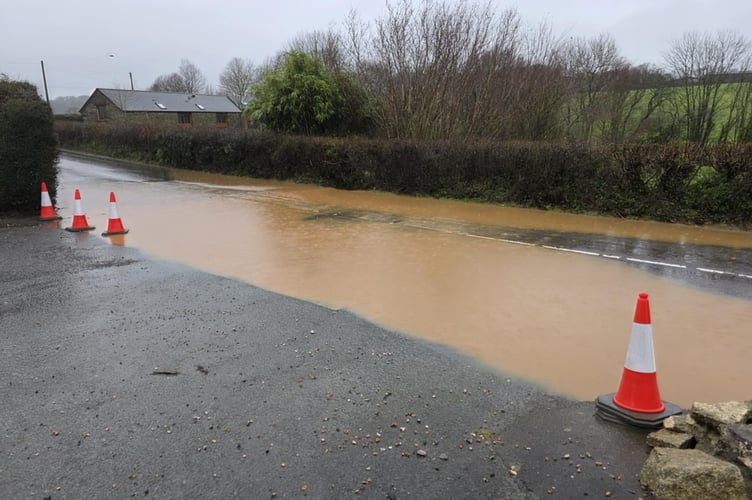
Becky says that despite the dangerous levels of flooding which builds up after any period of rain, she believes that Cornwall Council has remained ‘uninterested’ in the situation.
She explained: “The road outside the garage started flooding every time it rains and sits this side of the road with all four drains full. It eventually drains away after a couple days if there is no further rain.”
Becky says that the rain is not only dangerous for motorists, describing the blind corner as ‘lethal’ when it floods, it has also disrupted the businesses, making parts of the forecourt ‘unusable’.
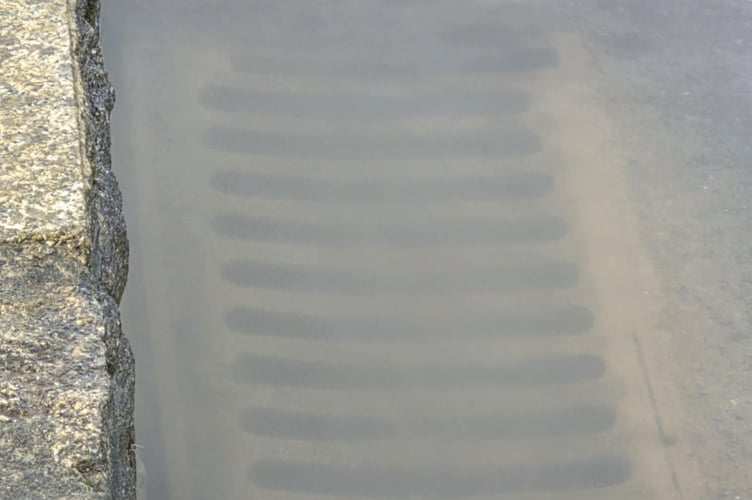
She continued: “It has caused disruption to our business as it creates a wave of water onto the forecourt leaving it unusable for parking.
“I have contacted Cornwall Council several times this year. They come and inspect in drier conditions, seem uninterested and then get a response to say basically there is no money to do anything about it.
“The road is a major highway, speed limit of up to 60 miles an hour with many large vehicles from the quarry. It took months before they would even put the flood signs up.”
As well as making some roads impassable or reducing the safety on along some routes, excess water on roads can also weaken surfaces, leading to more potholes.
A spokesperson for tyre manufacturer Michelin explains: “Similarly, rain can also cause potholes. Vehicles push excess water into the pavement surface and sub-surfaces after a rainfall. Moisture weakens the surface layers and the binding agents and causes the pavement to be susceptible to cracking. As vehicles travel over cracked pavement and/or more water seeps in through the cracks, they get worse and will eventually create a pothole.”
Kerry Louise Boniface, a learner driver from Pensilva, has expressed that the state of the roads has discouraged her from getting behind the wheel.
She said: “Since Christmas I’ve only been a passenger in my husband's vehicle because of the weather, potholes and flooding.”
She explained that much of this decision was due to the road condition.
“Many people I know have also had damage to their vehicles due to the amount of potholes on the roads.”
In 2025, Cornwall Council repaired 33,730 potholes, however, with flooding continually on the rise and causing issues, it is possible that the road conditions could worsen.
However, despite complaints, Cornwall Council has suggested that recent flooding is due to extraordinary conditions, and that the road network’s drainage ‘work effectively under normal conditions’.
Kerry added: “Now, when I think about having to drive, I get nervous because if the flood is on your side of the road, it’s a massive hazard and we’ve witnessed people crossing over the middle white lines to avoid the flood.
“There are three places between Pensilva and Liskeard that flood across the road and Newbridge Hill on the way to Callington is very often covered with water and a deep wide puddle on the corner.”
Kerry explained that she has been faced with extensive flooding on multiple occasions, particularly along the A390 near Merrymeet.
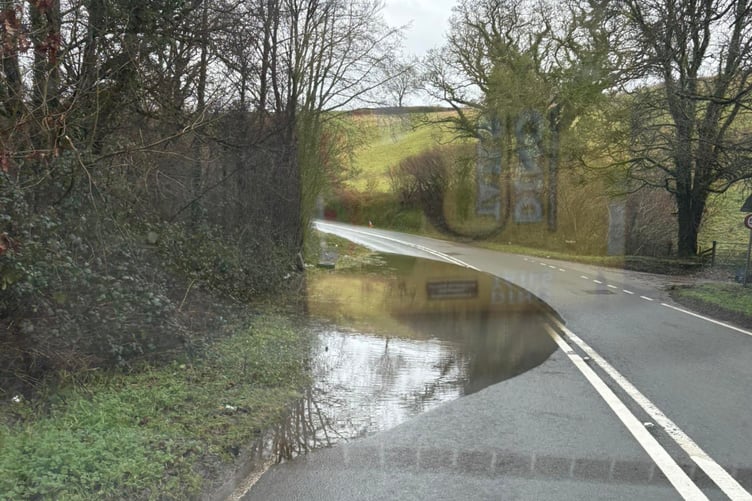
Similarly, during January, roads at Draynes Valley were left completely impassable with deep floodwater stranding several motorists.
With rainfall becoming more common and flooding covering Cornwall’s roads, it is unsurprising that drivers are left asking whether the county’s roads are fit for purpose.
When contacted about the issue, Cornwall Council said: “January brought with it three named storms and prolonged periods of heavy rain - exceptional weather events that have led to flooding in many areas, not solely on Cornwall’s roads.
“During extreme weather, we prioritise safety, deploying teams to deal with blocked drains, standing water and hazardous conditions as they arise.
“While our drains and gullies work effectively under normal conditions, they cannot prevent flooding when rivers burst their banks or heavy run‑off overwhelms the system. We will continue to closely monitor the network and work alongside partner agencies and landowners to address issues as needed.”
Comments
We've recently changed our login process. If you have an account for commenting, you will need to re-register on the login window.
This article has no comments yet. Be the first to leave a comment.