
THE stained-glass windows of Truro Cathedral feature historical and biblical subjects, writes Judith Field. Yet tucked in amongst them is an anomaly – an illustration of the attention-grabbing power of Christian legends.
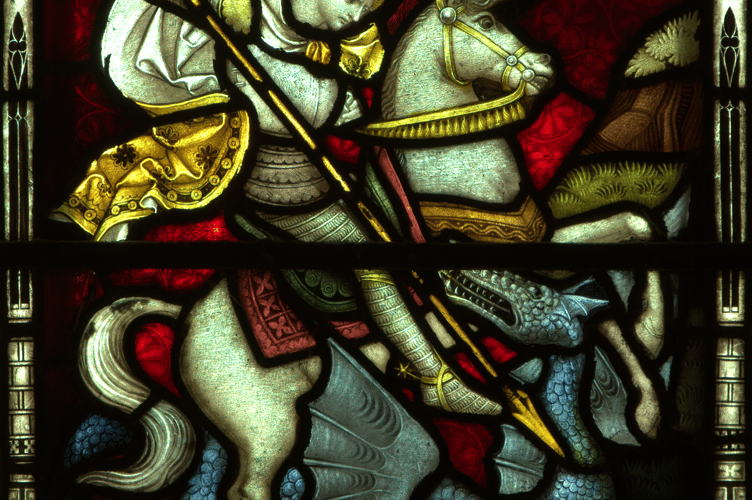
In the North Transept is a very special window, featuring three men, a horse and a dragon. From this brief outline, you can probably guess that one of the men is St George. Magnificent in medieval armour, he stares boldly out, reminding us that he is an international symbol of chivalry; the patron saint of England (and Ethiopia), famous for rescuing a maiden from being fed to a dragon. His flag will be flown by many a patriotic football fan this summer.
The odd thing about St George, however, is that records show he was a Roman soldier martyred for his faith in Palestine in AD303 – a thousand years before medieval manuscripts shot him to fame as a legendary dragon-slayer. His identification with Englishness dates from 1348, when he was selected by King Edward III as the patron saint of the newly-formed Order of the Garter (the most senior Order of Chivalry, to which the King and Duke of Cornwall belong).


.jpeg?width=209&height=140&crop=209:145,smart&quality=75)

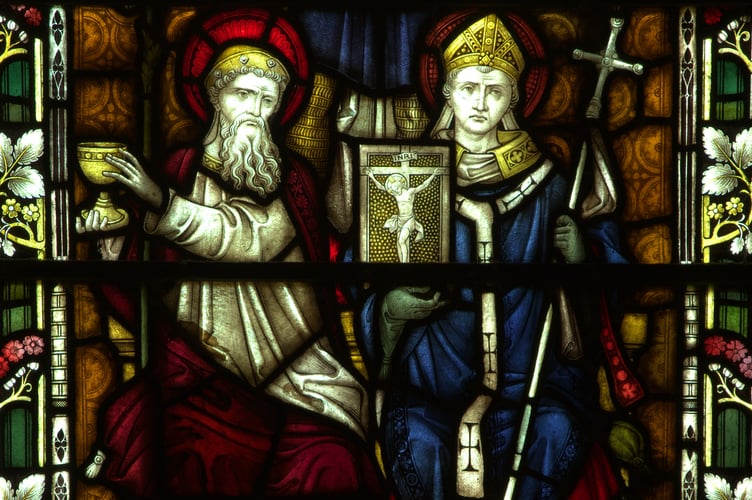
Two other historical figures sit beneath St George in the window, and both spawned west-country legends. One is St Augustine of Canterbury who, in AD597, was sent by Pope Gregory to convert the Anglo-Saxons to Christianity. King Ethelbert of Kent let him settle in Canterbury, and his mission certainly took off!
The 106th Archbishop of Canterbury, Dame Sarah Mullally, has just taken office, but unlike Dame Sarah, St Augustine was a prickly character. A legend grew that when people in Stroud played a trick on him by attaching a fish tail to his cloak, he cursed them so that their descendants were born with tails!
The third person in the window is St Joseph of Arimathea, who took the body of Jesus from the cross and prepared it for burial. Legend has it that afterwards, he journeyed to Avalon (Glastonbury) carrying with him the mythical Holy Grail (said to be the cup that caught Christ’s blood at the crucifixion). The legends of the Glastonbury Thorn Tree (that sprouted from the staff of St. Joseph), and the quest for the Holy Grail by King Arthur’s Knights of the Round Table, have gripped us ever since.
In the cathedral’s window, St Joseph holds the Holy Grail, keeping it well away from a glum-looking Augustine sitting beside him, a reference perhaps to a famous incident in AD603 in which Augustine failed to stand up when visiting bishops from Cornwall and the west entered the room. Offended, the bishops firmly rejected his proposal for their Celtic and his Catholic branches of Christianity to combine. It took another 230 years for this to happen, proof that although good manners cost nothing, lack of them can be expensive!
Truro Cathedral celebrates St George’s Day on April 23 with a special Evensong at 5.30pm. To find out more about the windows, visit www.cornishstainedglass.org.uk
Comments
We've recently changed our login process. If you have an account for commenting, you will need to re-register on the login window.
This article has no comments yet. Be the first to leave a comment.