
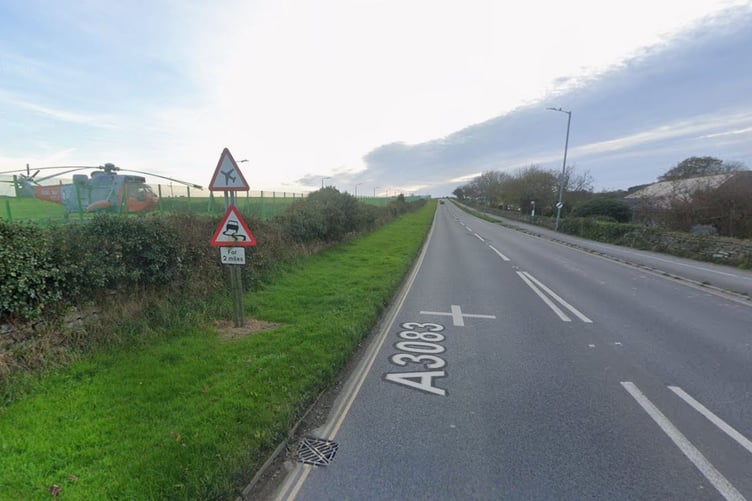
A campaign group is calling for the installation of average speed cameras on a busy stretch of road to be paused “pending an evidence-based review”.
Cornwall Council has explained why the camera system will go ahead despite the protestations.
The council carried out a public consultation earlier this year into the possibility of installing a four-camera average speed camera system over roughly two miles of road on the A3083 past RNAS Culdrose at Helston, as well as reducing the speed limit from 60mph to 50mph.
It followed a petition, signed by almost 2,000 people, calling for average speed cameras on the road, which has seen a number of fatal accidents over the years. An assistant coroner in Cornwall had also highlighted concerns around the absence of speed enforcement and identified the need for action to help prevent future deaths.
As a result of the consultation, the council has dropped plans to lower the speed limit but will go ahead with the average speed camera system.
However, not all residents are happy. The A3083 Culdrose Road Campaign has said the council is pressing ahead with the scheme “despite a majority of consultation respondents objecting to the cameras, without any cost-benefit analysis for the roughly £250,000 scheme and against the grain of the council’s own speed survey, which shows the vast majority of traffic is already travelling within the range the scheme was meant to achieve”.
It said that documents received following a Freedom of Information Act (FOI) request “reveal that the match funding was signed off eight months before the public was consulted, that the funding body’s board only approved up to £87,500 for a scheme tied to a 50mph limit that has since been dropped and that the council relied on an external online petition in its decision even though it has told residents it does not treat external petitions as part of its decision-making in relation to the Fairground Car Park introduction of charges [in Helston]”.
Dennis Lucan, of the A3083 Culdrose Road Campaign, said: “This was never about not caring. Everyone who lives here wants this road made safer. But the council’s own documents show it committed the money before it asked us, produced no cost-benefit analysis and pushed ahead with cameras that more than half of respondents objected to, on a road its own survey says is already largely compliant.
“When residents petition against something the council wants, we are told external petitions do not count. When a petition happens to support the council, it is written into the decision. People deserve consistency, evidence and honesty about how their money is spent.”
The campaigners have highlighted that the council’s post consultation scheme summary recorded 558 responses – 30 per cent wholly supported the scheme and 62 per cent objected. On the cameras alone, 289 respondents (51.8 per cent) raised objections or concerns and 287 objected outright.

A Cornwall Council spokesperson said: “We recognise that residents care deeply about safety on this route and that has been the council’s objective throughout the development of this scheme.
“Funding was secured as part of the scheme development process, which is standard practice and enables potential highway improvements to be considered. Securing funding does not predetermine the outcome of consultation, which helps inform the final scheme design.
“A petition calling for average speed cameras on this stretch of road attracted almost 2,000 signatures and, following an inquest in November 2025, Guy Davies, assistant coroner for Cornwall and the Isles of Scilly, highlighted concerns around the absence of speed enforcement on this route and identified the need for action to help prevent future deaths.
“Consultation feedback formed an important part of the decision-making process. While a significant number of respondents raised concerns about average speed cameras, decisions were informed by a range of factors, including collision history, speed data, stakeholder feedback, the coroner’s recommendations and the council’s duty to improve road safety and reduce the risk of future collisions.
“While no formal cost-benefit analysis was undertaken or held for the scheme, the council had regard to recognise road safety assessment principles, including the Department for Transport’s values for the prevention of road casualties and collisions.
“These values are used nationally to help understand the human, social and economic impacts of collisions and currently place the average value of preventing a road fatality at over £2.5 million and a serious injury casualty at over £283,000. In light of the tragic loss of three lives on this route in recent years, and injuries sustained by others, the potential to reduce future deaths and serious injuries was an important consideration in the development of the scheme.
“Whilst speed survey data indicated that the vast majority of vehicles were travelling below the current 60mph speed limit, it also recorded nearly 4,000 vehicles exceeding the limit during the nine-day survey period. Investigations into the recent fatal collisions identified excessive speed, including grossly excessive speed, as a significant contributory factor.
“The consultation process directly influenced the final scheme. The original proposal to reduce the speed limit to 50mph was reviewed following feedback from road users, and the speed limit will now remain at 60mph.
“Research shows that average speed cameras are effective at improving compliance with speed limits and encouraging more consistent driver behaviour. The council remains committed to making evidence-led decisions that improve road safety and reduce the risk of future collisions on the route.”
Comments
This article has no comments yet. Be the first to leave a comment.