
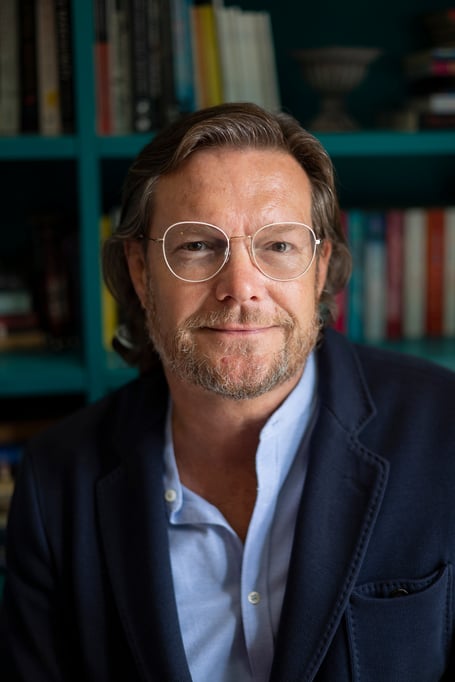
A new book is set to be published that explores Cornwall’s astounding beauty and culture.
Cornishman and former journalist Jonathan E Cox has returned to the UK after a 30-year absence for a writing sabbatical at Falmouth University.
Written with wry humour, The Cornwall Sabbatical is a touchingly poignant reflection of a way of life that has largely disappeared – an investigation into Cornwall’s cultural distinctiveness. It is due to be published on September 28.
The book is a humorous chronicle of their experience as they explore picture-perfect fishing villages and coastal coves and crisscross a granite landscape of rugby posts, old mine stacks and the barely discernible ruins of an ancient Celtic nation.



The gritty Cornwall of his childhood has gentrified into one of the most desirable locations in the UK and become a magnet for Michelin restaurants even as sharp inequalities remain.
A touching story about a lost way of life, The Cornwall Sabbatical reveals how Cornwall’s unique geology, climate, natural history and position as the end of the known world for much of antiquity has created a pioneering libertarian spirit and distinctive culture that is timeless.
Born in Penzance, Jonathan is a former Fleet Street journalist and international news agency correspondent. He recently completed a postgraduate writing degree at Falmouth University with a first-class honours degree (distinction).
The Cornwall Sabbatical is his first, but hopefully not last, book. To make ends meet as a writer, he also works as a consumer analyst.
Jonathan explains: “Cornish, I was born into a working-class family in Helston. I left Cornwall in my teens as there was little in the way of opportunity for young people. Covid triggered a reappraisal and I returned to Cornwall after living outside of the UK for over 30 years, first as a wire journalist and then as a financial analyst based in Zurich.
“I was blown away at the changes – lots of high-end cars, Michelin restaurants, gastro pubs, and loads of people on the beaches and in the water even in the darkest days of winter, something that rarely, if ever happened in my youth.
“More prosperous, there is more pride in place with Cornish flags everywhere and the Cornish recognised as a minority. But there is also a lot more homelessness and poverty with many people being left behind. A traditional way of life, particularly family social support structures, have disappeared.”
“I wanted to write about Cornwall in an entertaining and humorous way, covering serious issues, but not browbeating the reader. I look at some of the drivers of change as well as what is the ongoing move toward Cornwall’s greater independence with the UK.
“There are a lot of books about Cornwall – either overwhelmingly optimistic, dazzling as whitewashed fishermen’s cottages, or as bleak as some of the damp, bleak housing estates littering the inner peninsula.
“Not many are written by a Cornish author who tries to walk a middle ground. I never expected to write this book. It has become a labour of love dedicated to Cornwall, my first love.”
Comments
This article has no comments yet. Be the first to leave a comment.