
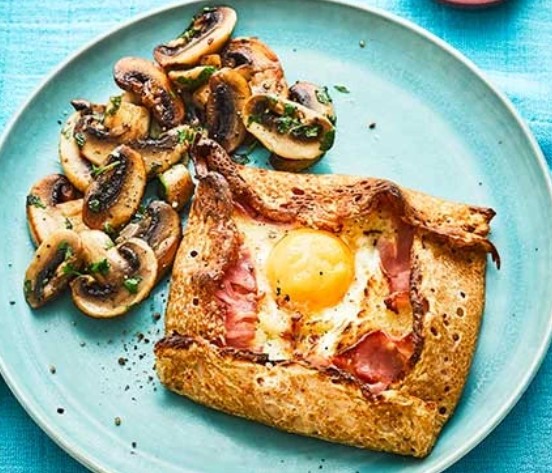
I’m trying to drag the galette mixture across the hot surface of the crepe maker, and it’s not falling flat as the proverbial pancake.
My effort is too thick in places, too thin in others altogether too uneven and it begins to err, darkly caramelise – erm, that’s a technical term -in places.
“It takes weeks of practice,” Mariana tells me. She has an unenviable job of trying to turn me, something of a dab hand in the kitchen if I say so myself – an application for MasterChef perhaps? – into a galette maker.
-Gary-Batchelor-Sue-Netherton-Chris-Lewis-Rob-Nicholls-Rowena-Castillo.jpeg?width=209&height=140&crop=209:145,smart&quality=75)
.jpeg?width=209&height=140&crop=209:145,smart&quality=75)

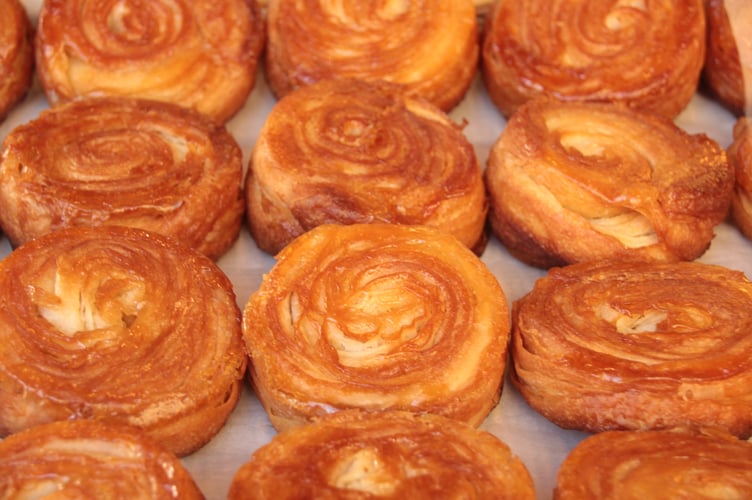
Galettes are a traditional food in Brittany. And here’s the thing: unlike crepes that are made from flour, eggs, butter and a little cream or milk, galettes are made from buckwheat.
“Buckwheat is gluten free. It’s not cereal. It’s made from the seeds of a plant that’s in the same family as rhubarb,” she says.
My cooking lesson at L'Atelier de la Crêpe in Saint-Malo is just two hours followed by a lunch downstairs in the popular café. Normally, it takes six weeks to be a fully accredited galette maker if you have no experience. Otherwise, if you’re a professional chef, it’s a two-week course. Yes, food and cuisine take time in France and here in Brittany. Time is the ingredient that’s perhaps most missing in other international cuisines.
Galettes can be savoury or sweet. As a main course, the savoury elements are added after the galette is cooked on one side, then flipped – and no, I didn’t master the flipping art! It’s then folded in on itself, forming a neat triangle or square parcel of deliciousness.
Sweet galette elements are served on the side, which is not surprising that a good pinch of quality sea salt is added with the ground buckwheat and water before it’s left to sit in the fridge for at least 24 hours – better still if you can hold off for 48 hours.
The dish has been part of local culture since at least the 9th Century. Before the Second World War, galettes were considered to be poor peasant food. That thinking, however, changed during the German Occupation and with wheat and other produce in short supply, galettes can back into their own. Today, galettes are ubiquitous across Brittainy. L'Atelier de la Crêpe runs restaurants across Paris and has outlets as far as Japan.
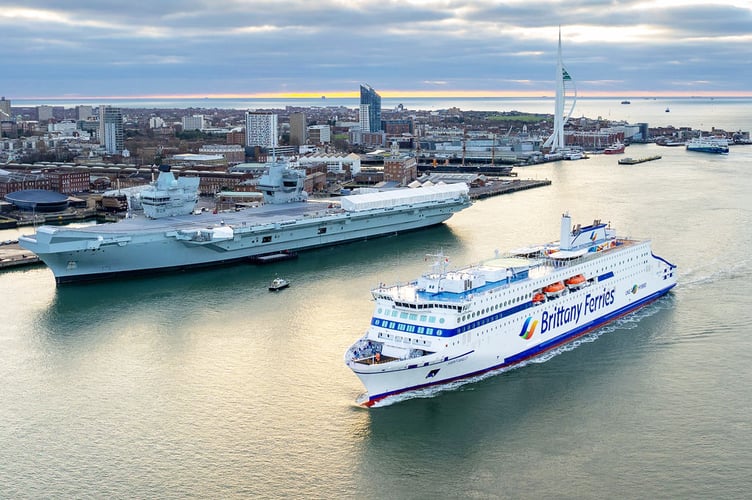
Getting to Brittany is a breeze, thanks to a handy schedule of sailings by Brittany Ferry from Portsmouth and Plymouth. Indeed, the line operates from most south coast ports to France and Spain. With the uncertainty caused by events in the Persian Gulf and their knock-on effect on airline schedules and fuel, Brittany Ferries have locked in their bargain prices for passengers. There is a certainty to sailings and no chance of your trip being cancelled because of fuel shortages or fuel surcharges. Brittainy Ferries have actually frozen their prices, guaranteeing you can budget and buy with absolute certainty.
Brittany Ferries offers a range of offers such as great savings on up to 5 days away from just £204 return for a car and up to two passengers - that's just £102 per person. Or make it a family break for only £266 return for two adults and two children with your car. That offer the most convenient cross-Channel ferries to France, with the widest choice of ferry crossings. You can depart from three ports to France from the UK.
Travel from Portsmouth, Plymouth or Poole and alight in Cherbourg, St Malo, Caen, Le Havre or Roscoff, for a direct English channel crossing to your holiday in France. For more information view its route map and timetables.
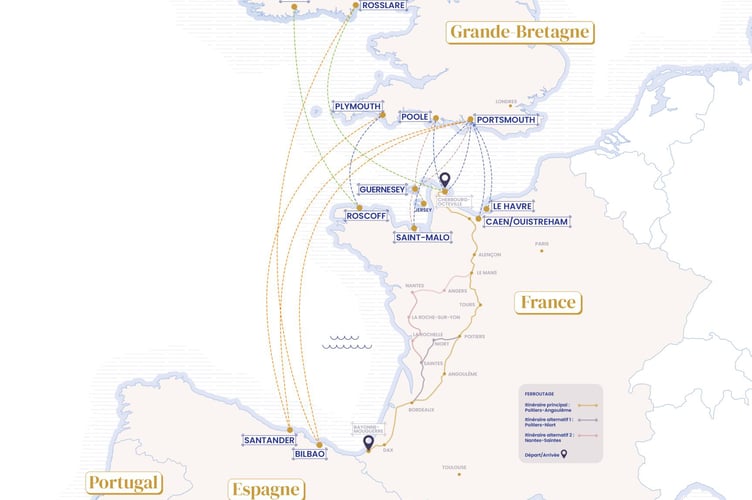
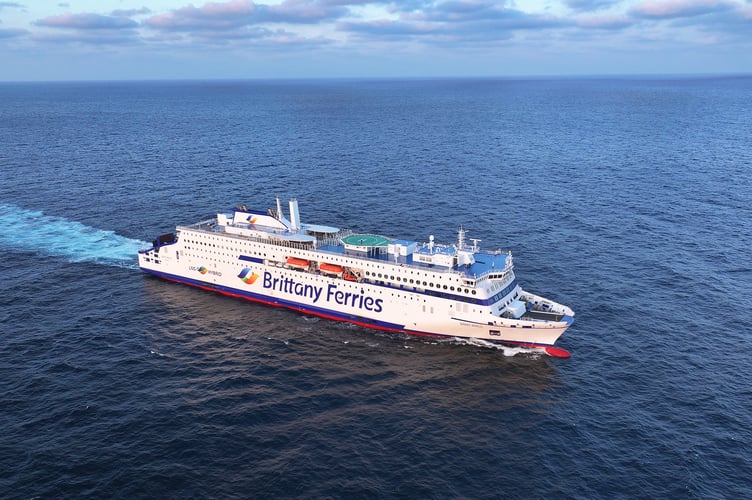
I brought my car on the convenient 8pm sailing from Portsmouth right into the heart of Saint-Malo on the new vessel names after the port. It’s state of the art with dual-fuel hybrid engine and is as smooth as those galettes I finally managed to master.
The ferries are built for comfort and leisure, with spacious lounges and exceptional onboard facilities, including restaurants, cafes, and bars.
Our very comfortable cabin with a sea view was perfect for the overnight 12-hour crossing.
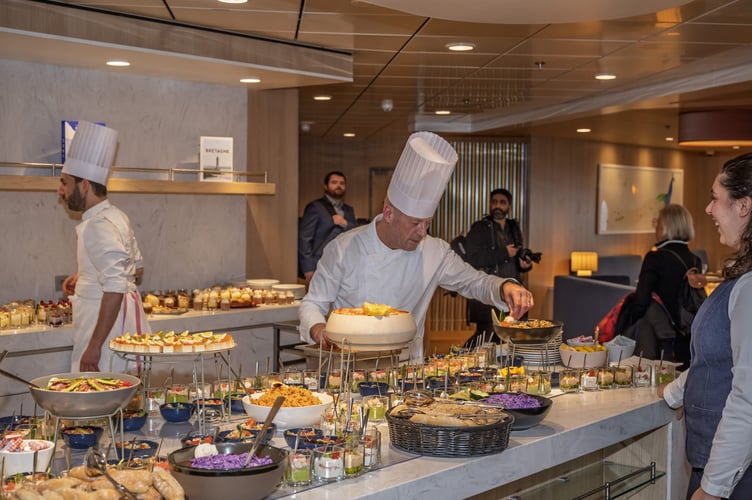
The C-Club executive buffet offered a wide and delicious range of nibbles and food – oysters anyone? – and my partner and I were lucky enough to enjoy it both for evening dinner and breakfast the next morning as the Saint-Malo calmly sailed forwards the walled city and small islands that dot the coast.
My limited knowledge of the city came from reading the Pulitzer Prize-winning novel, All the Light You Cannot See and a subsequent Netflix mini-series based on the book.
It’s a tourist mecca, with its inner walls – Intra Muros as it’s correctly known - and the island outcrop of Mont-Saint-Michel to the east on the tourism circuit. Sadly, tourists who just visit those two sites miss so much of Brittany’s culture, history, heritage, towns and villages as they rush off for the next selfie moment in Paris.
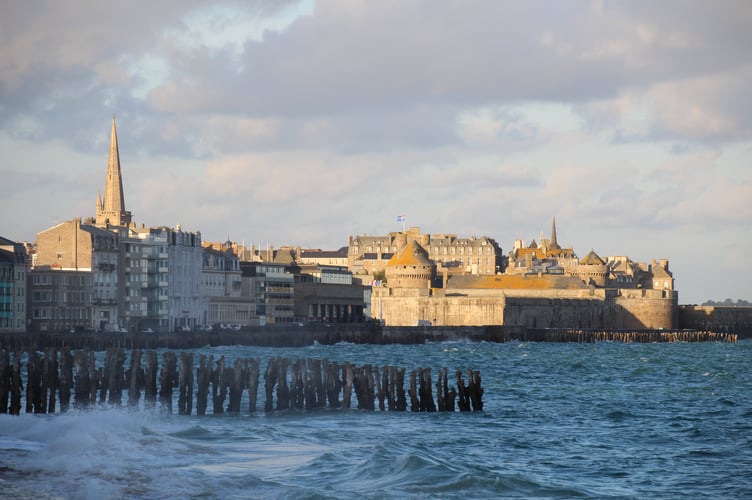
Completely surrounded by ramparts, the old town contains a rich historical heritage, secret streets, shipowners' houses, lively cafes and shops. The fortified walls of the city, dating from the twelfth century, will take you through time and lead you from discovery to discovery. Even though Saint-Malo has suffered through many sieges and battles, the old town nevertheless remains timeless.
We spent an afternoon walking the ramparts stopping for a refreshing local cider – the beverage of choice in the region – and having galettes, of course.
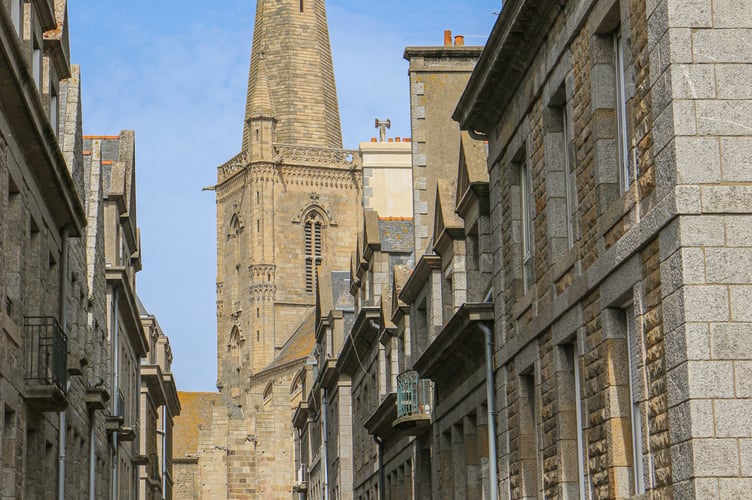
Countless hours were spent walking the streets below too, getting lost in another age. More than 50 buildings are classified as “historical monuments”. Initially built from wood, the facades were only clad in stone from the 17th Century onwards. It has a long history of privateering earning much wealth from local extortion and overseas adventures. Sadly, it was heavily bombed by the Allies in the weeks after D-Day but has been fully restored to its historic charm and glory.
Having spent two decades living in Canada, I was surprised to learn that Jacques Cartier was born in the city in 1491 – just as Christopher Columbus was setting sail across the Atlantic.
Cartier was the first European to explore the eastern seaboard of Canada and is credited with giving the country its name. The story goes that he and his men encountered a group of native Indians and asked what the location was called. “Kanata” same the reply. They, of course, meant “village”. So, there you have it, the world’s second-largest country is named village.
Prior to his death in 1557 - he is interred in the cathedral in the city - Cartier made two trips to Canada and explored the St. Lawrence River as far as present day Montreal. He believed it was the Northwest Passage, the elusive shortcut between Europe and China. At Montreal, his progress up the vast St. Lawrence was ended by raging fast-flowing rapids. To this day, those rocks are still called “Lachine Rapids” – the Chinese rapids.
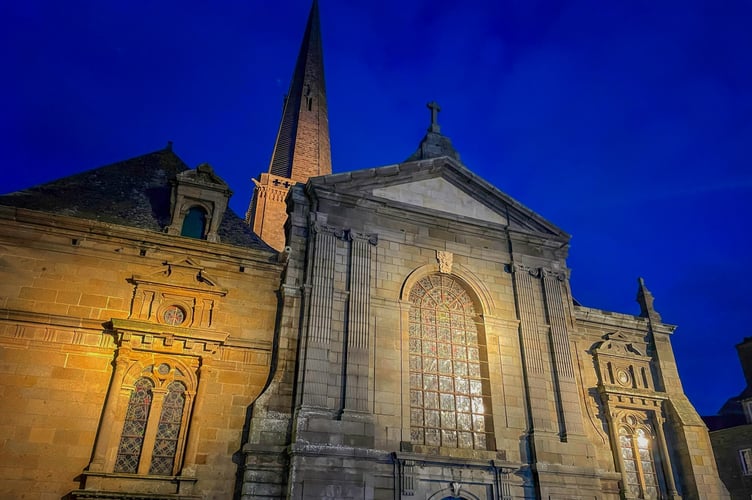
Beyond the walls of the city, there’s a thriving sailing port and nightlife, with local theatres and cultural events taking place across the calendar.
Our base in Saint-Malo was the new Oceania Hotel, just two minutes’ walk from Porte Saint-Vincent, the main portico into the Intra Muros.
The hotel opened just two years ago and offers all the luxury facilities and features you would expect from a discerning brand.
Seafront rooms at the Oceania Hotel offer a marvellous panoramic view of the coast and beach. On one day of our four-night stay, a storm blew in, driving waves and sand into a frenzy on Sillon beach below – a perfect canvass to watch unfold while tucked up in our comfortable bed covers.
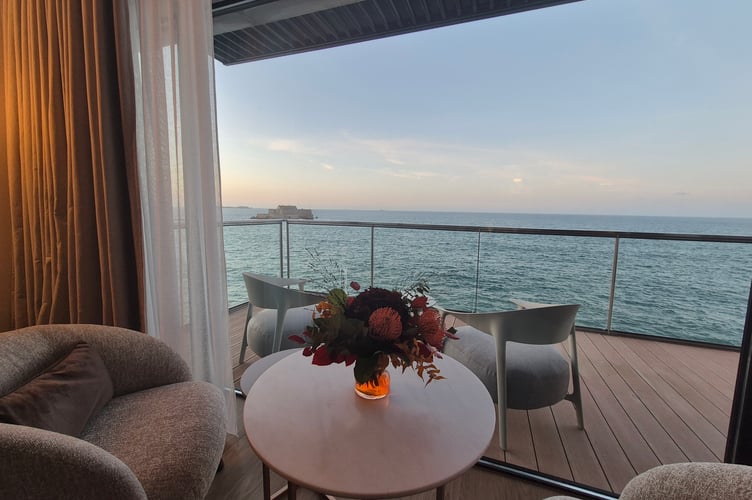
The Oceania Hotel also features a fantastic spa and swimming pool, joyed by my partner during the hours I sweated and fretted trying to master those galettes. At night, after days spent exploring the city and wider region, we enjoyed night caps in the lounge bar. In warmer weather, the terrace is the perfect place to have a drink with friends or indulge in a Sunday morning brunch.
And any brunch in Brittany means oysters. There’s none fresher or sweeter than those from Cancale. A handy 30-minute direct drive from Saint-Malo – or as long as you like if you linger along the coast road with its coves, inlets, little beaches and villages – Cancale is the centre of oyster production in Brittany. And it’s a fascinating place.
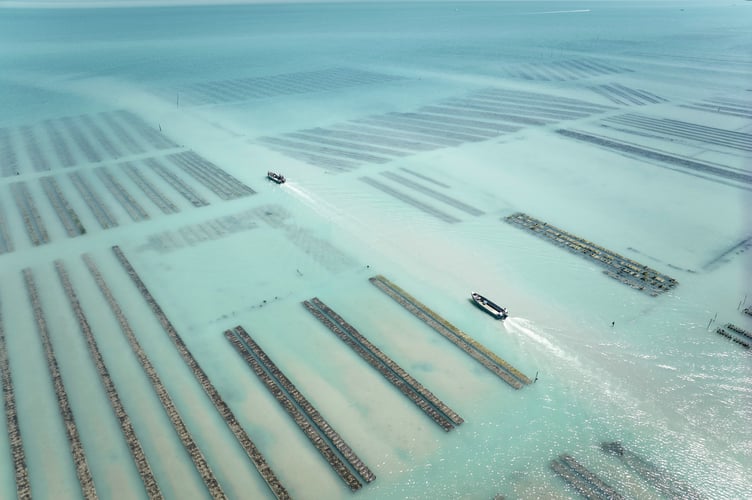
The tides in Mont- Saint-Michel Bay are strong. Those, along with the nutrient-rich sea and clean rivers flowing into it, create the perfect environment for oysters to thrive. We were lucky enough to visit Le Ferme Marine, the historic and main oyster farm in Cancale. It opened its doors in 1989 as a centre showing the history and culture and highlighting the skills of oyster farming in the region.
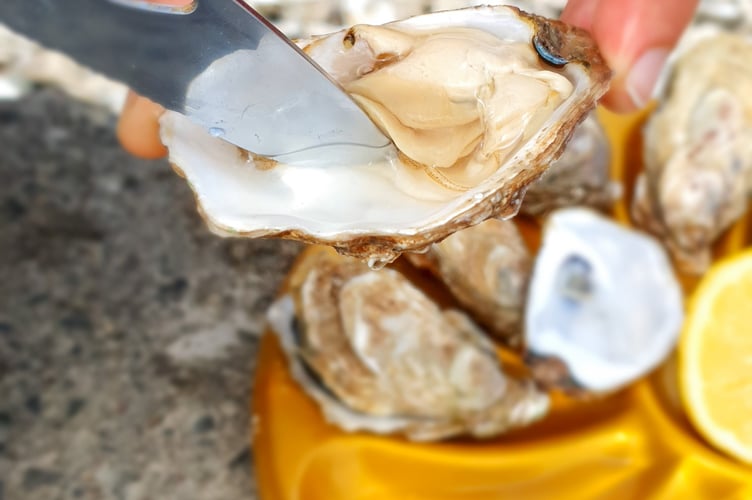
It’s a long process to cultivate the perfect oyster, and the molluscs spend four years being nurtured in the oyster beds. That combination of time, environment, water and the elements make for high-grade oysters that are shipped as far as China and Japan. Small wonder then that Cancale oysters have been included in UNESCO's list of intangible cultural heritage for the past seven years.
The molluscs are on the menu of every restaurant worth its salt in Brittany. Just add a squeeze of lemon and off you go. According to our guide at Le Ferme Marine, there’s no right or wrong way to slurp them down – but it is recommended to chew them to fully enjoy the full flavour of the sea.
Once their open and the flesh loosened from the shell, tip off the excess sea water and wait 10 seconds or so, and then enjoy. The custom of adding a squeeze of lemon comes from checking to see if the oyster was fresh in the days before ice and refrigeration. Live oysters recoil when the acidic lemon juice hits them.
I tested the lemon theory several times during our Breton adventures. Indeed, we enjoyed the Bistro de Jean so much that we ate their twice. Located on Rue de la Corne de Cerf in the Intra Muros. It’s a small restaurant with no more than room for 30. It offers a fantastic evening menu featuring three starters, three mains and three desserts at very reasonable prices.
Eating for two with a menu that included oysters, steak frites and an excellent bottle of Cote du Rhone can in with tip at 100 euros. Perfect. There’s a big old retriever asleep at the foot of the bar counter, oblivious to the diners and commotion of evening services. Highly recommended and book ahead if you can so as not to be disappointed. We found it by accident and returned with mouth-watering intent.
Across the region, there are countless jewels to enjoy the region’s specialities.
In Dinan, a marvellous medieval city that steeply slopes down to the River Rance, we found a cute little bistro that was a one-woman operation. The owner of Le Temp Devant Soi on Rue L’Apport took our order and disappear for 15 minutes to cook. It has limited space, quirky ceramics, paintings and statues with mid-century furniture and light fittings, but the food was as eclectic as the setting - a fusion of Asian influences of wonderful local ingredients. And an excellent select ion of wides. Again, three courses for two and a bottle of wine and tip came in at 100 euros.
As I noted before, many tourists are quick to just visit Saint-Malo then dash to Mont-Saint-Michel.
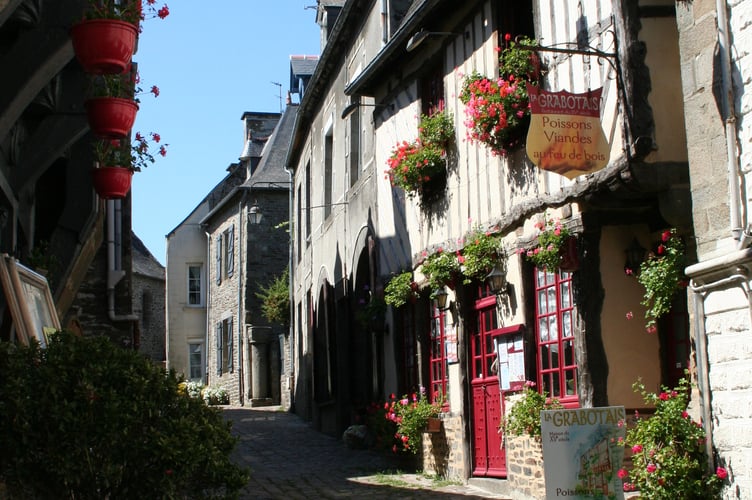
We took our time and explored the towns and villages of the region, places such as Dol-de-Bretagne and Mont Dol. Just off the main route from Saint-Malo to Mont-Saint-Michel, Dol as it’s commonly known, is a well-preserved walled cathedral town with a long and historic past. Close your eyes in the main street, La Grande Rue des Stuarts and it’s possible to be transported back to the 12th Century, or slightly later with timber-frame buildings and stone porticos where artisans worked on their trade or merchants sold their wares.
In 549, the Welsh Saint Teilo was documented as coming to Dol where he joined Samson of Dol, and the fruit groves they planted remain and are known as the groves of Teilo and Samson. Legend has it that while there he was assigned by King Budic II to subdue a belligerent winged dragon, which he was said to have tamed and then tied to a rock in the sea off Brittany.
The town is reputed to be the origin of the Royal house of Stuart, with James VI of Scotland becoming King James I of England in March 1603 on the death of Queen Elizabeth I. A plaque in Dol commemorates that origin.
The walled town was unsuccessfully besieged by William the Conqueror a decade after his success at Hastings in 1066, so yes, the joint histories between England and Brittany are that entwined through the centuries.
Just outside Dol is the Cricket Club Des Ormes where, back in 2003, the club played for 26 hours and 13 minutes. The record has been beaten a number of times since. No doubt, however, the tea breaks included more culinary delights other than cucumber sandwiches!
Indeed, the Breton region is steeped in history predating the Romans and the Iron Age settlers. When I retire, I promised myself I will undertake the walking ‘Tro Breizh’ or ‘Tour of Brittany’ – based on a Christian pilgrimage that links the towns of the seven founding saints of Brittany. Its own version of the Camino de Santiago if you will, just with better food and wine to fuel weary hikers.
The seven were monks from Britain from around the 5th or 6th century who founded churches and bishoprics and spear early Christianity. The full circuit takes month and covers 370 miles, but it’s growing in popularity with a number of one-week stages following the original path.
An old Breton legend says that those who do not complete the Tro Breizh in their lifetime will be sentenced to complete it in their afterlife, walking the length of the tour from within their coffin every seven years.
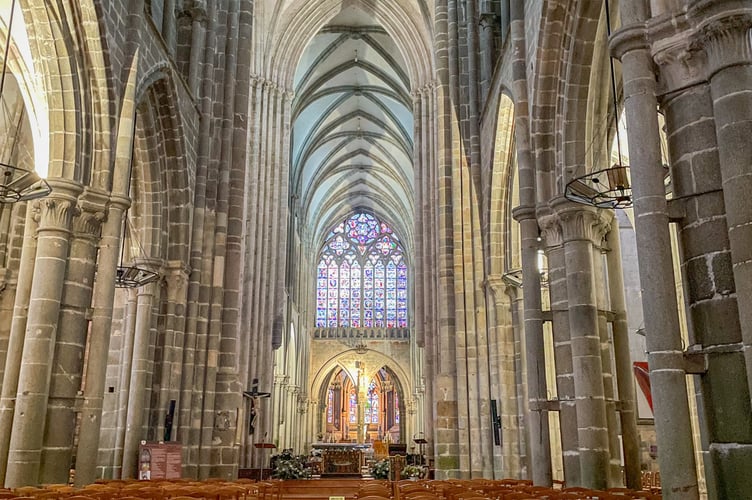
A tour of Dol’s Norman-era cathedral is a must, with British author Ken Follett donating £125,000 in proceeds from his book on the restoration of Notre-Dame in Paris to the Dol project. A well inside the cathedral has recently been discovered, pointing to its long history lost in the mists of time. Naturally, using Brittany Ferries services to Saint-Malo, will provide the perfect easy passage in preparation for the month of walking on the road ahead.
Those mists of time too have swept over Mont-Saint-Michel, one of the most-visited and easily recognised landmarks in Europe. Technically located at the very western edge of Normandy - the changed course of the Couesnon River is to blame for its being relocated from the east of Brittany, and that remains a point of debate between locals from both regions.
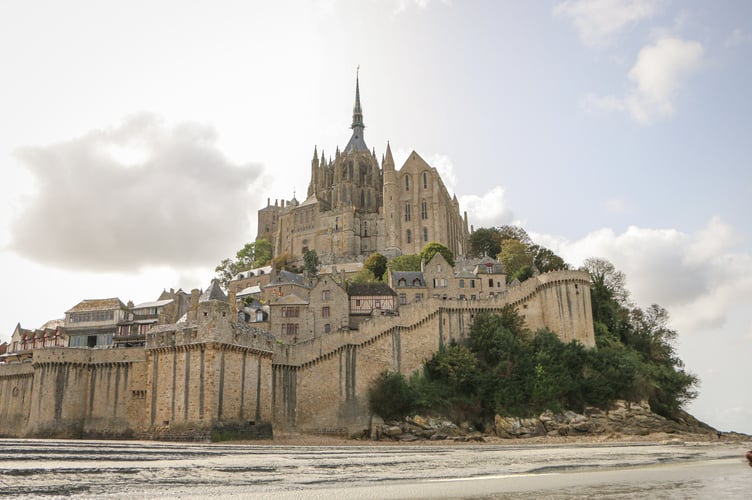
It is a mystical and magical place, almost direct from central casting of the Game of Thrones, missing just a dragon circling above its spire and golden statue of Archangel Michael slaying such a beast with Biblical heft powering his broadsword.
The connection between Mont-Saint-Michel and the mainland has changed over the centuries. It was previously connected by a tidal causeway that added to the defensive capabilities of the granite redoubt. There’s now a bridge to bring tourists be bus from a nearby information centre. Access to limited but well worth the time to visit the unique architectural abbey and church. Truly a magnificent site. According to legend, the archangel Michael appeared in 708 to Aubert the bishop of Avranches, and instructed him to build a church on the rocky islet.
It’s featured in the Bayeux Tapestry, which commemorates the Norman Conquest. Harold Godwinson is pictured on the tapestry rescuing two Norman knights from the quicksand in the tidal flats during the Breton–Norman war.
The wealth and influence of the abbey extended to several daughter foundations, including St Michael's Mount in Cornwall. Its popularity and prestige as a centre of pilgrimage waned with the Reformation, and by the time of the French Revolution there were scarcely any monks in residence. It was closed and converted into a prison during the French Revolution.
During the Nazi occupation of France German soldiers occupied Mont-Saint-Michel, where they used St. Aubert church as a lookout post and the island was a major attraction for German tourists then. After the Allies' initial D-Day invasion in June 1944, exhausted German soldiers retreated to strongholds like Mont-Saint-Michel. On August 1, a single American soldier – Private Freeman Brougher of Pennsylvania and the 72nd Publicity Service Battalion – reached and liberated Mont-Saint-Michel accompanied by two British reporters, Gault MacGowan of the New York Sun and Paul Holt with the London Daily Express.
(The trip was sponsored and organised by Brittany Ferries, the Oceania Hotel and Saint-Malo Tourism).
Comments
This article has no comments yet. Be the first to leave a comment.