
DID you remember to put your clocks forward?
The sun is moving north now and it is a fairly quiet time so far as sunspots are concerned. However, around the equinoxes, the Earth's magnetic field lines up with that of the sun, with the effect of enhancing any aurora caused by solar activity. I advise you, as ever, to keep up to date via www.spaceweather.com. I’ve just had a look, and the almost spotless face has been covered with spots again!
The phases of the moon are: Full Moon, April 2; Last Quarter, April 10; New Moon, April 17; First Quarter, April 24. It’s good to know these dates, because we then know where and when to look – for example, the new moon is very close to the sun in the sky, while the full moon rises when the sun sets.
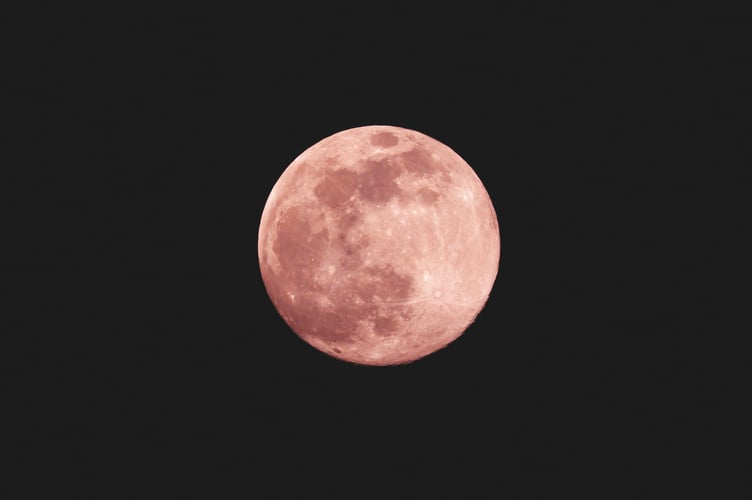
April’s full Moon is called the Pink Moon, from Native American traditions aligning with the arrival of spring flowers. In Christianity, it’s known as the Lenten Moon if it falls before the spring equinox or the Paschal Moon if it occurs afterwards, and it’s used to determine the date of Easter.




There are no eclipses this month, but last month's lunar eclipse was well recorded in America.
As for the planets, Mercury can be seen at the start of the month at western elongation; Venus moves between Aries and Taurus, and Jupiter is visible in the evening in the constellation of Gemini.
The Lyrids meteor shower can be seen in the north-east close to the bright star Vega in the constellation of Lyra. They peak on April 22, but can be seen a few days either side. The moon will be close to the first quarter and so not too bright.
There may be two comets towards the end of the month - hopefully, we will see something.
Comments
This article has no comments yet. Be the first to leave a comment.