
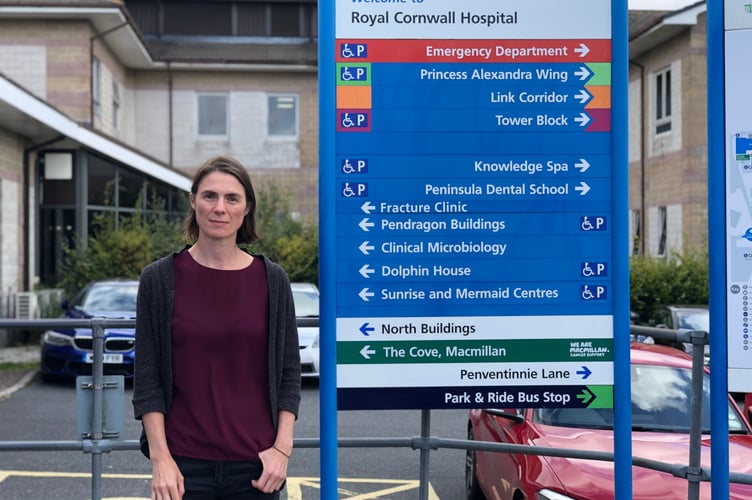
DESPITE figures improving, there are still hundreds of people in Cornwall waiting longer than 12 hours for an emergency hospital bed each month, with ambulances waiting over an hour to hand over patients at the Royal Cornwall Hospital in Truro.
Latest figures published by NHS England show ambulances waiting an hour and eight minutes on average to hand over patients, while response times for Category 2 incidents are over 40 minutes – among the longest in the country.
So far this year, 1,302 people have waited more than 12 hours for an emergency admission (so-called ‘corridor care).
A total of 529 attendees at A&E departments in Cornwall had to wait over 12 hours from a decision to admit to admission in February – that includes Treliske’s emergency department (ED), the Urgent Treatment Centre at West Cornwall Hospital and minor injuries units.




That’s down from 773 in January and a peak of 804 in January 2024, but is still far higher than the numbers seen before the Covid-19 pandemic. In February 2020, just 16 attendances at A&E faced a wait of over 12 hours in Cornwall.
Recent years have seen serious issues with ambulance delays at Treliske, but waiting times had been falling late last year. However, so far in 2026 RCHT’s handover times have been among the ten longest in the country.
Patients are also seeing long waits for ambulances to respond to incidents. The average waiting time for a Category 2 incident in the Cornwall and Isles of Scilly ICB area is over 40 minutes, the fifth highest in the country. The target response time is 18 minutes.
Category 2 incidents include serious emergencies like strokes and heart attacks, where prompt treatment makes a big difference to patient outcomes.
As national concerns grow over so-called ‘corridor care’, the figures also show that over 1,000 patients at RCHT waited more than 12 hours for a bed – the equivalent of 22 people each day of the year so far.
Liberal Democrat Cornwall councillor Ruth Gripper, who has raised the issue of ambulance waiting times over many years, said the figures revealed a hospital under pressure. “These are really concerning figures and evidence of a hospital under intense pressure,” she said. “My heart goes out to patients experiencing these long waits and to the staff working under such difficult conditions.
“Ambulance waiting times has been an ongoing issue over many years and although at times we’ve seen real progress it’s deeply concerning to see these latest figures – not just the handover and ambulance response times, but the long waits to find a bed for people once the decision has been made to admit them.
“Twelve hours or more waiting on a trolley is not what patients need and it’s not the kind of high quality care that staff want to be giving either.”
A spokesperson for South Western Ambulance Service (SWASFT) responded to the concerns, saying: “We are working hard with our system partners to reduce hospital handover delays, so our ambulance clinicians can get back out on the road as quickly as possible to respond to other 999 calls in the community.”
They outlined the work that is being done to reduce delays. “Since 2020 we have increased the number of hours our ambulances are on the road every week from 37,000 to over 50,000 hours per week across the South West,” said the spokesperson.
“Clinicians in our emergency operations centres assess 999 calls, directing patients to the right care, reducing unnecessary hospital visits. This has resulted in SWASFT having some of the lowest conveyance rates to emergency departments in the country.”
They continued: “During busy periods, we have local leaders working at the most challenged emergency departments to provide local leadership. They assist with prioritising handover of patients waiting to be transferred into hospital care.
“We’ve collaborated with system partners to develop Care Coordination (CareCo) Hubs across the South West. These hubs connect ambulance clinicians with other health and social care professionals to ensure patients access the right care, first time, reducing unnecessary Emergency Department admissions and ambulance dispatches, meaning patients are treated closer to home.
“We have been working with our system partners as part of region-wide task and finish groups to develop a Timely Handover Process (THP). Since November, we have been trialling this in some of our more challenged areas to provide a point of escalation for extended handovers, with a shared aim between SWASFT and the acute hospitals to free up crews quicker so they can respond to other patients in the community.”
The number of patients seen within four hours at Treliske’s emergency department has fallen to its lowest levels since October 2024. Fewer than half (42 per cent) of attendances at Cornwall’s Type 1 A&E waited less than four hours from arrival to admission, transfer or discharge.
That’s down from 45.1 per cent in January and 46.0 per cent in February 2025. It’s also below the national average of 59.4 per cent.
The waiting list at Royal Cornwall Hospitals Trust was at 41,580 in January. That’s down slightly from 41,850 in December and a peak of 48,732 in May 2023.
Only 247 have been on the waiting list for over a year, down from as many as 1,394 in June 2024.
Comments
This article has no comments yet. Be the first to leave a comment.