
WHILE doom-laden headlines can often give the impression the world is going to hell in a handcart, here in Cornwall, the debate is rather more folksy. The perennial question of which is more appropriate - chairman, chairwoman or the unisex chair - has been discussed at length, not once but twice, in the Cornwall Council chamber at County Hall.
Last week, the council was asked to vote on a recommendation that the term “chairman” be replaced with “chair” for the purposes of equality and diversity, except where the statutory term must be used for legal compliance. Much debate ensued.
Social media was awash with commentary along the lines of: “Haven’t they got more important things to worry about? Parking, potholes, affordable housing?” Others argued it’s far from trivial, in the 21st century, to request a gender-neutral title for a public office so there’s no need to keep changing it in speech or written documentation.
It’s a subject that keeps coming back precisely because people care about it, on both sides: whether to change it, or leave well alone. As council chairman (chair?) Cllr Rob Nolan commented wryly: “For something people don’t want to debate, I’ve got a growing list of speakers.”




Cllr Ruth Gripper (LibDem, Mylor, Perranarworthal and Ponsanooth) felt strongly enough to bring the matter before the constitution and governance committee, which strives for fairness, balance and power (and doesn’t cover potholes, to be fair).
Cllr Gripper became a Cornwall councillor last May, and noticed various mentions of ‘chairman’. “What that said to me, quite clearly, is the council assumes that a committee chair is always a man,” she said. “Happily, that is not the case in practice, but I thought surely we could update our official language to reflect this?”
Councillors of all parties and genders weighed in. Green councillor Karen La Borde (Green, Gloweth, Malabar and Shortlanesend) described ‘chairman’ as “gendered language conferring a superiority over a particular gender”, while Cllr David Garrigan (LibDem, St Teath and Tintagel) said the term “should be consigned back to 1972 where it belongs”. Cllr Alan Rowe (Labour, Falmouth Penwerris) said the term is “there to tell women and girls they are not welcome and that these roles are for men only”.
Cllr Steven Webb (LibDem, Truro Moresk and Trehaverne) disputed that ‘chairman’ was gender-neutral, adding: “It was used when women were not ever expected to be in a role of power, therefore never considered.” He added: “If I was chairing and people kept calling me chairwoman, I would care.”
In contrast, Conservative councillor Jane Pascoe, who has chaired many a meeting, said: “The definition of ‘chairman’ is the person presiding over a meeting. I’m always happy to be called chairman … We’ve got more important things to discuss.”
And not everyone likes the alternatives. ‘Madam Chairman’? Archaic. ‘Chairperson’? Wishy-washy.
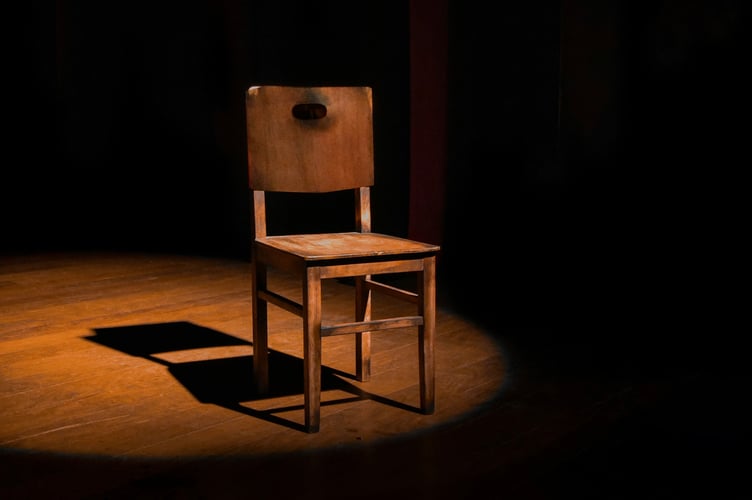
Chair? Cllr Andrew Mitchell (St Ives, Independent), raised the common opinion that “as much as anybody dislikes being addressed as ‘chairman’, I have just as great a sense and feeling of being referred to as ‘chair’. I’m not a lump of furniture.”
Independent councillor and Camborne mayor James Ball reflected the popular view that “it’s up to the chairman of any committee how they’re addressed … residents want us to focus on matters that affect them”.
As woman and a biologically-born female, I’m entitled to a view, in my own opinion column, right?
My views on gendered language have changed over the years. As a teen, I was scathing about Ms, a title that was first mooted in 1901 and took flight with the women’s liberation movement of the 1960s. “It means you’re a Miss but don’t want to say so,” I scoffed.
Now 53, in a long-term relationship and with a teenage daughter of my own, I tick that Ms box quite happily. It’s a catch-all title for women of a certain age, whose marital status is no one else’s concern.
While men are Mr Whoever, women still live in an age where marriage can involve a name and title change. The options are multiple and laced with politics. Similarly, men lose no sleep over being called ‘chairman’, because they are.
The language used in Cornwall Council’s constitution dates back to the 1972 Local Government Act - three years earlier than the Sex Discrimination Act – and was hard to change. But women make up half the world’s population, so are hardly a minority. If you want more to stand for council, it helps if the language reflects that.
The committee agreed to a substantive motion that at the start of each year, committee heads will make known their personal preferred term. Addressing online criticism, Cllr Webb said: “Language matters - we change it properly, through debate and a vote, not by sneering.” He added: “Guess what? We can fix potholes the same time.”
(For the record, I’d be happy with chair, should I ever be asked).
With thanks to the Local Democracy Reporting Service (LDRS).
Comments
We've recently changed our login process. If you have an account for commenting, you will need to re-register on the login window.
This article has no comments yet. Be the first to leave a comment.