
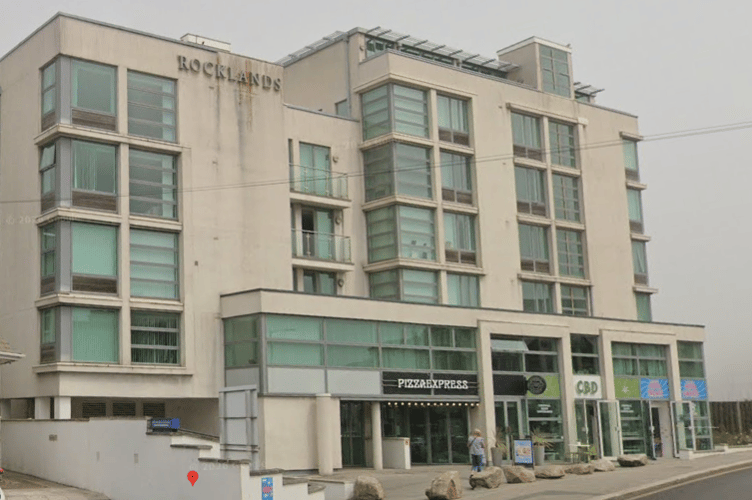
PLANS are proposed to replace combustible cladding from a prominent apartment block in Newquay after the material was banned following the Grenfell Tower fire tragedy.
A planning application has been submitted for the removal and replacement of existing combustible cladding and external wall elements with new non-combustible and associated works at the Rocklands in Narrowcliff.
An inquiry set up following the Grenfell Tower fire in West London in 2017 that killed 72 people concluded the blaze was primarily driven by the aluminium composite material cladding and breached building regulations.
Bailey Partnership, on behalf of its client Admiral House Property Trading Ltd, argues the Rocklands plan is supported by the Ministry of Housing, Communities and Local Government through the building safety programme’ and written ministerial statements, which seeks to ensure that buildings are safe “now and in the future.”

.png?width=209&height=140&crop=209:145,smart&quality=75)
Bailey Partnerships, in the planning application, said: “Following the Grenfell Tower fire tragedy, a review of aluminium composite material cladding panels, insulation and facade materials resulted in a ban of the use of combustible materials in new buildings above 18 metres.
“These combustible materials are present at Rocklands.
“Accordingly, the proposals seek to replace the existing cladding and external wall system with a new non-combustible system.
“These measures will help to ensure that Rocklands is safe of a high standard and fit for residential use for years to come.
“This is a significant benefit of the proposals. The proposals also provide an economic and social benefit, due to the employment that will be generated through the construction phase
“In order to ensure that the building is fit for residential purpose mitigating any fire safety concerns regarding the existing materiality of the building facades, the site requires the removal of the existing combustible insulated rendered cladding system and combustible spandrel panels, and the installation of an alternative system, which includes the installation of non-combustible insulated rendered cladding system and non-combustible spandrels.
“All materials to be used are to be rated, as minimum Class A2 limited combustibility, or better.
“As part of the works all wall mounted letters will be removed and reinstated, like-for-like, in terms of size, colour, material and font.”
The planning application takes into consideration the impact the scheme will have on local heritage assets including the neighbouring Barrowfields.
Bailey Partnerships stated: “The proposals are considered to be acceptable in terms of design quality and will not have a discernible impact upon the character and appearance of the area.
“When considering the potential impact of the development on the nearby heritage asset it is relevant to highlight that the proposed works are limited to removing and replacing inappropriate materials and addressing important safety requirements. This is a significant benefit of the proposals.
“Furthermore, the proposed materials have been selected to be as akin, as far as possible, in appearance to the current materials to ensure that they are in keeping with the architectural palette of the existing and adjacent buildings.
“Consequently, it can be agreed that the proposals sustain and enhance the local character and distinctiveness of the area.
“Overall, the proposals will provide a refreshment and betterment of materials.
“The scheme will have “negligible” change to the significance and setting of the nearby heritage assets.
“Accordingly, it is clear that “substantial harm” would therefore not arise as a result of the proposals. The proposals would result in “less than substantial harm.”
Comments
We've recently changed our login process. If you have an account for commenting, you will need to re-register on the login window.
This article has no comments yet. Be the first to leave a comment.