
A CORNWALL Council decision to reintroduce a controversial chemical weedkiller for use on the county’s roads and kerbs has led to calls for the decision to be put on hold so town and parish councils can consider their options.
Glyphosate is classified by the International Agency for Research on Cancer (IARC) as “probably carcinogenic to humans”. It has also been linked to eye and skin irritation and potential endocrine disruption.
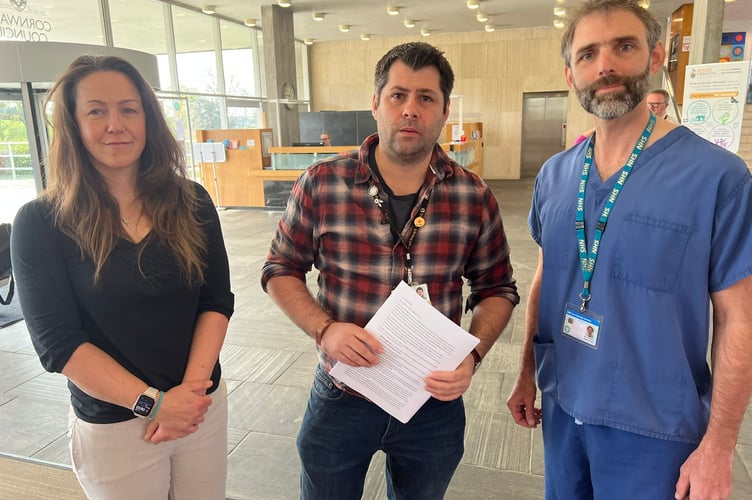
More than 200 healthcare workers, including 70 doctors, put their names to a letter handed to council leader Cllr Leigh Frost by Hayle GP Dr Robert Cook and Perranporth physiotherapist Paula Bright on Monday morning at New County Hall in Truro. The medics’ signatures join those of more than 13,000 across numerous petitions, and the voices of organisations including Cornwall Wildlife Trust.
The council voted to cease using glyphosate in 2016. A full meeting of Cornwall Council yesterday (Tuesday, April 21) was due to discuss a motion tabled by Green councillors including Karen LaBorde (Gloweth, Malabar and Shortlanesend), who asked the cabinet to recognise that a return to usage “represents a significant policy reversal with ecological, public health and democratic implications for communities across Cornwall”. The meeting was set to be preceded by a public protest outside New County Hall.

-(1).jpg?width=209&height=140&crop=209:145,smart&quality=75)

Cllr Laborde said Cornwall Council “has opened a can of worms”, adding: “There are lots of unanswered questions about how we manage the public realm, which is currently split between Cornwall and Iocal councils - and, in the case of unadopted estates, is often managed without consultation or not at all. So I see this debate in a positive light, as it should take Cornwall further in delivering public realm for all.”
Cllr Laborde also sits on Truro City Council and chairs its Parks And Amenities Committee. She confirmed that the city council already uses glyphosate on the areas it manages, and that this will be discussed at a future council meeting.
“Our adopted estates were sprayed three times a year; I managed to get that down to twice to save money that could be invested in play equipment,” she said. “Obviously, I would like it to be zero, but the parks department have used it for a very long time and are comfortable with it.”
David Rodda, town clerk for Truro City Council, said: “All chemical use by the council is carefully controlled, and wherever possible non-chemical options for weed control are employed on land owned or managed by Truro City Council.
“However, as far as street weeds are concerned, Truro City Council has trialled numerous different techniques over the past 10 years including machine, manual and non-chemical treatments - but these have been discounted as they are either very expensive and/or ineffective.
“Truro City Council Parks Committee resolved at the start of 2026 to continue to chemically treat street weeds to maintain current levels of control and uses an external contractor to undertake this work. This contractor uses a precision application method that only treats the weeds themselves rather than the surrounding area and, in a move to reduce chemical use in 2026/27, the number of annual treatments has been reduced from three to two.”
Mr Rodda said Cornwall Council’s proposal to take back responsibility for street weeds in Truro would considered in detail before making a decisions: “We want to ensure current levels of weed control are maintained.”
MPs called upon Cornwall Council to delay the decision to implement glyphosate treatment. Jayne Kirkham, Labour MP for Truro and Falmouth, expressed “real concerns” about the way the matter had been handled. “Town and parish councils were given just a few weeks to decide whether to opt in or out of glyphosate spraying in their areas,” she said. “For many councils, that simply isn’t enough time to meet and make an informed decision.”
See more: page 10 and 11.
Comments
We've recently changed our login process. If you have an account for commenting, you will need to re-register on the login window.
This article has no comments yet. Be the first to leave a comment.